Ice Spikes Explained
TL;DR
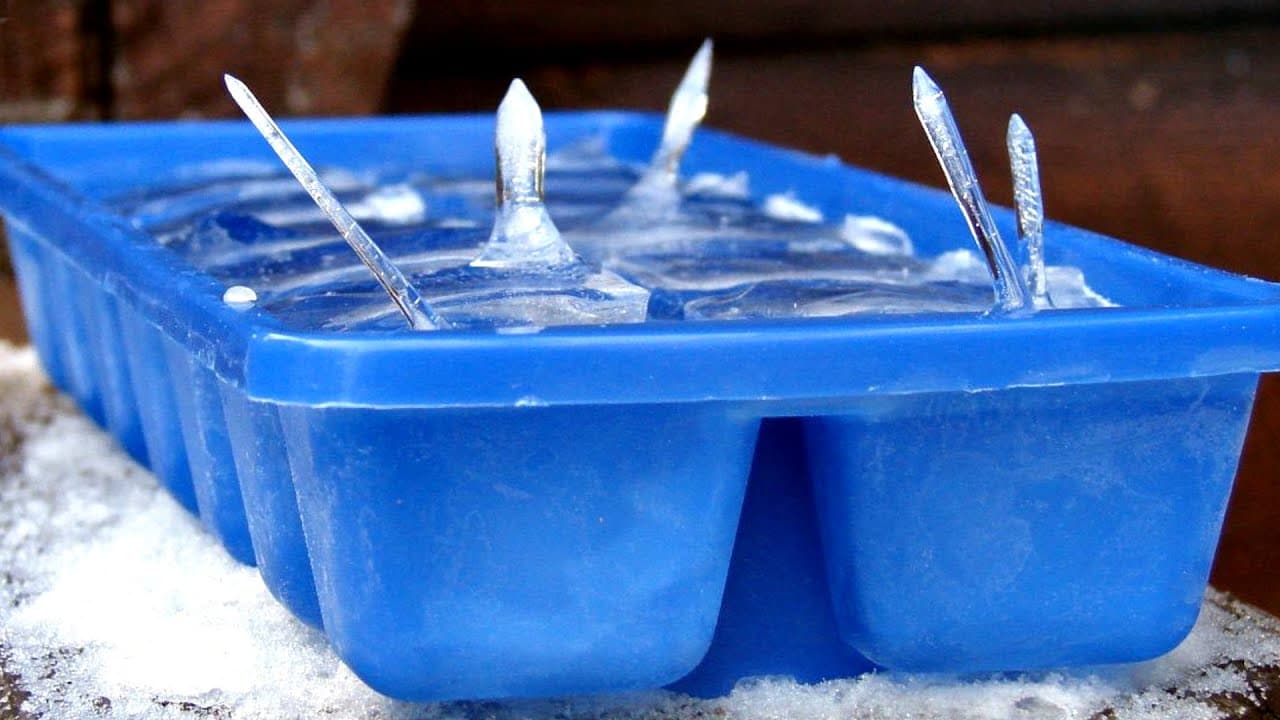
Ice cube spikes form due to the expansion of water when it freezes, creating hollow spikes that grow as more water is forced out through a hole in the ice.
Transcript
Have you ever made ice cubes and then found that when you take them out of the freezer there are spikes on them? This phenomenon has caused a lot of curiosity and some concern. The truth is, there is a simple physical process responsible for ice cube spikes. Ice cubs cool first from their top surface where they are in direct contact with the cold f... Read More
Key Insights
- 💦 Ice cube spikes form due to the expansion of water when it freezes and the subsequent forced outflow of water through a hole.
- 🧡 Ideal conditions for spike formation include specific temperature range, distilled water, and increased airflow.
- 🧊 The formation of ice cube spikes is a result of water's unique property of expanding when it freezes.
- 😅 If water didn't expand when it froze, Earth would be drastically different, either colder or hotter, affecting the existence of life.
- 🥶 Large ice spikes, known as ice vases, can form in natural settings such as bird baths.
- 🧊 Ice cube spikes serve as a fascinating example of the physics and properties of water.
- 🧊 Contemplating the formation of ice cube spikes highlights the importance of water's expansion when freezing for sustaining life on Earth.
Install to Summarize YouTube Videos and Get Transcripts
Explore YouTube Video Summarizer or Get YouTube Transcript Extractor
Questions & Answers
Q: How do ice cube spikes form?
Ice cube spikes form when the water in the middle of an ice cube is forced up and out through a hole as the ice freezes, creating a hollow spike. This occurs due to the expansion of water when it freezes and the formation of ice crystals at the edges of the cube.
Q: What factors can influence spike formation?
The ideal conditions for ice cube spike formation include a temperature range of minus five to minus eight Celsius, the use of distilled water instead of tap water to prevent salt concentrations, and the presence of a fan in the freezer to increase air circulation and evaporative cooling.
Q: Can large ice spikes form in natural settings?
Yes, in specific conditions such as bird baths, larger ice spikes known as ice vases can form. These spikes can be created due to the same principles of water expansion and hole formation observed in ice cubes.
Q: What would happen if water didn't expand when it froze?
If water didn't expand when it froze, ice would sink to the bottom of bodies of water, leading to further cooling and the potential for complete solidification. This would result in a cold, lifeless earth with no bodies of liquid water for organisms to survive.
Summary & Key Takeaways
-
Ice cubes cool from their top surface, where they are in direct contact with the freezer air, causing the first ice crystals to form on the top and edges.
-
As the ice freezes, it expands and the water in the middle is forced up and out through a hole, creating a hollow spike.
-
Ideal conditions for spike formation include a temperature between minus five and minus eight Celsius, the use of distilled water, and increased airflow from a fan.
Read in Other Languages (beta)
Share This Summary 📚
Summarize YouTube Videos and Get Video Transcripts with 1-Click
Try YouTube Summary with ChatGPT & Claude or YouTube Transcript Generator
Explore More Summaries from Veritasium 📚





Summarize YouTube Videos and Get Video Transcripts with 1-Click
Try YouTube Summary with ChatGPT & Claude or YouTube Transcript Generator