Falling Oil Prices, Europe’s Quantitative Easing, Nervous Markets: The Global Economy in 2015
TL;DR
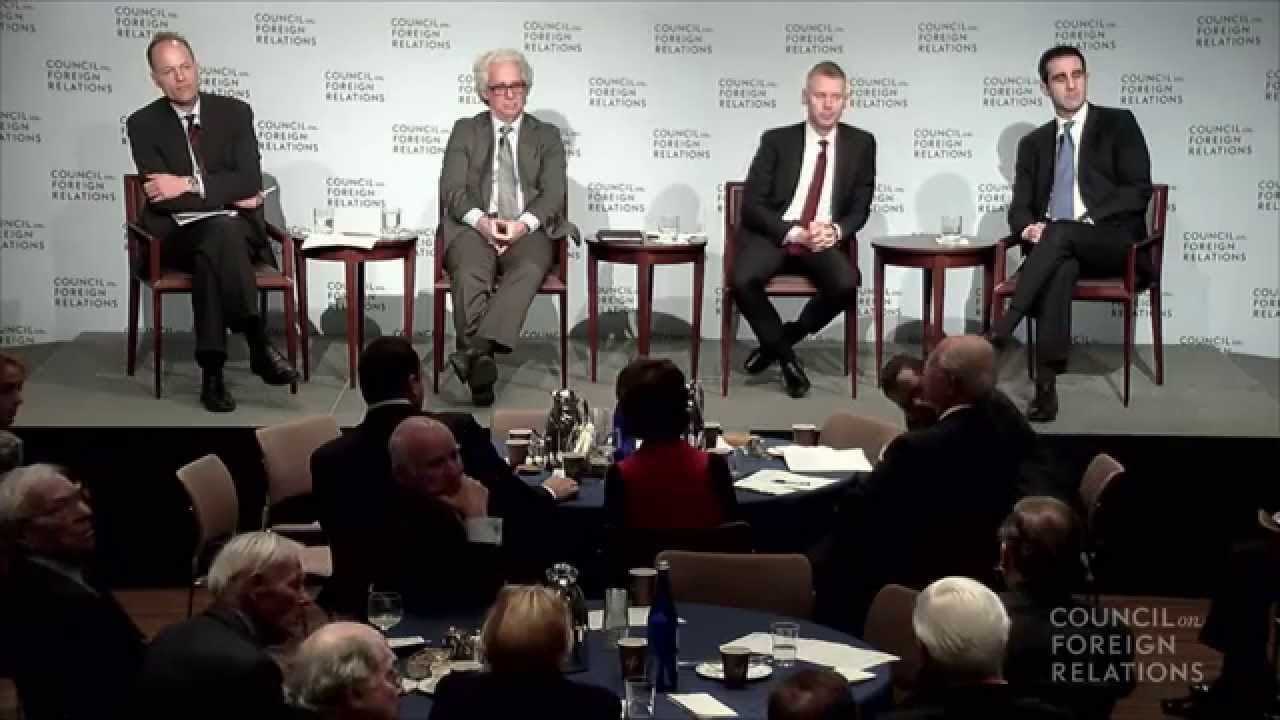
Discussion on oil prices, Europe's QE, and global economic challenges.
Transcript
MALLABY: This is normally called the WEU World Economic Update. Today, it's called the NDU, the Non-Davos Update. We promise that there is no ice outside, at least until this evening, that there is no jet lag for most of you, that you will not slip on the sidewalk as you get out, and it's a lot less expensive here, OK? So be grateful. We have a gre... Read More
Key Insights
- The IMF has revised its 2015 growth forecast slightly downward, yet it remains higher than the previous year at 3.5%, indicating mixed global economic conditions.
- The U.S. is the only major economy with an upward growth revision, highlighting a divergence in economic performance compared to other regions.
- Falling oil prices generally benefit oil-importing countries, but the benefits are not always greater than the costs imposed on oil-exporting nations.
- Europe and Japan are facing serious deflation risks, and the effectiveness of their monetary policies is under scrutiny.
- The ECB's anticipated QE may be insufficient to combat deflationary pressures in the Eurozone due to political constraints and the lack of a unified commitment.
- Russia's economic crisis, exacerbated by sanctions and low oil prices, poses challenges for maintaining EU and U.S. sanctions unity.
- The U.S. dollar's strength raises questions about global tolerance for currency devaluation strategies by other major economies.
- Greece's potential debt renegotiation with Eurozone governments could lead to market turmoil but is unlikely to result in a euro exit.
Install to Summarize YouTube Videos and Get Transcripts
Explore YouTube Video Summarizer or Get YouTube Transcript Extractor
Questions & Answers
Q: What is the current global economic outlook for 2015?
The global economic outlook for 2015 is mixed, with the IMF revising its growth forecast slightly downward to 3.5%. The U.S. economy shows positive growth, while other major economies face challenges, including deflation risks in Europe and Japan.
Q: How do falling oil prices affect the global economy?
Falling oil prices generally benefit oil-importing countries by reducing costs, but the benefits are not always greater than the economic losses faced by oil-exporting nations. The impact is complex, with potential financial consequences and varying effects on different economies.
Q: What are the challenges facing the Eurozone's monetary policy?
The Eurozone faces serious deflation risks, and the ECB's anticipated QE may not be sufficient to combat these pressures. Political constraints, particularly from Germany, limit the ECB's ability to make an unlimited commitment to QE, affecting its potential efficacy.
Q: How does the U.S. dollar's strength impact global economic dynamics?
The U.S. dollar's strength raises questions about global tolerance for currency devaluation strategies by other major economies. As other regions attempt to stimulate growth through devaluation, the U.S. may face challenges in managing trade relations and economic balance.
Q: What is the potential impact of Greece's election on the Eurozone?
Greece's election could lead to market turmoil if Syriza renegotiates debt with Eurozone governments. However, the likelihood of Greece exiting the euro is low, as both Greece and the Eurozone have incentives to reach a debt relief agreement despite potential difficulties.
Q: How do sanctions and low oil prices affect Russia's economy?
Russia's economy is significantly impacted by sanctions and low oil prices, leading to a currency crisis and potential economic downturn. These factors create challenges for maintaining EU and U.S. sanctions unity and pose risks to Russia's financial stability and geopolitical stance.
Q: What are the implications of the ECB's QE for the Eurozone?
The ECB's QE is intended to combat deflationary pressures, but its effectiveness is limited by political opposition and the lack of a unified commitment. The Eurozone's economic recovery is hindered by these constraints, raising concerns about its ability to stimulate growth effectively.
Q: What role does Germany play in the Eurozone's economic policies?
Germany plays a significant role in shaping the Eurozone's economic policies, often advocating for austerity and opposing aggressive monetary measures like QE. This stance influences the ECB's ability to implement effective policies and affects the overall economic stability of the Eurozone.
Summary & Key Takeaways
-
The global economic outlook for 2015 is mixed, with the U.S. showing positive growth while other major economies face challenges. The IMF's growth forecast is slightly revised down but remains optimistic.
-
Falling oil prices have a varied impact on the global economy, benefitting oil importers while posing challenges for exporters. The U.S. benefits from cheaper oil, but the situation is complex in Europe and Japan.
-
The ECB's upcoming QE is unlikely to significantly shift inflation expectations due to political opposition, particularly from Germany. The Eurozone faces deflationary pressures, and Greece's election adds uncertainty.
Read in Other Languages (beta)
Share This Summary 📚
Summarize YouTube Videos and Get Video Transcripts with 1-Click
Try YouTube Summary with ChatGPT & Claude or YouTube Transcript Generator
Explore More Summaries from Council on Foreign Relations 📚
Summarize YouTube Videos and Get Video Transcripts with 1-Click
Try YouTube Summary with ChatGPT & Claude or YouTube Transcript Generator