Free radical reactions | Substitution and elimination reactions | Organic chemistry | Khan Academy
TL;DR
Free radical reactions start with energy input and lead to chain reactions that release energy.
Transcript
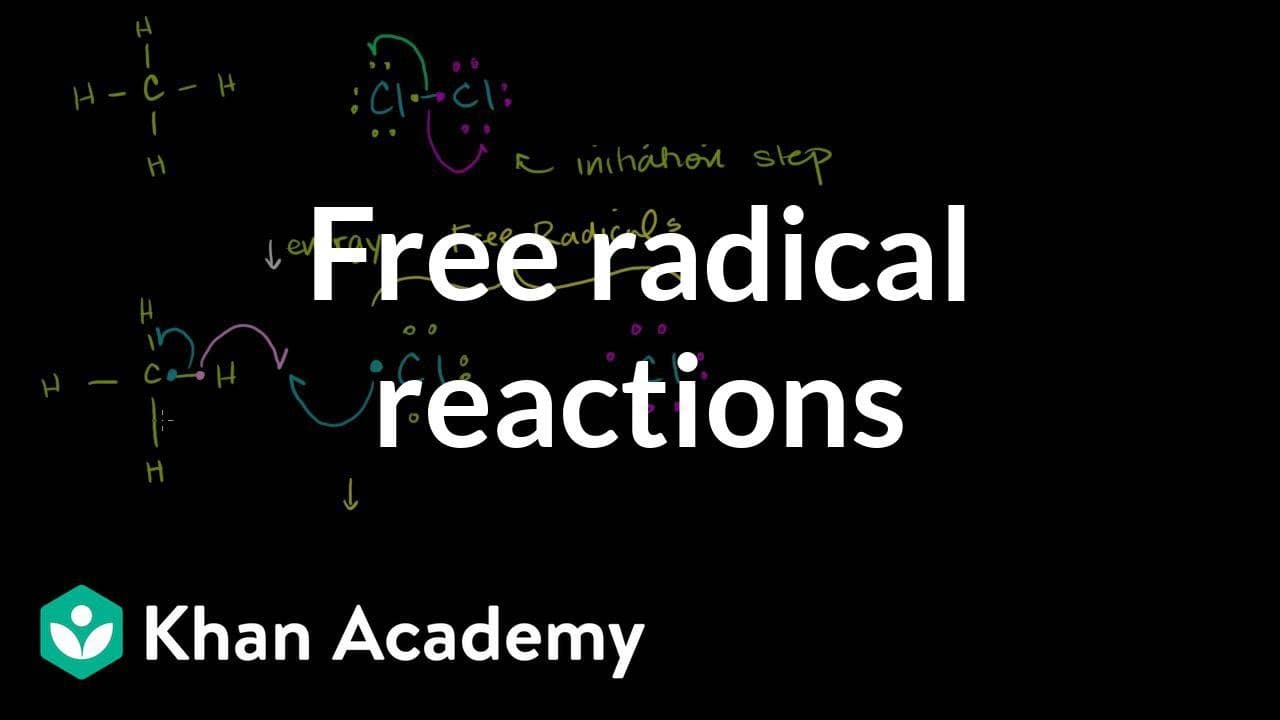
Let's think about what type of reaction we might be able to get going if we had some methane and some molecular chlorine. So if we just let this be and we didn't heat it up or put in any UV light into this reaction, pretty much nothing will happen. Both of these molecules are reasonably happy being the way they are. But if we were to add heat into ... Read More
Key Insights
- 🥶 Free radical reactions require energy to initiate but release energy as the reaction progresses.
- 🙂 Heat or UV light can break weaker bonds, such as chlorine-chlorine bonds, leading to the formation of highly reactive free radicals.
- 🥶 Chain reactions occur as free radicals react with other molecules, continuously creating new free radicals.
Install to Summarize YouTube Videos and Get Transcripts
Explore YouTube Video Summarizer or Get YouTube Transcript Extractor
Questions & Answers
Q: What is the role of heat or UV light in free radical reactions?
Heat or UV light provides the energy required to initiate free radical reactions by breaking weaker bonds between chlorine atoms.
Q: Why are free radicals considered dangerous?
Free radicals are highly reactive and can lead to damage in biological systems, such as DNA mutations, which are associated with conditions like cancer.
Q: How do free radical reactions lead to chain reactions?
Once the initiation step creates free radicals, they react with other molecules, creating new free radicals in a continuous chain reaction.
Q: What happens in termination steps of free radical reactions?
In termination steps, free radicals can react with each other to form stable molecules, reducing the concentration of free radicals in the system.
Summary & Key Takeaways
-
Free radical reactions occur when heat or UV light is applied to a system containing molecules like methane and molecular chlorine.
-
The initiation step requires energy to break the chlorine-chlorine bond, resulting in the formation of chlorine free radicals.
-
As the reaction progresses, chain reactions occur, where free radicals react with other molecules, continuously forming new free radicals.
-
Eventually, termination steps occur, reducing the concentration of free radicals in the system.
Read in Other Languages (beta)
Share This Summary 📚
Summarize YouTube Videos and Get Video Transcripts with 1-Click
Try YouTube Summary with ChatGPT & Claude or YouTube Transcript Generator
Explore More Summaries from Khan Academy 📚



Summarize YouTube Videos and Get Video Transcripts with 1-Click
Try YouTube Summary with ChatGPT & Claude or YouTube Transcript Generator