The World's Top Economies in 9 Minutes
TL;DR
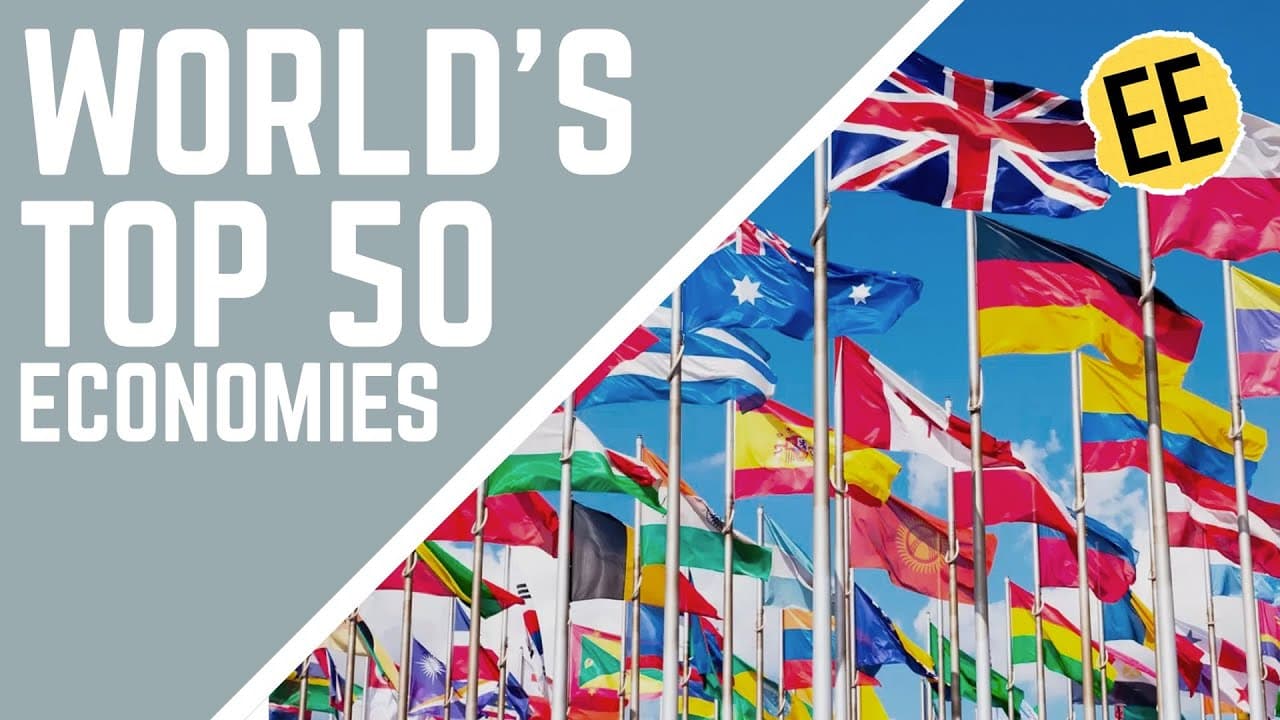
A humorous overview of the world's top 50 economies.
Transcript
there are between 186 and 192 countries in the world in 2019 depending on who you ask in this case we will be asking the United Nations as they seem to be pretty reputable and have a good handle on this whole country business so let's get cracking on the largest 50 economies in the world today by far the biggest economy in the world is the United S... Read More
Key Insights
- The United States remains the world's largest economy, with a GDP of $21.3 trillion, surpassing many countries' GDPs with its sports industry alone.
- China's rapid industrialization has lifted over a billion people from poverty, using more concrete in three years than the U.S. in the entire 20th century.
- Japan, despite economic stagnation, remains the third-largest economy, while Germany leads Europe with its automotive industry and numerous zoos.
- India's economy is growing, yet over half its population still works in agriculture, with its GDP smaller than California's.
- Brazil is rich in natural resources but plagued by corruption, while Canada enjoys prosperity without the economic challenges faced by the U.S.
- South Korea's economy is driven by technology and gaming, whereas Russia relies heavily on natural resources and intelligence.
- Saudi Arabia's Aramco outperformed Apple, Amazon, and Google in profits, while Switzerland is known for chocolates and banking.
- South Africa faces extreme inequality, with a significant portion of its population living in poverty despite post-apartheid progress.
Install to Summarize YouTube Videos and Get Transcripts
Explore YouTube Video Summarizer or Get YouTube Transcript Extractor
Questions & Answers
Q: What makes the United States the largest economy in the world?
The United States is the largest economy due to its massive GDP of $21.3 trillion, which is driven by a diverse range of industries including technology, finance, and entertainment. The U.S. sports industry alone generates more revenue than the GDP of many countries, showcasing its economic influence.
Q: How has China achieved rapid economic growth?
China's rapid economic growth is attributed to its aggressive industrialization and infrastructure development, which have lifted over a billion people out of poverty. The country has used more concrete in three years than the U.S. did in the entire 20th century, reflecting its extensive growth efforts.
Q: What challenges does Japan face despite being the third-largest economy?
Japan faces challenges such as an aging population and economic stagnation, which have hindered its growth compared to emerging Asian economies. Despite these issues, Japan remains the third-largest economy due to its technological and manufacturing strengths.
Q: Why is Germany considered an economic powerhouse in Europe?
Germany is considered an economic powerhouse due to its strong automotive industry, efficient infrastructure, and leadership in various sectors. It boasts more zoos than the rest of Europe combined, symbolizing its economic and cultural influence within the continent.
Q: What are the economic characteristics of Brazil?
Brazil is characterized by its abundance of natural resources and rich biodiversity. However, its economy is hampered by corruption and political instability, which have prevented it from fully capitalizing on its potential and achieving sustained economic growth.
Q: How does Canada's economy differ from the United States?
Canada's economy differs from the United States in its stability and social policies. Canada avoids many economic challenges faced by the U.S., such as student loan debt and privatized healthcare, allowing it to maintain a prosperous economy with fewer economic 'boss fights.'
Q: What drives South Korea's economic growth?
South Korea's economic growth is driven by its technological advancements, particularly in small cars, mobile phones, and the gaming industry. The country has capitalized on these sectors to become a high-growth economy with a significant global presence in technology and entertainment.
Q: What is the economic situation in South Africa?
South Africa faces significant economic challenges, including extreme inequality and poverty. Despite the end of apartheid, over 4 million people live on less than a dollar a day, while a wealthy upper class controls a large portion of the country's wealth, highlighting the ongoing social and economic disparities.
Summary & Key Takeaways
-
The video provides a light-hearted look at the top 50 economies globally, highlighting key economic strengths and challenges. The United States leads with a massive GDP, while China follows with impressive industrial growth. Other countries like Japan and Germany maintain their economic positions despite various challenges.
-
India and Brazil are noted for their potential and challenges, with India transitioning from agriculture to industry and Brazil struggling with corruption. The video also touches on Canada's economic stability and South Korea's tech-driven growth, contrasting with Russia's resource dependency.
-
Saudi Arabia's oil wealth is highlighted, alongside Switzerland's banking sector. The video also addresses the economic issues in South Africa, emphasizing the country's inequality. Overall, the video offers an engaging overview of global economic dynamics with humor and insight.
Read in Other Languages (beta)
Share This Summary 📚
Summarize YouTube Videos and Get Video Transcripts with 1-Click
Try YouTube Summary with ChatGPT & Claude or YouTube Transcript Generator
Explore More Summaries from Economics Explained 📚





Summarize YouTube Videos and Get Video Transcripts with 1-Click
Try YouTube Summary with ChatGPT & Claude or YouTube Transcript Generator