Relation of Alkyl Halide with Silver Salt of Carboxylic Acid
TL;DR
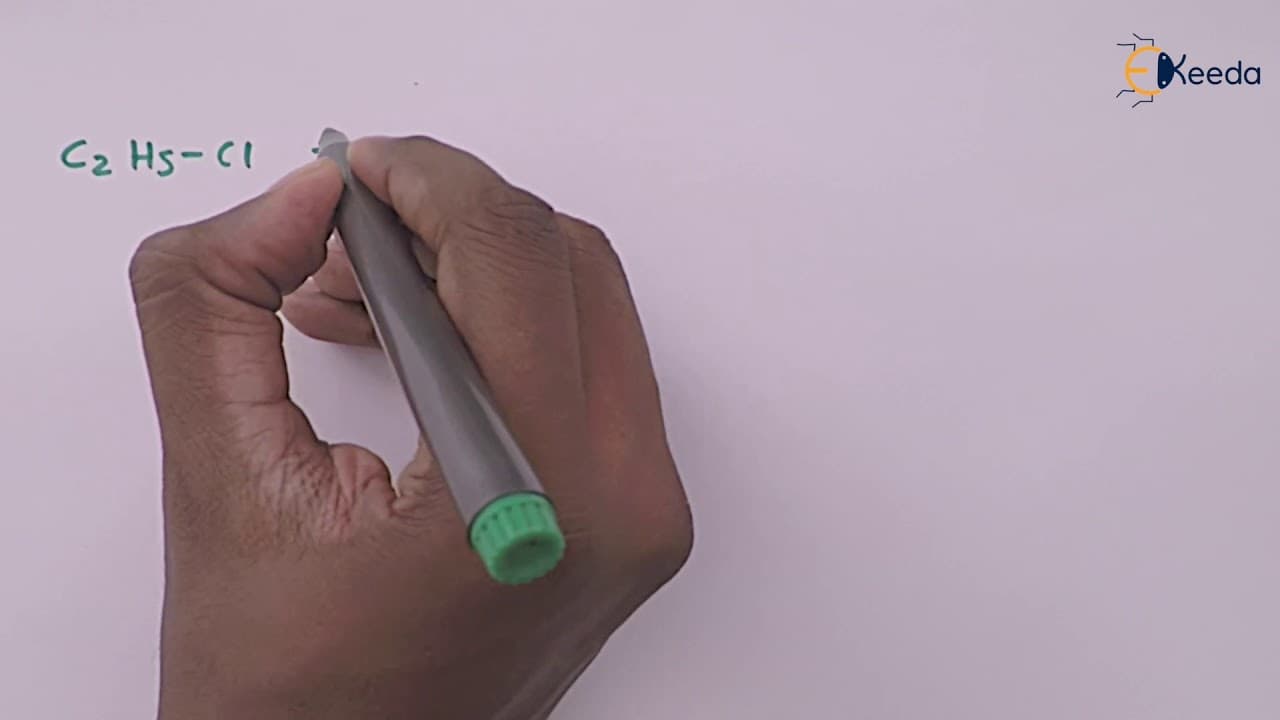
Alkyl halides react with sodium salts of carboxylic acids in the presence of ethanol to produce esters.
Transcript
click the bell icon to get latest videos from equator reference in the previous section we have got to know about how the ether is been formed with the help of the alkyne and that is Williamson synthesis and now we are going to talk about what is the reaction of the air can have with that of that is sodium sold out for carboxylase so it is informed... Read More
Key Insights
- 💁 The formation of esters through the reaction of alkyl halides with sodium salts of carboxylic acids is known as the Williamson synthesis.
- ❓ Ethanol is commonly used as a solvent in this reaction.
- 🫀 The substitution of an alkyl group with a silver atom is a crucial step in the reaction.
- 👥 The reaction can produce various esters by varying the alkyl group and carboxylic acid.
- 🇪🇭 The reaction is widely used in organic synthesis to produce esters with specific properties.
- 🧑🏭 The carboxylate anion acts as a nucleophile in the reaction.
- ❓ The reaction typically occurs in an ethanolic solution.
Install to Summarize YouTube Videos and Get Transcripts
Explore YouTube Video Summarizer or Get YouTube Transcript Extractor
Questions & Answers
Q: What is the reaction that produces esters from alkyl halides and sodium salts of carboxylic acids?
The reaction involves the substitution of an alkyl group with a silver atom from the carboxylic acid salt, resulting in the formation of a carboxylate anion. The carboxylate anion then reacts with the alkyl halide to produce an ester.
Q: What are the products of the reaction between methyl bromide and silver propanoate in ethanol?
The reaction between methyl bromide and silver propanoate in ethanol yields methyl propanoate as the main product, along with silver bromide as a by-product.
Q: How does the presence of ethanol affect the reaction?
Ethanol acts as a solvent in the reaction, facilitating the formation of esters. It also helps in the formation of the carboxylate anion and the precipitation of the by-product.
Q: Can the alkyl group and the carboxylic acid in the reaction be different?
Yes, the alkyl group and the carboxylic acid can be different in the reaction. The key factor is the formation of the carboxylate anion, which reacts with the alkyl halide to produce the ester.
Summary & Key Takeaways
-
The reaction between alkyl halides and sodium salts of carboxylic acids in ethanol generates esters.
-
The process involves the substitution of an alkyl group with a silver atom and the formation of a carboxylate anion, which reacts with the alkyl halides.
-
Examples of the reaction include the formation of methyl acetate and ethyl propanoate.
Read in Other Languages (beta)
Share This Summary 📚
Summarize YouTube Videos and Get Video Transcripts with 1-Click
Try YouTube Summary with ChatGPT & Claude or YouTube Transcript Generator
Explore More Summaries from Ekeeda 📚





Summarize YouTube Videos and Get Video Transcripts with 1-Click
Try YouTube Summary with ChatGPT & Claude or YouTube Transcript Generator