Why are echo chambers so dangerous? | Behavioural Psychologist Adam Grant Meets Tim Harford
TL;DR
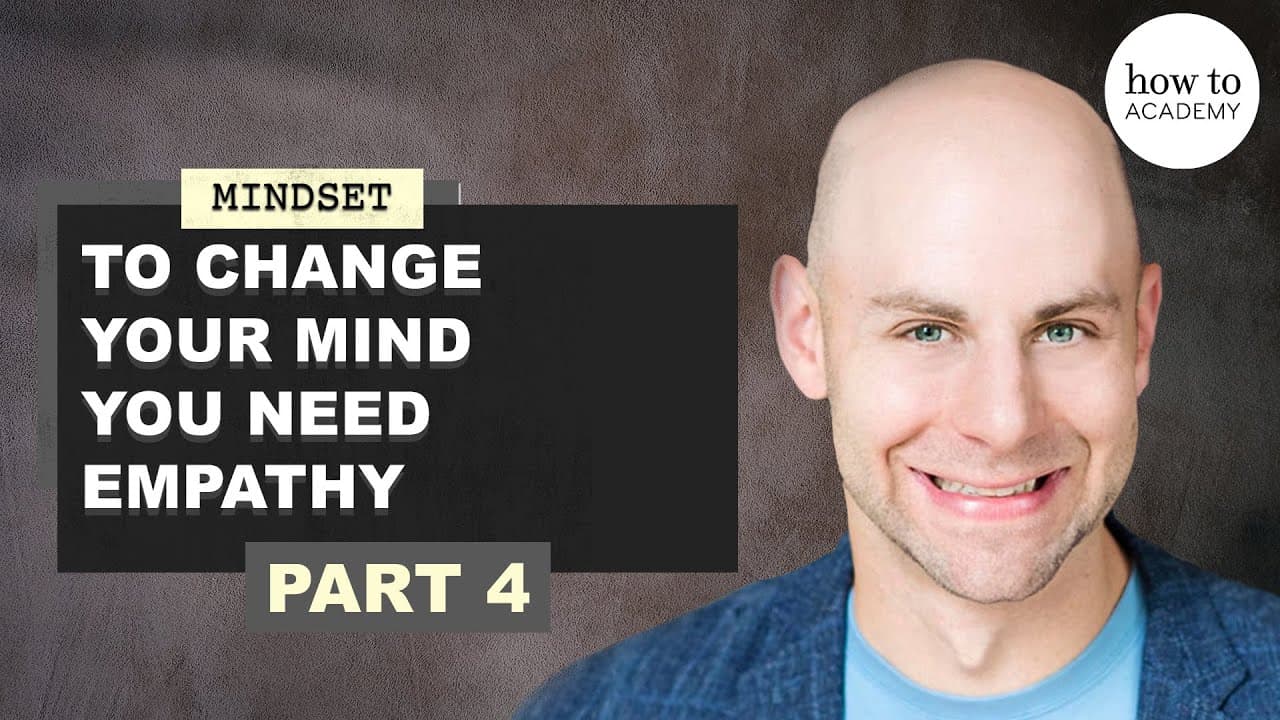
Empathy plays a critical role in productive rethinking, both in helping others and practicing self-compassion. Teaching children to keep an open mind involves admitting one's own mistakes. Key insights include the importance of curiosity, the potential dark side of technology, and the need for scientists to balance preaching and prosecuting.
Transcript
i i will say i'm going to try to do lightning style answers so we can get through a bunch of questions okay so i've got one for an another anonymous question maybe this links to vaccines i don't know it's up to you um what role does empathy have in productive rethinking right i think it's it's critical to helping other people do their rethinking an... Read More
Key Insights
- 🤳 Practicing self-compassion and distancing oneself from past mistakes facilitates productive rethinking and growth.
- 🤗 Admitting personal fallibility to children fosters an open-minded mindset.
- 🍳 Technology's advantages and disadvantages depend on how it is used, and breaking out of echo chambers is crucial for personal growth.
- 🥌 Thoughtful criticism can be effective without adopting a prosecutorial tone.
- 🤝 Mental time travel and forecasting help in dealing with uncertainty and approaching issues with a lifelong learning mindset.
- 🤗 The pandemic emphasizes the importance of open-mindedness and learning from past flawed beliefs.
- 🌍 Curiosity is a powerful tool for approaching the world, bringing intellectual integrity to discussions, and escaping echo chambers.
- 🪛 Balancing preaching and prosecuting in scientific communication is essential, promoting a data-driven, respectful approach to critique.
Install to Summarize YouTube Videos and Get Transcripts
Explore YouTube Video Summarizer or Get YouTube Transcript Extractor
Questions & Answers
Q: What role does empathy have in productive rethinking?
Empathy is critical in both helping others engage in rethinking and practicing self-compassion for our own past mistakes. By understanding others' perspectives, we can better challenge our beliefs and foster curiosity.
Q: How do you teach a child to keep an open mind?
One effective strategy is to share personal experiences of times when you were wrong and admit mistakes. By modeling self-reflection and embracing evolving knowledge, children can develop an open-minded mindset.
Q: What keeps you up at night?
Adam Grant expresses concerns about people who question mainstream media and scientific establishments, moving further away from evidence and accuracy. This trend contributes to major problems in the world.
Q: What keeps you hopeful?
Grant finds hope in the curiosity and hunger to learn that he consistently observes in students. Their drive to address problems and make a difference inspires a positive outlook for the future.
Summary & Key Takeaways
-
Empathy is essential for productive rethinking, helping others in their reevaluation process and promoting self-compassion in our own.
-
Teaching children to keep an open mind involves admitting our own mistakes and demonstrating the evolution of knowledge over time.
-
Technology has both advantages and disadvantages, and it is crucial to learn how to use tools wisely and break out of echo chambers.
Read in Other Languages (beta)
Share This Summary 📚
Summarize YouTube Videos and Get Video Transcripts with 1-Click
Try YouTube Summary with ChatGPT & Claude or YouTube Transcript Generator
Explore More Summaries from How To Academy Mindset 📚






Summarize YouTube Videos and Get Video Transcripts with 1-Click
Try YouTube Summary with ChatGPT & Claude or YouTube Transcript Generator