The Importance of the Galo de Barcelos to the Portuguese - Listening Exercise
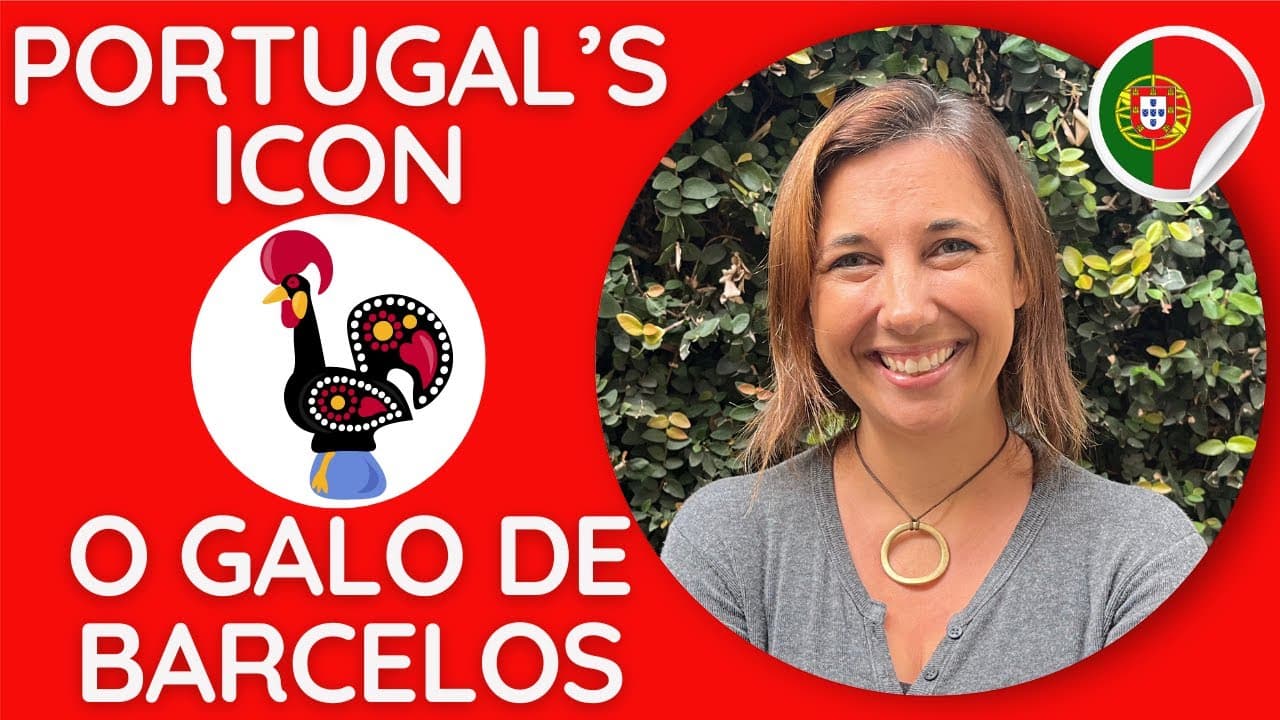
TL;DR
The Galo de Barcelos is a key symbol in Portuguese culture.
Transcript
Hello everybody! I'm back with another video entirely in Portuguese. Today, we are going to talk about a very famous Portuguese symbol: the Rooster of Barcelos. We are going to talk about the legend and the importance it has in the Portuguese culture. Before starting, remember to subscribe to the channel to stay up to date with everything about Por... Read More
Key Insights
- The Galo de Barcelos is a hand-crafted clay rooster, traditionally painted black with colorful decorations, symbolizing Portuguese culture.
- The rooster gained popularity after being showcased at the Portuguese Popular Art Exhibition in 1935 in Geneva, Switzerland.
- António Ferro, a cultural leader during Salazar's regime, helped establish the rooster as a national symbol in the 1950s and 60s.
- The legend behind the rooster involves a miracle saving a pilgrim from execution, which led to its creation as a cultural artifact.
- Barcelos, a town in northern Portugal, is known for pottery and is the origin of the Galo de Barcelos.
- The rooster is a staple in Portuguese homes and a popular souvenir, symbolizing national identity and tradition.
- The Galo de Barcelos is also used as a symbol by the international restaurant chain Nando's, founded by a Portuguese man.
- In 2021, the rooster became a registered brand to protect local artisans and the tradition of handcrafting these iconic figures.
Install to Summarize YouTube Videos and Get Transcripts
Explore YouTube Video Summarizer or Get YouTube Transcript Extractor
Questions & Answers
Q: What is the Galo de Barcelos and why is it significant?
The Galo de Barcelos is a hand-crafted clay rooster, traditionally painted with vibrant colors. It is significant due to its cultural symbolism in Portugal, representing a miracle story from Barcelos. It has become an emblem of Portuguese identity, widely recognized and cherished both nationally and internationally.
Q: How did the Galo de Barcelos become popular?
The Galo de Barcelos gained popularity after being showcased at the Portuguese Popular Art Exhibition in Geneva in 1935. Its success was further cemented by António Ferro, who promoted it as a national symbol during the 1950s and 60s, making it an integral part of Portuguese culture and tourism.
Q: What legend is associated with the Galo de Barcelos?
The legend of the Galo de Barcelos involves a pilgrim accused of a crime he didn't commit. He claimed a roasted rooster would crow to prove his innocence. Miraculously, the rooster did crow, saving the pilgrim from execution. This story is central to the rooster's cultural significance in Portugal.
Q: Where does the Galo de Barcelos originate from?
The Galo de Barcelos originates from Barcelos, a town in northern Portugal known for its pottery. This town is where the legend of the miraculous rooster took place, and it remains a key location for the production of these iconic clay figures, which are celebrated in local fairs and markets.
Q: How is the Galo de Barcelos used internationally?
Internationally, the Galo de Barcelos is used as a symbol by Nando's, a restaurant chain founded by Portuguese entrepreneur Fernando Duarte. It is also featured in Chinese media, such as the cartoon series 'Panda and the Rooster,' highlighting its global cultural reach and recognition.
Q: What measures have been taken to protect the Galo de Barcelos tradition?
To protect the tradition and craftsmanship of the Galo de Barcelos, it was registered as a brand in 2021. This registration aims to safeguard the cultural heritage and ensure that the roosters are made and painted by hand, preserving the authenticity of this iconic Portuguese symbol.
Q: What role did António Ferro play in the Galo de Barcelos' history?
António Ferro, a cultural leader during Salazar's regime, played a crucial role in promoting the Galo de Barcelos as a national symbol in the 1950s and 60s. His efforts helped to establish the rooster as an emblem of Portuguese identity, contributing significantly to its widespread recognition and popularity.
Q: How is the Galo de Barcelos represented in Portuguese homes and tourism?
In Portuguese homes, the Galo de Barcelos is a common decorative item, symbolizing national pride and tradition. It is also a popular souvenir for tourists, available in various shapes and colors across Portugal. Its presence in homes and tourism highlights its status as a cherished cultural icon.
Summary & Key Takeaways
-
The Galo de Barcelos is a significant cultural symbol in Portugal, originating from a legend in the town of Barcelos. It represents a miracle involving a pilgrim and a rooster, and has become a staple in Portuguese homes, symbolizing national identity and tradition.
-
The rooster was first popularized internationally at the Portuguese Popular Art Exhibition in 1935. António Ferro played a crucial role in establishing it as a national symbol during the 1950s and 60s, further solidifying its importance in Portuguese culture.
-
Today, the Galo de Barcelos is a registered brand to protect its traditional craftsmanship. It is also used as a symbol by the Nando's restaurant chain and has been featured in international media, showcasing its global cultural significance.
Read in Other Languages (beta)
Share This Summary 📚
Summarize YouTube Videos and Get Video Transcripts with 1-Click
Try YouTube Summary with ChatGPT & Claude or YouTube Transcript Generator
Explore More Summaries from Learn European Portuguese Online 📚




Summarize YouTube Videos and Get Video Transcripts with 1-Click
Try YouTube Summary with ChatGPT & Claude or YouTube Transcript Generator