Indian Prime Minister Narendra Modi on India’s Economy and U.S.-India Relations
TL;DR
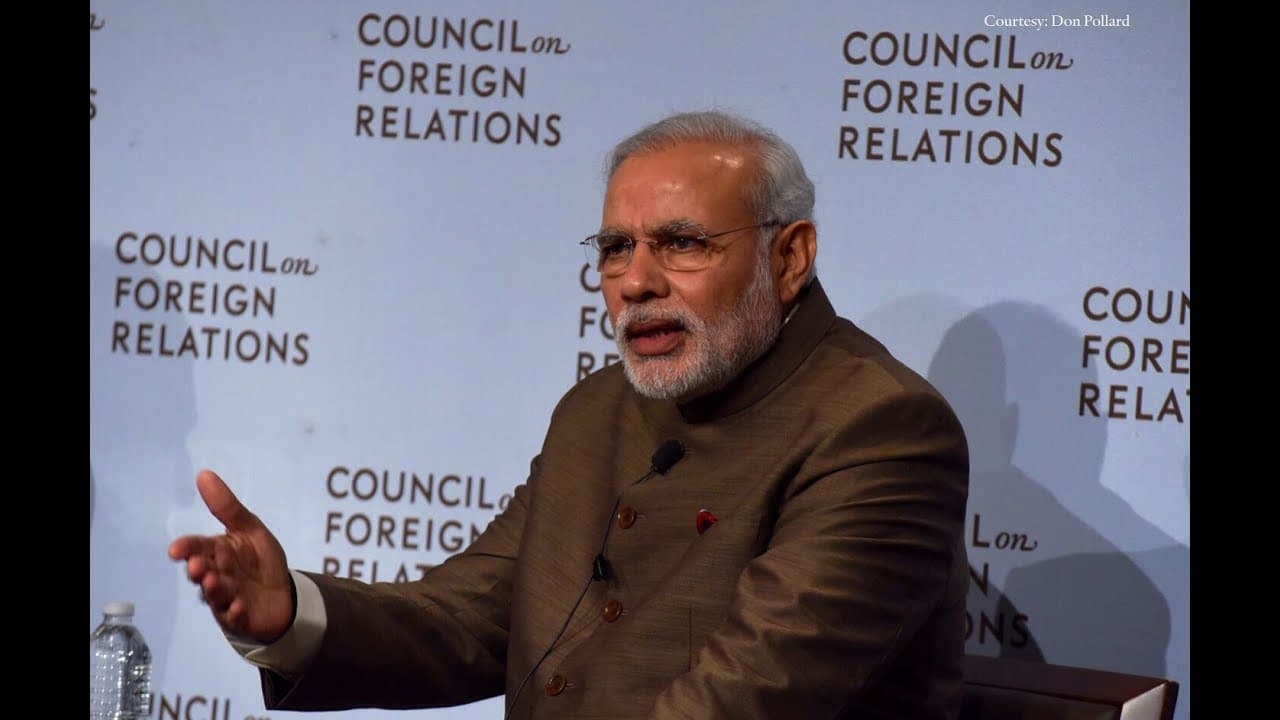
Modi discusses India's economic growth and U.S.-India relations.
Transcript
HAASS: Welcome to the Council on Foreign Relations. I am Richard Haass, president of CFR, and I'm delighted today to welcome and introduce a man who needs little introduction, his excellency, Narendra Modi, prime minister of India. The prime minister, as you all know and as you've seen in our media, has taken New York City by storm. Madison Square ... Read More
Key Insights
- Modi emphasizes the importance of good governance and economic development, focusing on agriculture, manufacturing, and the service sector to balance India's economy.
- India is committed to the WTO trade facilitation agreement but insists on simultaneous progress on food security to protect its large population of impoverished citizens.
- India's recent election marked a historic shift, with Modi's party winning an absolute majority for the first time in thirty years, reflecting a desire for change among the electorate.
- Modi highlights India's demographic advantage, with 65% of the population under 35, and the potential for this youth to drive economic growth and innovation.
- Modi stresses the need for a cooperative approach to global challenges, including terrorism and climate change, emphasizing India's philosophy of seeing the world as a family.
- The Prime Minister advocates for increased foreign direct investment, particularly in India's railway system, to spur economic development.
- Modi underscores the importance of India's relationship with neighboring countries and regional cooperation through initiatives like the SAARC satellite project.
- India's approach to foreign policy is evolving from nonalignment to one of interdependence, recognizing the interconnected nature of the modern world.
Install to Summarize YouTube Videos and Get Transcripts
Explore YouTube Video Summarizer or Get YouTube Transcript Extractor
Questions & Answers
Q: What is Modi's vision for India's economic growth?
Modi envisions a balanced economic growth strategy that focuses on agriculture, manufacturing, and the service sector. He aims to create a stable economic environment by ensuring each sector contributes equally to the economy. His government is committed to good governance, transparency, and efficiency to drive economic progress.
Q: How does Modi view India's role in the WTO trade facilitation agreement?
Modi supports the WTO trade facilitation agreement but insists that it must be accompanied by progress on food security. He emphasizes the need to protect India's large population of impoverished citizens by ensuring food availability, arguing that trade and food security must advance together.
Q: What demographic advantages does Modi highlight for India?
Modi highlights that 65% of India's population is under the age of 35, presenting a significant demographic advantage. This young population is seen as a potential driver for economic growth and innovation, with the ability to propel India forward in the global economy.
Q: How does Modi describe India's foreign policy approach?
Modi describes India's foreign policy as evolving from nonalignment to one of interdependence, recognizing the interconnected nature of the modern world. He emphasizes the importance of regional cooperation and global partnerships to address common challenges like terrorism and climate change.
Q: What initiatives does Modi propose for regional cooperation?
Modi proposes initiatives like the SAARC satellite project to enhance regional cooperation. This project aims to provide benefits in areas like health, education, and weather forecasting to neighboring countries, fostering a spirit of collaboration and mutual development in the region.
Q: How does Modi plan to attract foreign direct investment in India?
Modi plans to attract foreign direct investment by improving infrastructure, particularly in the railway sector. He highlights the potential for significant economic development through private investment in railways, offering opportunities for international investors to participate in India's growth story.
Q: What is Modi's stance on terrorism?
Modi sees terrorism as a global threat that requires a united response from all countries. He emphasizes that terrorism cannot be categorized as 'good' or 'bad' and calls for a collective effort to combat it by transcending national borders, ideologies, and communal divisions.
Q: How does Modi view India's relationship with the United States?
Modi views the U.S.-India relationship as a partnership based on shared democratic values and mutual economic interests. He sees potential for collaboration on global issues, leveraging the strengths of both nations to contribute positively to the international community. He emphasizes respect for democracy and economic cooperation as key pillars of this partnership.
Summary & Key Takeaways
-
Prime Minister Narendra Modi discusses his vision for India's economic growth, focusing on balancing agriculture, manufacturing, and services to foster development. He emphasizes good governance and the need for transparency and efficiency in government operations.
-
Modi addresses India's stance on the WTO trade facilitation agreement, stressing the importance of food security for India's large population. He highlights India's demographic advantages and the potential for youth-driven economic innovation.
-
Modi outlines India's foreign policy approach, emphasizing regional cooperation and global interdependence. He advocates for a united front against terrorism and stresses the importance of India's relationship with the United States.
Read in Other Languages (beta)
Share This Summary 📚
Summarize YouTube Videos and Get Video Transcripts with 1-Click
Try YouTube Summary with ChatGPT & Claude or YouTube Transcript Generator
Explore More Summaries from Council on Foreign Relations 📚
Summarize YouTube Videos and Get Video Transcripts with 1-Click
Try YouTube Summary with ChatGPT & Claude or YouTube Transcript Generator