How to Use Shaping Techniques in Dog Training
TL;DR
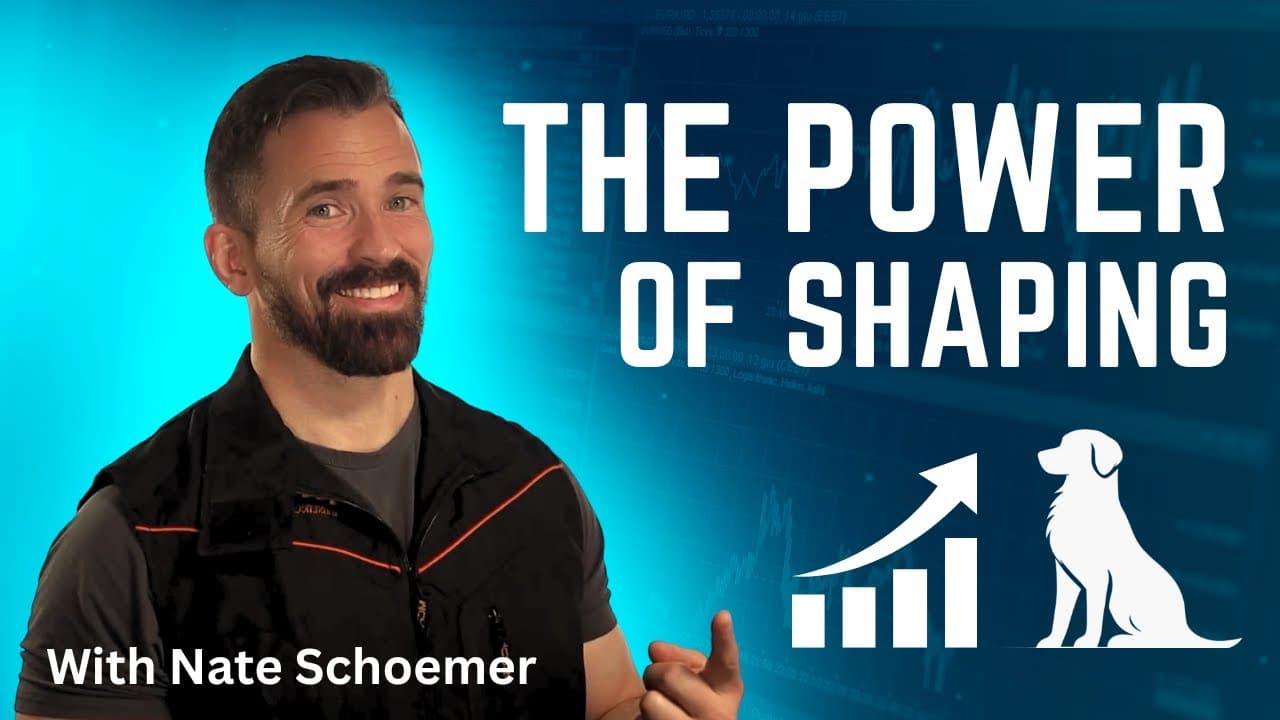
Shaping in dog training involves guiding a dog through successive approximations to achieve desired behaviors. Techniques like luring, assisted shaping, and targeting help dogs learn effectively. Understanding and applying these methods can enhance a dog's learning process, making training more precise and engaging.
Transcript
hey how's it going everyone i'm Nate Schmer certified professional and master dog trainer and you are watching my show on dog training today we are doing a live Q&A and we are going to be talking primarily about shaping and how it relates to dog training and how we can use it while we're training and working with our dogs there are lots of differen... Read More
Key Insights
- Shaping is a method in dog training that involves rewarding successive approximations toward a desired behavior.
- Luring is a common shaping technique where food or a treat guides a dog's position and behavior.
- Assisted shaping involves helping a dog achieve a behavior gradually, rewarding small steps toward the goal.
- Targeting uses objects or points as focus areas for dogs to reach, often used in advanced training.
- Free shaping allows dogs to offer behaviors without direct guidance, rewarding desired actions.
- Capturing involves rewarding a behavior the dog does naturally, reinforcing it for future repetition.
- Spatial pressure can be used to influence a dog’s movement or position during training.
- Consistency in cues and rewards is crucial for effective shaping, ensuring clear communication with the dog.
Install to Summarize YouTube Videos and Get Transcripts
Explore YouTube Video Summarizer or Get YouTube Transcript Extractor
Questions & Answers
Q: How does shaping work in dog training?
Shaping in dog training works by reinforcing successive approximations of a desired behavior. Trainers reward dogs for small steps toward the final behavior, gradually increasing the complexity of the task. This approach helps dogs learn complex behaviors by breaking them down into manageable parts, enhancing their understanding and engagement.
Q: What is luring in dog training?
Luring in dog training is a technique where a treat or food is used to guide a dog's actions. By moving the treat in specific ways, trainers can direct a dog's movement and position, helping them learn new behaviors. Luring is effective for teaching basic commands and building a foundation for more advanced training.
Q: What is the difference between free shaping and assisted shaping?
Free shaping involves allowing a dog to offer behaviors without direct guidance, rewarding desired actions as they occur. In contrast, assisted shaping involves helping a dog achieve a behavior gradually, rewarding small steps toward the goal. Both methods encourage learning but differ in the level of guidance provided to the dog.
Q: How can targeting be used in dog training?
Targeting in dog training involves teaching a dog to focus on or touch specific objects or points. This technique can be used to guide dogs through complex behaviors, such as agility courses or service tasks. By associating targets with rewards, dogs learn to follow cues precisely, enhancing their training responsiveness and accuracy.
Q: Why is consistency important in shaping?
Consistency in shaping is crucial as it ensures clear communication between the trainer and the dog. Consistent cues and rewards help dogs understand what is expected of them, reducing confusion and enhancing learning efficiency. Inconsistent signals can lead to misunderstandings, slowing down the training process and affecting the dog's responsiveness.
Q: What role does spatial pressure play in dog training?
Spatial pressure in dog training involves using body movements to influence a dog's position or movement. By stepping toward or away from a dog, trainers can encourage specific behaviors or adjustments. This technique complements other shaping methods, providing non-verbal cues that guide a dog's actions during training sessions.
Q: How can shaping improve a dog's learning experience?
Shaping improves a dog's learning experience by breaking down complex behaviors into manageable steps, making training more approachable and engaging. It encourages active participation and problem-solving, fostering a positive learning environment. By rewarding progress, shaping builds a dog's confidence and motivation, leading to more effective and enjoyable training sessions.
Q: What are the benefits of using shaping techniques?
Shaping techniques offer several benefits, including enhanced precision in training, increased engagement from the dog, and the ability to teach complex behaviors incrementally. These methods foster a deeper understanding and stronger bond between the trainer and the dog, making training sessions more productive and enjoyable for both parties.
Summary & Key Takeaways
-
Shaping in dog training is a technique that rewards dogs for successive steps toward a final behavior, enhancing learning efficiency. It includes methods like luring, where treats guide a dog's actions, and assisted shaping, which rewards gradual progress. Understanding these techniques can significantly improve training outcomes.
-
Luring involves using treats to guide dogs into desired positions, while assisted shaping rewards small steps toward a behavior. Targeting focuses on specific objects or points, and free shaping allows dogs to offer behaviors naturally. These methods collectively enhance precision and engagement in training.
-
Effective shaping requires consistency in cues and rewards, ensuring clear communication with the dog. Techniques like spatial pressure can further influence a dog's movement, making shaping a versatile tool in training both basic and complex behaviors. Mastering these methods can transform the training experience.
Read in Other Languages (beta)
Share This Summary 📚
Summarize YouTube Videos and Get Video Transcripts with 1-Click
Try YouTube Summary with ChatGPT & Claude or YouTube Transcript Generator
Explore More Summaries from Nate Schoemer 📚


Summarize YouTube Videos and Get Video Transcripts with 1-Click
Try YouTube Summary with ChatGPT & Claude or YouTube Transcript Generator