Stack and Queues
TL;DR
Learn how to implement and perform operations on stacks and queues using arrays and linked lists.
Transcript
hello friends today we will discuss about the element rigid structures known as tap into we will first discuss about the stacks using a D and then we will know that how we can implement the stack and queue using the link other than the fundamental methods to express and analyze the algorithms we need one last revision that is the disposition of the... Read More
Key Insights
- 🈸 Stacks and queues are important data structures used in various algorithms and applications.
- 😒 Stacks use a last-in, first-out (LIFO) order, while queues use a first-in, first-out (FIFO) order.
- 👂 Stacks can be implemented using arrays or linked lists, while queues can be implemented using linked lists or circular queues.
- 🧑💼 Implementation choices depend on the specific requirements and trade-offs in terms of efficiency and memory usage.
- 😑 Stacks are commonly used in recursive algorithms and expression evaluation.
- 👨🔬 Queues are often used in scheduling, buffering, and breadth-first search algorithms.
- 👂 With linked lists, insertion and deletion operations are more efficient in queues compared to stacks.
Install to Summarize YouTube Videos and Get Transcripts
Explore YouTube Video Summarizer or Get YouTube Transcript Extractor
Questions & Answers
Q: What is the main difference between a stack and a queue?
The main difference between a stack and a queue is the order in which elements are added and removed. In a stack, the last element added is the first one to be removed (LIFO), while in a queue, the first element added is the first one to be removed (FIFO).
Q: How are stacks implemented using arrays?
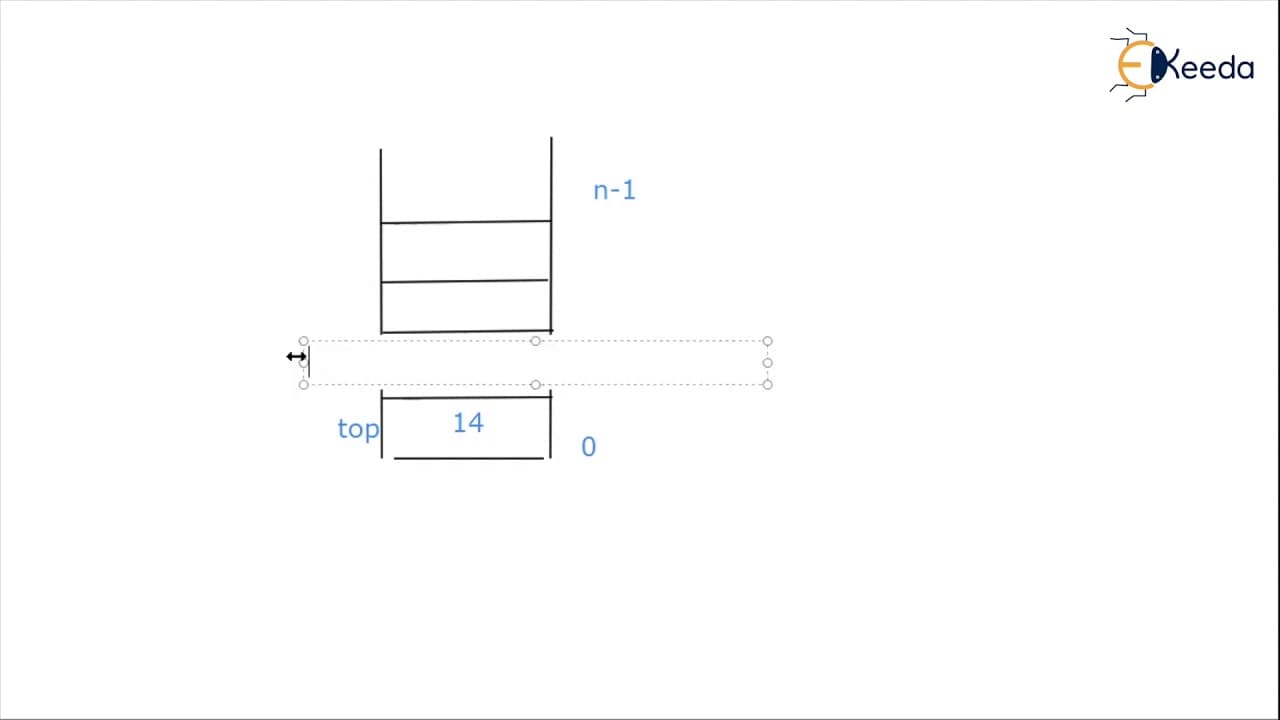
Stacks can be implemented using a linear array where the elements are stored from index 0 to n-1. The top of the stack is defined as the index at which elements can be added or removed. Addition is done by incrementing the top and inserting the element at the new top index. Deletion is done by decrementing the top.
Q: How are queues implemented using linked lists?
Queues can be implemented using a linked list where each node contains a data element and a link to the next node. The rear of the queue points to the last node, and the front points to the first node. Insertion is done by creating a new node and updating the rear pointer. Deletion is done by moving the front pointer to the next node.
Q: What is the advantage of using linked lists for implementing queues?
Using linked lists for implementing queues allows for efficient insertion and deletion operations. Unlike arrays, linked lists don't require shifting elements when adding or removing from the front or rear of the queue. This makes linked lists a better choice when the size of the queue is dynamic.
Summary & Key Takeaways
-
The video discusses the implementation of stacks and queues using arrays and linked lists.
-
The stack is a data structure with a last-in, first-out (LIFO) order, with operations such as addition (push) and deletion (pop).
-
The queue is a data structure with a first-in, first-out (FIFO) order, with operations such as insertion and deletion.
Read in Other Languages (beta)
Share This Summary 📚
Summarize YouTube Videos and Get Video Transcripts with 1-Click
Try YouTube Summary with ChatGPT & Claude or YouTube Transcript Generator
Explore More Summaries from Ekeeda 📚






Summarize YouTube Videos and Get Video Transcripts with 1-Click
Try YouTube Summary with ChatGPT & Claude or YouTube Transcript Generator