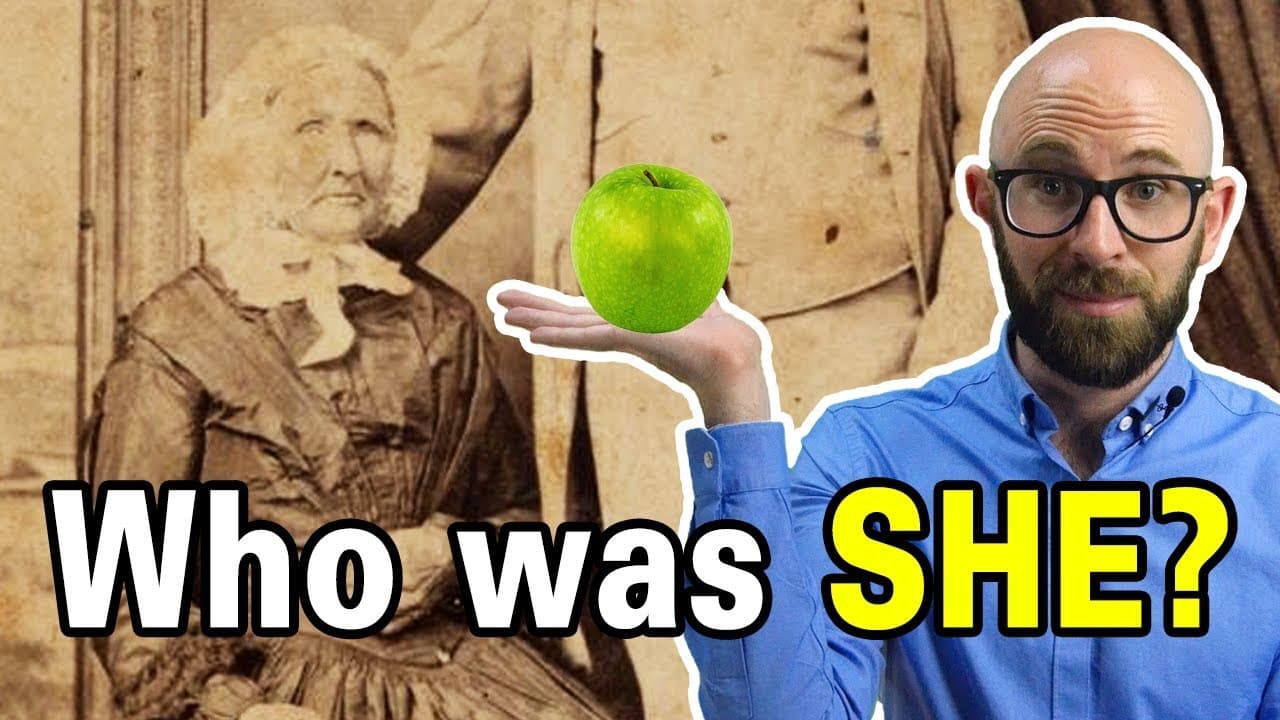
Who was the Granny Smith that Granny Smith Apples are Named After?
TL;DR
Granny Smith apples are named after Maria Ann Smith, an English-born orchardist who discovered and cultivated the namesake seedling in Australia. She found it beside a creek on her property in 1868, when she was 69, but died in 1870 before it gained commercial recognition. Read on to discover how local orchardists preserved her apple and helped it spread internationally.
Transcript
Maria Ann Sherwood was born into a farming family in England in 1799. Because of her parents’ work, she became interested in agriculture and began working on the farm as well. When she was just nineteen years old she married a man named Thomas Smith, who was also a farm labourer, and the pair managed a farm in Beckley for the next nineteen years, b... Read More
Key Insights
- 🧑🌾 Maria Ann Smith, a farmer's wife in 19th century Australia, discovered and cultivated the Granny Smith apple.
- 🇳🇿 The Granny Smith apple gained popularity in Australia and New Zealand before being introduced to other countries.
- 🍍 The apple was sustainably propagated by local orchardists until it gained commercial recognition.
- 🍍 The Granny Smith apple is believed to be a cross between the European Wild Apple and the domestic apple.
- 😉 The apple gained recognition for its cooking qualities and won a prize at an agricultural show in 1891.
- 👂 The apple was produced on a large scale in Bathurst, New South Wales, and listed as suitable for export by the Department of Agriculture.
- 🇺🇸 Granny Smith Apples were introduced to Great Britain in 1935 and the United States in 1972.
Install to Summarize YouTube Videos and Get Transcripts
Explore YouTube Video Summarizer or Get YouTube Transcript Extractor
Questions & Answers
Q: Who was the Granny Smith that Granny Smith apples are named after?
Granny Smith was Maria Ann Smith, born Maria Ann Sherwood into an English farming family in 1799. She became an orchardist in Australia and discovered and cultivated the seedling that produced her namesake apple.
Q: How did Maria Ann Smith discover the Granny Smith apple?
In 1868, the 69-year-old Maria Ann Smith found a seedling growing beside a creek on her property. She believed it had grown from French crab apples and began cultivating the new apple tree.
Q: What is the Granny Smith apple believed to be a cross between?
Maria Ann Smith thought the seedling came from French crab apples. It is now believed to be a cross between Malus sylvestris, the European Wild Apple, and M. domestica, the domestic apple.
Q: How were Granny Smith apples preserved after Maria Ann Smith died?
Local orchardists sustained and propagated the apples after Smith died in 1870. Edward Gallard developed a large crop from cuttings taken from the original tree and continued growing them annually until his death in 1914.
Q: When did the Granny Smith apple gain recognition?
Smith’s seedling won the prize for best cooking apple at the Castle Hill Agricultural and Horticultural Show in 1891. By 1895, Granny Smith apples were being produced on a large scale at the Government Experimental Station in Bathurst, New South Wales.
Q: Did Maria Ann Smith live to see her apple become commercially recognized?
No. Maria Ann Smith died in 1870, only two years after discovering the seedling, so she never saw the apple gain commercial recognition. Local orchardists kept propagating it until it became well-known.
Q: When were Granny Smith apples introduced to Great Britain?
Granny Smith apples were introduced to Great Britain in 1935. Before that, they had become widely popular in Australia and New Zealand and were listed as suitable for export by the Department of Agriculture.
Q: When and by whom were Granny Smith apples introduced to the United States?
Granny Smith apples were introduced to the United States in 1972. Grady Auvil of the Auvil Fruit Company introduced them.
Summary & Key Takeaways
-
Maria Ann Sherwood, a farmer's daughter from England, married and moved to Australia where she and her husband managed their own farm.
-
In 1868, Maria discovered a seedling apple tree on her property, which she cultivated and named Granny Smith.
-
The Granny Smith apple gained popularity in Australia and was later introduced to other countries, including the United States.
Read in Other Languages (beta)
Share This Summary 📚
Summarize YouTube Videos and Get Video Transcripts with 1-Click
Try YouTube Summary with ChatGPT & Claude or YouTube Transcript Generator
Explore More Summaries from Today I Found Out 📚





Summarize YouTube Videos and Get Video Transcripts with 1-Click
Try YouTube Summary with ChatGPT & Claude or YouTube Transcript Generator