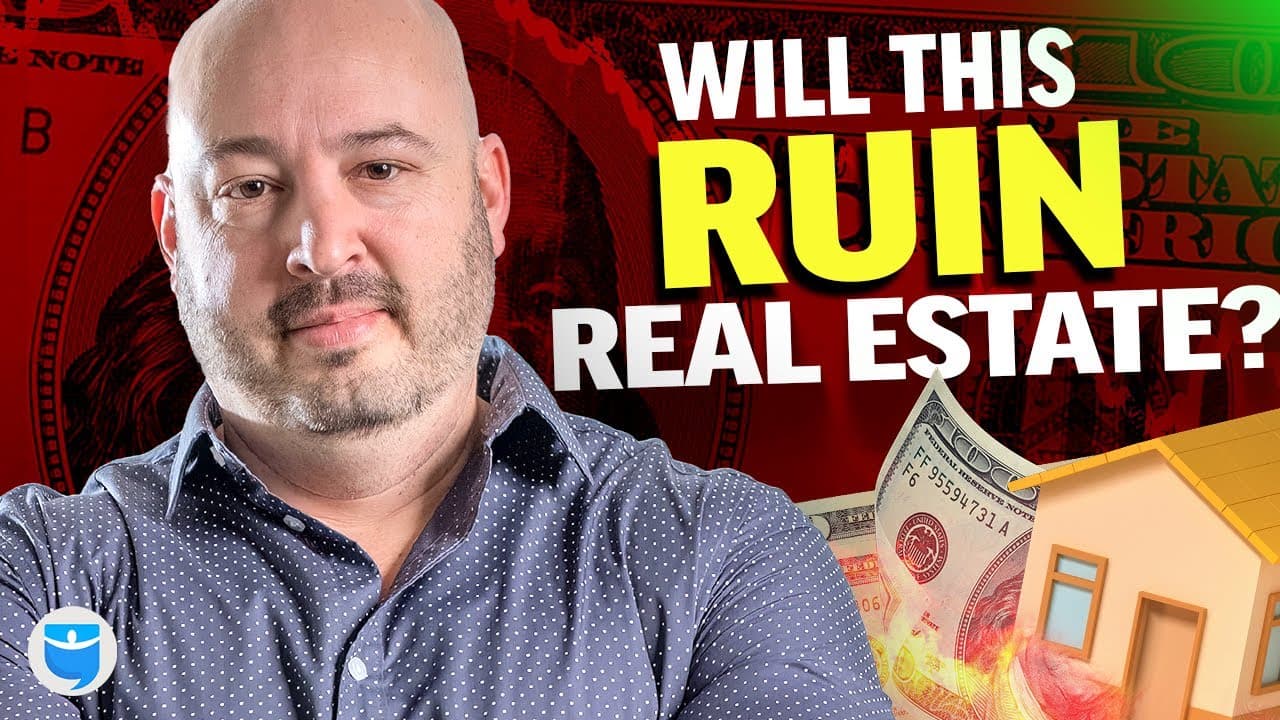
What the US Dollar’s Demise Could Mean for Real Estate
TL;DR
Explores how the US dollar's decline could affect real estate investments.
Transcript
this is the Bigger Pockets podcast episode 762. I don't know that I'd say it's apparent that the dollar will no longer be the world's Reserve currency but it is moving in that direction and I've been talking about this for years so we've known that inflation is going to be a problem since before covet especially during covet we've known that we've ... Read More
Key Insights
- The US dollar's potential decline as the world's reserve currency could lead to increased inflation and economic instability, affecting real estate markets.
- Real estate investors should consider the implications of high mortgage rates when choosing between flipping and the BRRRR method.
- Using a HELOC for real estate investments can be risky due to variable interest rates and potential for increased debt burden.
- When rental properties aren't cash flowing, investors should explore alternative strategies like converting to short-term rentals or re-evaluating market conditions.
- The importance of consulting experts in various fields, such as lending and tax, is emphasized to make informed investment decisions.
- Self-employed individuals face unique challenges in obtaining loans, requiring a thorough understanding of lending requirements and potential alternatives.
- Section 8 housing presents a viable investment strategy in certain markets, offering consistent income and favorable price-to-rent ratios.
- Investors should remain cautious and consider holding cash reserves due to current economic uncertainties and potential market fluctuations.
Install to Summarize YouTube Videos and Get Transcripts
Explore YouTube Video Summarizer or Get YouTube Transcript Extractor
Questions & Answers
Q: What are the potential impacts of the US dollar losing its reserve currency status?
If the US dollar loses its status as the world's reserve currency, it could lead to increased inflation as foreign-held dollars return to the US. This would further weaken the dollar and potentially cause economic instability, affecting various sectors, including real estate.
Q: Is it better to flip properties or use the BRRRR method in 2023?
The decision between flipping and using the BRRRR method depends on current high mortgage rates. Flipping might be more advantageous in the short term, while BRRRRing could offer long-term benefits if properties are acquired at favorable prices and interest rates stabilize.
Q: What are the risks of using a HELOC for real estate investments?
Using a HELOC for real estate investments carries risks due to variable interest rates, which can increase debt burdens. It's important to ensure that the investment yields returns that exceed the cost of borrowing to avoid financial strain.
Q: How can investors improve cash flow on non-performing rentals?
Investors can improve cash flow on non-performing rentals by exploring alternative rental strategies, such as converting to short-term or medium-term rentals, or by re-evaluating market conditions and adjusting rental rates or property management strategies.
Q: What should self-employed individuals know about obtaining loans?
Self-employed individuals face unique challenges in obtaining loans, such as needing to provide two years of tax returns to demonstrate income. It's important to understand different lending requirements and explore non-conforming loan products that may offer more flexibility.
Q: How can Section 8 housing be a viable investment strategy?
Section 8 housing can be a viable investment strategy in markets where government-subsidized rents are high relative to property costs. This can provide consistent income and favorable price-to-rent ratios, making it an attractive option for investors seeking stable returns.
Q: What factors should investors consider in the current economic climate?
Investors should consider maintaining cash reserves to prepare for potential economic uncertainties and market fluctuations. It's also important to stay informed about economic trends and adjust investment strategies accordingly to mitigate risks and capitalize on opportunities.
Q: How can investors leverage expert guidance in real estate investing?
Investors can leverage expert guidance by consulting professionals in lending, tax, and real estate markets to make informed decisions. Engaging with experts can help navigate complex investment scenarios and ensure compliance with regulations, ultimately enhancing investment outcomes.
Summary & Key Takeaways
-
The episode discusses the potential consequences of the US dollar losing its status as the world's reserve currency, emphasizing the impact on inflation and real estate investing. It highlights the importance of understanding economic trends to make informed investment decisions.
-
David Greene addresses common real estate investment questions, offering insights into flipping vs. BRRRRing, using HELOCs, and strategies for non-performing rentals. He emphasizes the need for expert guidance in areas like lending and tax planning.
-
Listeners are encouraged to explore various real estate-related opportunities, including Section 8 housing and medium-term rentals, while maintaining financial flexibility and preparing for potential economic changes.
Read in Other Languages (beta)
Share This Summary 📚
Summarize YouTube Videos and Get Video Transcripts with 1-Click
Try YouTube Summary with ChatGPT & Claude or YouTube Transcript Generator
Explore More Summaries from BiggerPockets 📚


Summarize YouTube Videos and Get Video Transcripts with 1-Click
Try YouTube Summary with ChatGPT & Claude or YouTube Transcript Generator