How to source academic journal articles
TL;DR
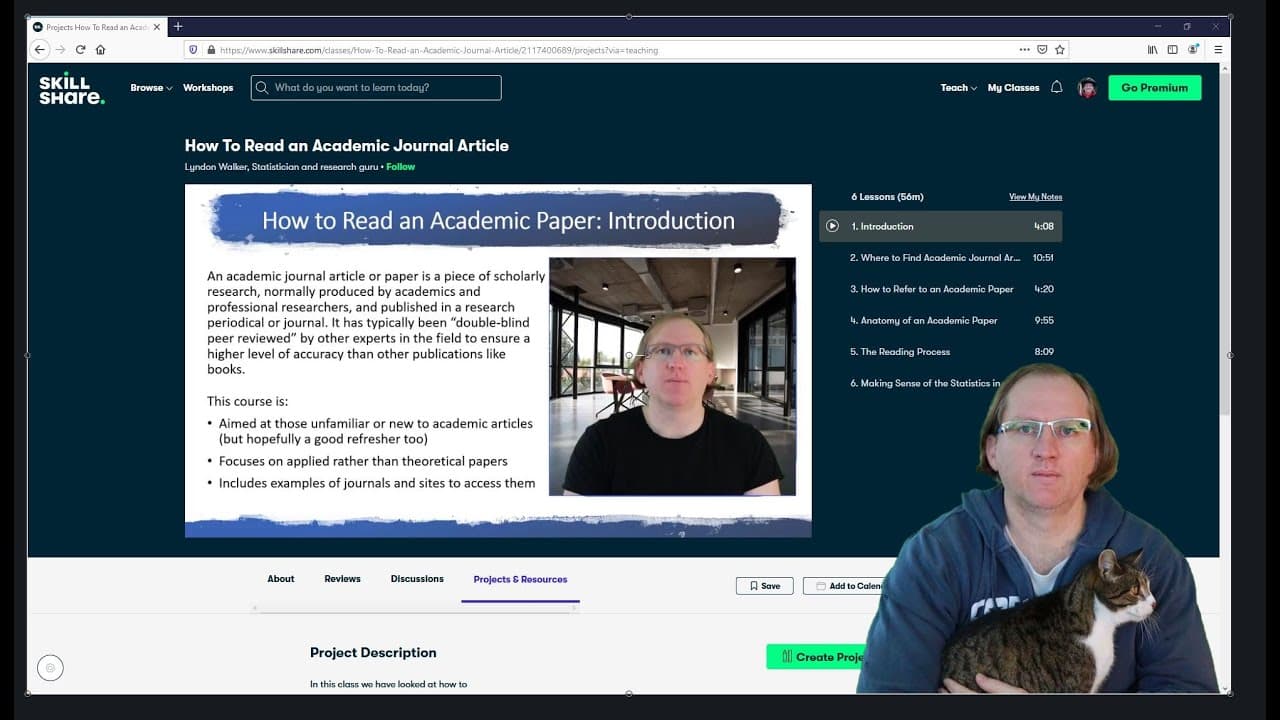
This video explains various sources for finding academic papers effectively.
Transcript
the following video is one of the chapters of my skillshare course on how to read an academic paper hopefully it is helpful to you here on youtube in isolation but if you click on the link below the video you can go to the skillshare course and watch all of the different sections okay so the first thing we need to do is find out where we can source... Read More
Key Insights
- 🖇️ Institutional databases linked to universities provide the most reliable access to academic papers but may be hard to access without affiliation.
- 👨🔬 Google Scholar is a useful alternative for broader searches, although quality may vary and some articles could be behind paywalls.
- 😷 PubMed provides free access to a variety of medical literature, making it an essential resource for health-related research.
- 🥶 JSTOR is a valuable resource for older articles, often containing significant research from past decades that remains relevant today.
- 🥺 Awareness of predatory journals is crucial as they exploit researchers for financial gain without offering rigorous peer review, potentially leading to unreliable publications.
- 💦 Directly contacting authors for access to paywalled articles can be an effective strategy; many are willing to share their work.
- 🤗 Evaluating open access journals requires attention to quality indicators, as some may not be credible or reputable.
Install to Summarize YouTube Videos and Get Transcripts
Explore YouTube Video Summarizer or Get YouTube Transcript Extractor
Questions & Answers
Q: What are the primary sources for finding academic papers as discussed in the video?
The video identifies several key sources for locating academic papers, including institutional databases, Google Scholar, PubMed for medical journals, and JSTOR. Each source provides unique access options, with institutional databases generally being the most comprehensive, while Google Scholar offers broader searches. PubMed specializes in medical literature, and JSTOR contains a mix of free and paywall content, including historic articles.
Q: How does Google Scholar differ from institutional databases?
Google Scholar aims to provide a broader search for academic content compared to institutional databases, which usually curate materials from recognized journals. While Google Scholar includes various articles, some may not be peer-reviewed and could reside behind paywalls. Institutional databases generally offer more rigorous and reliable academic research tailored for education institutions, making them preferable when available.
Q: What challenges might someone face when accessing academic articles outside of a university?
Individuals not affiliated with universities may face greater challenges in accessing academic articles due to paywalls that protect many reputable journals. This limitation could prevent them from obtaining the full text of articles. Alternatives like Google Scholar or platforms for open access might provide some articles, but the quality and accessibility can be inconsistent.
Q: What are predatory journals, and why should researchers be cautious about them?
Predatory journals are low-quality publication venues that often solicit articles from researchers for a fee without providing rigorous peer review. Researchers should be cautious as these journals can damage their credibility. The video advises evaluating journal quality by checking for red flags such as spelling errors on the website and the presence of paywalls, which may indicate a predatory approach.
Q: How can researchers ensure they are reading high-quality academic papers?
Ensuring the quality of academic papers involves researching the journal's reputation and using citation metrics like impact factors and citation indices, which indicate how often articles are referenced. Established journals, such as The Lancet or British Medical Journal, typically symbolize high quality. Newer journals may be harder to assess, requiring careful inspection of their website and content quality.
Q: What strategies can researchers use to access paywalled articles?
Researchers can directly contact the authors of paywalled articles to request copies. Most authors appreciate interest in their work and may share draft versions or pre-prints if the articles cannot be accessed through standard channels. This strategy can provide valuable articles that would otherwise remain unavailable without institutional access.
Q: Why is it important to evaluate open access journals?
Evaluating open access journals is crucial because while they provide free access to research, many are low-quality. Researchers need to confirm these journals' credibility by reviewing their website for professionalism, checking for editorial boards, and verifying that their articles undergo genuine peer review, as low-quality journals often do not maintain these standards.
Q: What role do citation indices and impact factors play in assessing journal quality?
Citation indices and impact factors serve as metrics to evaluate the quality of academic journals based on how often their articles are cited in other literature. Journals with higher citation rates generally indicate broader acceptance and recognition within the academic community. However, these metrics can be less informative for new journals that might not have amassed sufficient citations yet.
Summary & Key Takeaways
-
The video outlines multiple sources for accessing academic papers, highlighting institutional databases, Google Scholar, PubMed, and JSTOR, each with unique advantages and limitations.
-
It discusses the importance of assessing journal quality, reinforcing the concept of predatory journals, and suggesting tools like citation indices to evaluate credibility.
-
A practical tip is provided for accessing paywalled articles by directly contacting authors, emphasizing that many are willing to share their work with interested readers.
Read in Other Languages (beta)
Share This Summary 📚
Summarize YouTube Videos and Get Video Transcripts with 1-Click
Try YouTube Summary with ChatGPT & Claude or YouTube Transcript Generator
Explore More Summaries from Dr Lyndon Walker 📚
Summarize YouTube Videos and Get Video Transcripts with 1-Click
Try YouTube Summary with ChatGPT & Claude or YouTube Transcript Generator