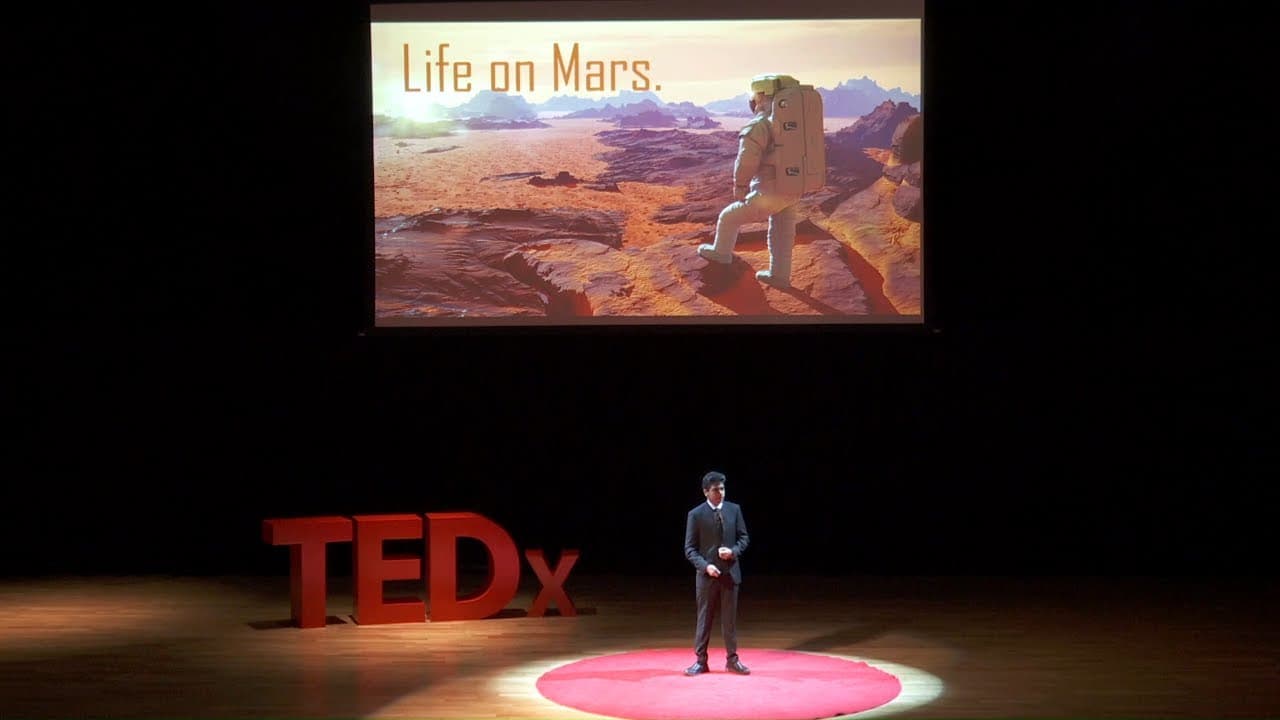
Destiny Among the Stars: Humanity’s Future in Space | Garv Lamba | TEDxGEMSWellingtonAcademyAlKhail
TL;DR
The future of space exploration holds opportunities for abundant resources, knowledge expansion, economic growth, and a backup plan for human survival.
Transcript
foreign throughout our history humans have had one trait that has defined them over all others and that's our insatiable desire to explore we've always searched for new places to conquer and colonize from the earliest cavemen who ventured out and searched for food and shelter to the sailors who sailed across oceans and carved out new territories on... Read More
Key Insights
- 👾 Humans have an insatiable desire to explore, and space exploration is the next frontier of exploration.
- 👾 The cosmic perspective gained from space exploration humbles us and shows our potential for growth.
- 👾 Technological progress has enabled us to harness solar energy and mine resources from space.
- 🪐 Colonizing other planets can shift our mindset from scarcity to abundance and provide a backup plan for humanity.
- 👾 Space exploration expands our knowledge, creates economic opportunities, and serves as a backup plan.
- 👶 Mars offers resources and the potential for various industries and a new society.
- 👾 Learning from past mistakes is crucial for successful human presence in space.
- 🤯 The involvement of creative minds is essential for shaping the social and cultural aspects of future human societies in space.
Install to Summarize YouTube Videos and Get Transcripts
Explore YouTube Video Summarizer or Get YouTube Transcript Extractor
Questions & Answers
Q: How has space exploration progressed technologically?
Space exploration has seen significant advancements, such as the incredible processing power of modern devices compared to the computers used during the moon landing. Solar energy is harnessed in projects like the International Space Station and Martian rovers. Companies are also working on mining asteroids for valuable resources.
Q: Why is colonizing other planets important?
Colonizing other planets offers the potential for a shift from scarcity to abundance mindset. It provides access to unlimited resources, eliminating starvation and homelessness. Additionally, it serves as a backup plan in case of cosmic disasters and offers economic opportunities.
Q: Why should we invest time and money in space exploration when we have problems on Earth?
Space exploration expands our knowledge of the universe, creates economic opportunities, and ensures our survival in the face of threats like climate change and natural disasters. It serves as a backup plan and offers potential solutions to global challenges.
Q: Why is Mars likely to be the first planet we colonize?
Mars has resources such as water and minerals, making it a viable option for human presence. It presents opportunities for industries like ecological preserves, agriculture, and tourism. It also allows us to learn from past mistakes and create a better future society.
Summary & Key Takeaways
-
Humans have always had a desire to explore new territories, and now we are on the verge of venturing beyond our own planet.
-
Space exploration has advanced rapidly, leading to technological progress, such as the ability to harness solar energy and mine resources from asteroids.
-
The benefits of colonizing other planets include shifting to an abundance mindset, expanding knowledge, creating economic opportunities, and providing a backup plan for potential cosmic disasters.
Read in Other Languages (beta)
Share This Summary 📚
Summarize YouTube Videos and Get Video Transcripts with 1-Click
Try YouTube Summary with ChatGPT & Claude or YouTube Transcript Generator
Explore More Summaries from TEDx Talks 📚






Summarize YouTube Videos and Get Video Transcripts with 1-Click
Try YouTube Summary with ChatGPT & Claude or YouTube Transcript Generator