How Do Open-Ended Materials Enhance Learning in Early Childhood?
TL;DR
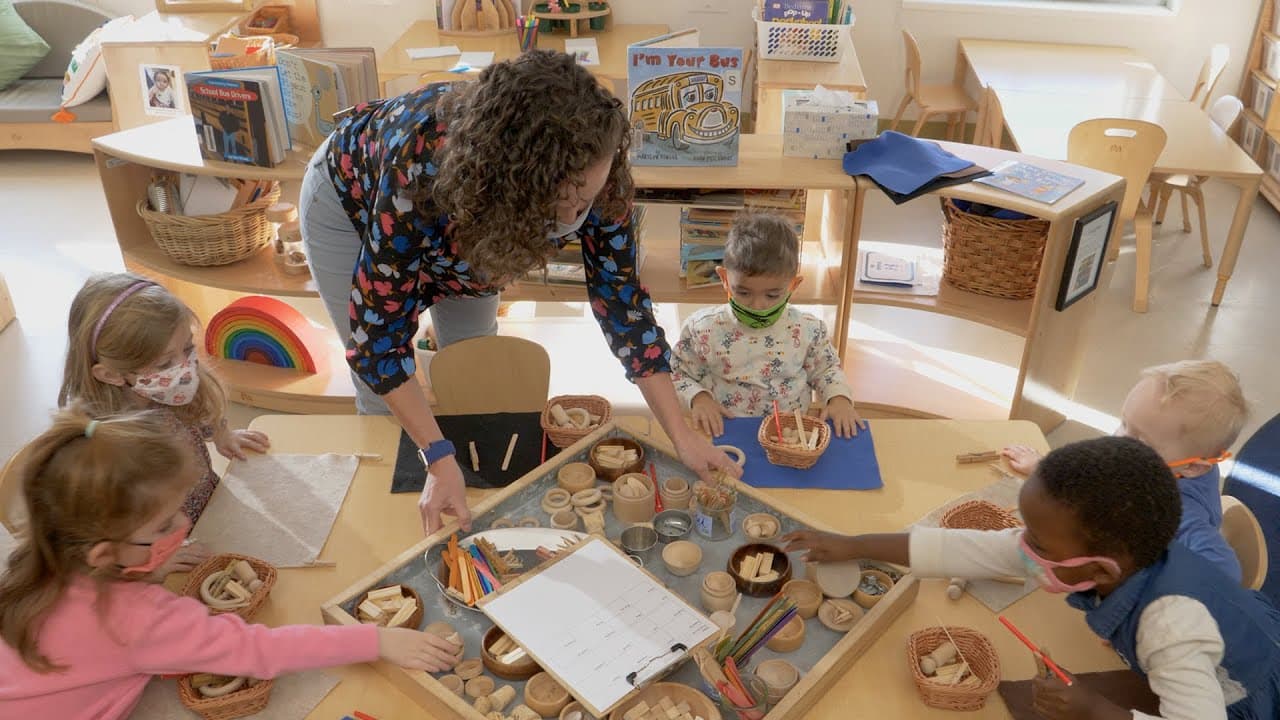
Open-ended materials in early childhood education allow children to learn at their own pace, fostering creativity and problem-solving. These materials encourage exploration without a single correct usage, supporting differentiated instruction and meaningful learning experiences. Teachers facilitate this process, helping children form genuine relationships and expand their vocabulary through engaging activities.
Transcript
Teacher: Okay, ready. Put your hands in the air so I don't mush anyone's fingers. These are more ideas of things you could use in your design. >>Student: This is a bowl and this is a-- These are big ones. >>Irene Garneau: In early childhood, teachers are constantly differentiating for children depending on where they are. >>Student: That one is m... Read More
Key Insights
- 🤗 Open-ended materials support differentiated instruction in early childhood education, allowing teachers to meet children where they are.
- 🤗 Using open-ended materials enables children to learn at their own pace and prevents both frustration and boredom.
- 💍 Natural materials provide engaging learning experiences and support vocabulary development.
- 👶 The role of teachers as facilitators is essential in guiding children's exploration and understanding.
- 🤗 Open-ended materials promote imaginative play, problem-solving, and critical thinking skills in young children.
- 🤗 Social interactions and the formation of genuine relationships emerge when children engage with open-ended materials.
- 🤗 Incorporating open-ended materials in the classroom sparks creativity and supports individualized learning.
Install to Summarize YouTube Videos and Get Transcripts
Explore YouTube Video Summarizer or Get YouTube Transcript Extractor
Questions & Answers
Q: How do open-ended materials benefit early childhood learning?
Open-ended materials benefit early childhood learning by allowing children to explore and learn at their own pace, fostering imagination, creativity, and problem-solving skills.
Q: How can teachers facilitate using open-ended materials effectively?
Teachers act as facilitators, supporting children's exploration and understanding by asking thought-provoking questions, providing guidance, and creating a safe and stimulating learning environment.
Q: What is the importance of using natural materials in early childhood education?
Natural materials not only provide opportunities for exploration but also stimulate conversations, vocabulary development, and an appreciation for the natural world.
Q: How do open-ended materials promote social interactions among children?
Open-ended materials encourage children to observe and learn from each other, sparking conversations, sharing ideas, and building genuine relationships.
Summary & Key Takeaways
-
Open-ended materials enable teachers to differentiate instruction for children based on their individual abilities and interests.
-
These materials promote meaningful learning experiences for young children and allow them to access learning in a way that is relevant to them.
-
Open-ended materials do not have one correct way of being used, which encourages children to explore, imagine, and problem-solve.
Read in Other Languages (beta)
Share This Summary 📚
Summarize YouTube Videos and Get Video Transcripts with 1-Click
Try YouTube Summary with ChatGPT & Claude or YouTube Transcript Generator
Explore More Summaries from Edutopia 📚
Summarize YouTube Videos and Get Video Transcripts with 1-Click
Try YouTube Summary with ChatGPT & Claude or YouTube Transcript Generator