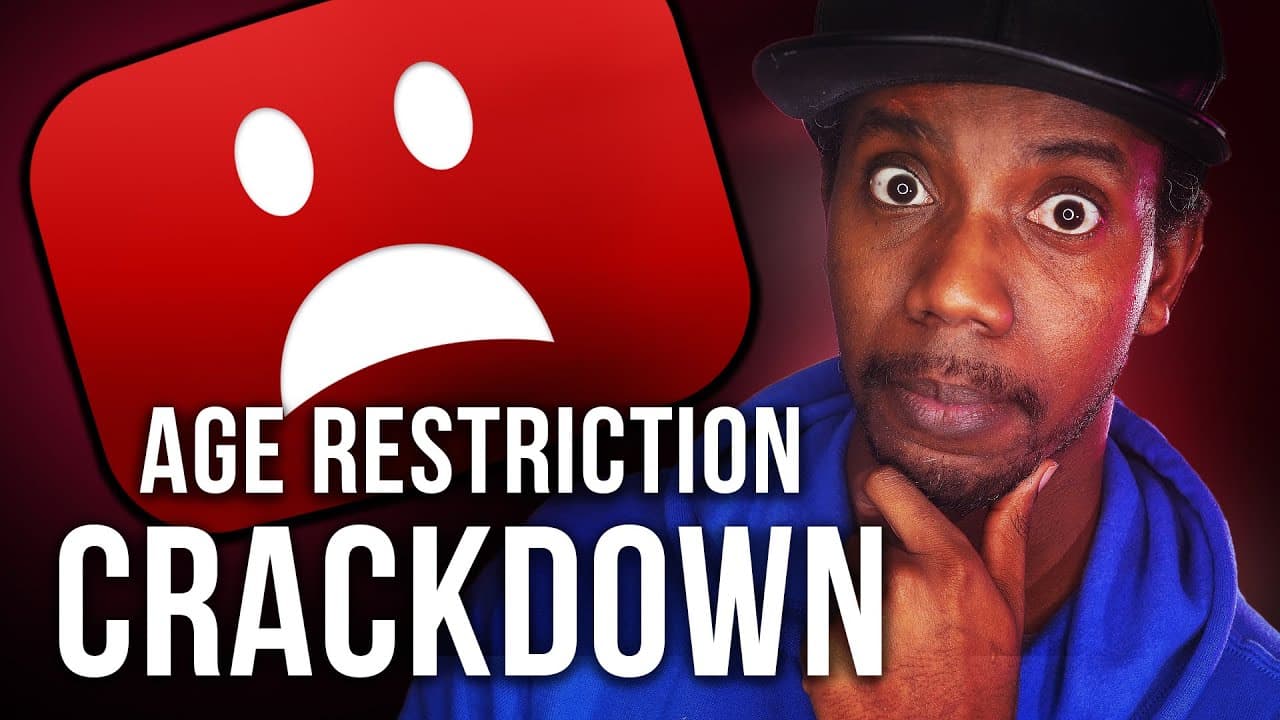
NEW YOUTUBE CRACKDOWN?! Increased Age Restrictions on Mature Videos
TL;DR
YouTube has updated its machine learning algorithms to better categorize and restrict mature content, leading to age restrictions that may impact content creators' views, monetization, and future of the platform.
Transcript
- So as of the making of this video in September 2020, YouTube has a new major change to the platform. Now, while this isn't necessarily a YouTube policy change, YouTube is expanding the way that its machine learning, its algorithm actually categorizes mature content on YouTube. And so this is going to involve age restrictions for mature content th... Read More
Key Insights
- 🤕 Age-restricted content on YouTube is typically associated with extreme profanity, nudity, suggestive themes, and realistic violence.
- 🤕 Age restrictions lead to decreased views and distribution, impacting content creators' visibility and potential revenue.
- 🛄 YouTube's policies aim to comply with regulations, which may result in more platform restrictions in the future.
- 🤕 The appeals process for age restrictions involves human reviewers, but transparency and accountability could be improved with reviewer identification.
- 🍉 Diversifying income streams and adapting to evolving platform regulations may be crucial for content creators' long-term survival.
- 👾 Despite potential limitations, platforms will still have space for edgy and borderline content, although profitability may decrease.
Install to Summarize YouTube Videos and Get Transcripts
Explore YouTube Video Summarizer or Get YouTube Transcript Extractor
Questions & Answers
Q: How does age-restricted content affect video performance for content creators?
Age-restricted content receives fewer views and distribution, resulting in decreased visibility and potential engagement from the under-18 audience, which forms a significant portion of YouTube viewership.
Q: How does YouTube's new policy impact monetization for content creators?
Age-restricted videos are likely to receive limited or no ads, leading to demonetization for content creators and potential financial strain, especially for those heavily reliant on YouTube ad revenue.
Q: Can content creators appeal age restrictions placed on their videos?
Yes, content creators can appeal age restrictions, as YouTube has stated that appeals will be reviewed by human reviewers and not algorithms. However, it is important to note that the appeals process still relies on individual judgment and may not guarantee a different outcome.
Q: How is age-restricted content different from COPPA regulations?
Age-restricted content on YouTube is limited to individuals under 18, while COPPA focuses on children under 13. Additionally, age-restricted content is not restricted from viewing but may have limited features, unlike COPPA-regulated content.
Summary & Key Takeaways
-
YouTube has implemented changes to how it categorizes and restricts mature content on its platform, resulting in age restrictions for content suitable for an audience over 18.
-
Content that falls under extreme profanity, nudity, suggestive topics, realistic violence, or overly sexual themes may be age-restricted and receive fewer views and distribution.
-
Content creators are concerned about the impact on their video performance, monetization, the appeals process, differences from COPPA, and the future of YouTube.
Read in Other Languages (beta)
Share This Summary 📚
Summarize YouTube Videos and Get Video Transcripts with 1-Click
Try YouTube Summary with ChatGPT & Claude or YouTube Transcript Generator
Explore More Summaries from Roberto Blake 📚





Summarize YouTube Videos and Get Video Transcripts with 1-Click
Try YouTube Summary with ChatGPT & Claude or YouTube Transcript Generator