Motion Graphs (1 of 8) Position vs. Time Graph Part 1, Constant Velocity
TL;DR
This video explains how to read position vs time graphs, including understanding slope, velocity, and direction of objects in motion.
Transcript
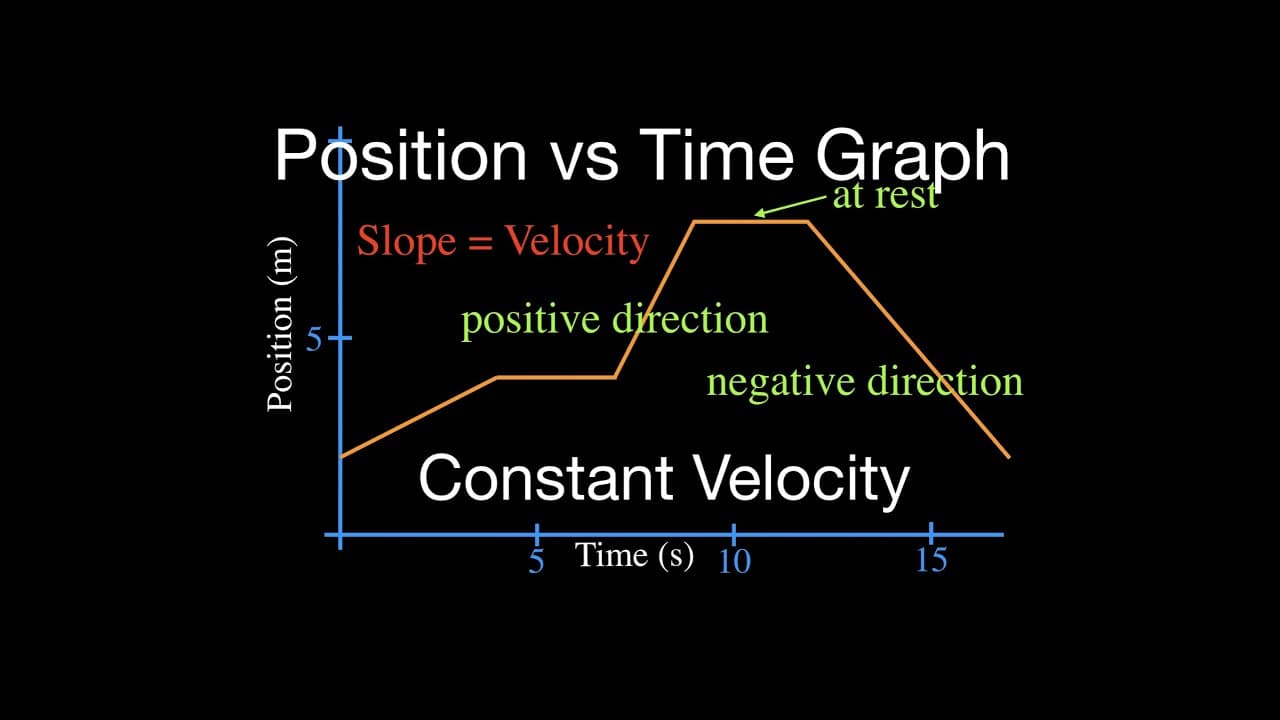
Okay in this video I'm going to go over some of the basics of reading the position vs time graph and we're going to show you how to on figure out what's going on in general by looking at the graph and also how to calculate some of the values that are presented on the graph. Alright so it is like I said up here this is the position versus time graph... Read More
Key Insights
- 💁 Position vs time graphs provide information about an object's motion in one dimension.
- 🫥 The slope of the line on the graph represents the velocity of the object.
- ❎ Positive slopes indicate positive velocity and negative slopes indicate negative velocity.
- 🤘 The sign of the velocity indicates the direction of the object's motion.
- 📈 Constant slopes on the graph indicate constant velocity.
- 🧘 Position vs time graphs can be analyzed quantitatively to calculate the velocity of an object.
- 📈 Steeper slopes on the graph correspond to greater velocities.
Install to Summarize YouTube Videos and Get Transcripts
Explore YouTube Video Summarizer or Get YouTube Transcript Extractor
Questions & Answers
Q: How can the position vs time graph be used to determine the velocity of an object?
The slope of the line on the graph represents the velocity, with positive slopes indicating positive velocity and negative slopes indicating negative velocity.
Q: What is the relationship between the slope and velocity on a position vs time graph?
The slope of the line is equal to the velocity of the object. Positive slopes correspond to positive velocities, while negative slopes correspond to negative velocities.
Q: How can the direction of an object's motion be determined from the position vs time graph?
The sign of the velocity (positive or negative) indicates the direction of the object's motion. Positive velocity corresponds to motion in the positive direction, while negative velocity corresponds to motion in the negative direction.
Q: What does a constant slope on the position vs time graph indicate about the velocity of the object?
A constant slope on the graph indicates that the velocity of the object is constant.
Summary & Key Takeaways
-
The position vs time graph represents motion in one dimension, with time on the x-axis and position on the y-axis.
-
The slope of the line on the graph represents the velocity of the object, with positive slopes indicating positive velocity.
-
The direction of the object's motion can be determined by the sign of the velocity, and whether it is constant or changing can be determined by the slope.
Read in Other Languages (beta)
Share This Summary 📚
Summarize YouTube Videos and Get Video Transcripts with 1-Click
Try YouTube Summary with ChatGPT & Claude or YouTube Transcript Generator
Explore More Summaries from Step by Step Science 📚

Summarize YouTube Videos and Get Video Transcripts with 1-Click
Try YouTube Summary with ChatGPT & Claude or YouTube Transcript Generator