Stanford Seminar - From Haptic Illusions to Beyond Real Interactions in Virtual Reality
TL;DR
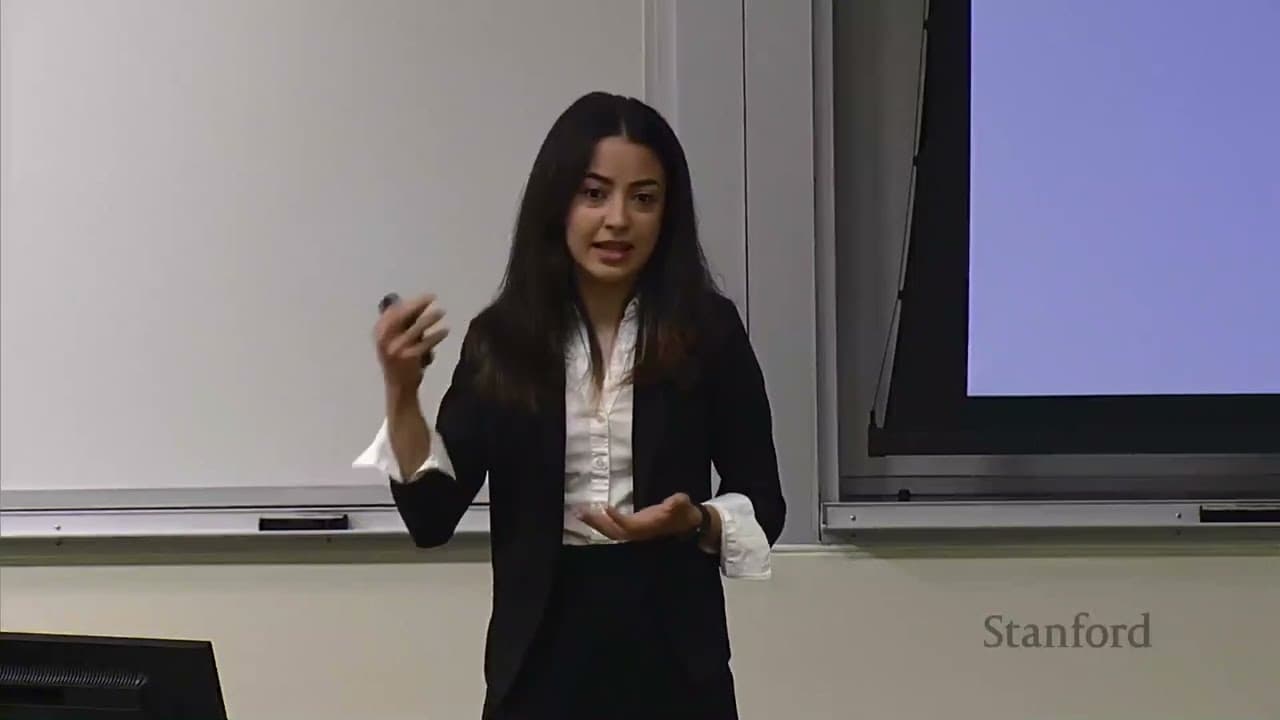
This analysis discusses the use of haptic illusions to improve haptic rendering in virtual reality (VR) and explores the concept of beyond real interactions that extend users' abilities in VR. It addresses challenges in accuracy, speed, and resolution of haptic devices and proposes a framework for understanding the perception and action in VR interactions.
Transcript
i'm really excited to be here today to talk to you about some of the work i've been doing during my phd which has been around virtual reality virtual reality or vr has been around for a long time but only in the past five to ten years has it really taken off all the advances in the graphics the field of view the tracking technology have now led us ... Read More
Key Insights
- 👨🔬 VR technology has advanced significantly, providing opportunities for research beyond gaming applications.
- 🐎 Haptic illusions, such as haptic retargeting, angle redirection, and scaling up, can improve the accuracy, speed, and resolution of haptic interactions in VR.
- 👤 Beyond real interactions, which transform users' movements, allow for extending users' abilities beyond the physical world but require careful consideration of sensory conflicts and user adaptation.
- 👨🔬 Understanding human perception and sensory motor control can guide the design and evaluation of VR interactions, but further research is needed to develop predictive models and adapt interactions to individual differences.
Install to Summarize YouTube Videos and Get Transcripts
Explore YouTube Video Summarizer or Get YouTube Transcript Extractor
Questions & Answers
Q: What are haptic illusions, and how do they improve haptic rendering in VR?
Haptic illusions involve manipulating sensory information to create the perception of improved haptic feedback. For example, in using drones for haptic interactions, researchers create the illusion of accurate positioning by offsetting the user's hand gradually. This makes the user believe they are interacting with a physical surface, even though the drone is not precisely positioned.
Q: How do researchers address the limitations of haptic devices, such as accuracy and speed?
Researchers use techniques like haptic retargeting, where predictive models estimate user intent and adjust the haptic feedback accordingly. By gradually offsetting the user's hand or controlling the speed of tabletop robots, they improve the perceived accuracy and speed of haptic interactions.
Q: Can haptic illusions also enhance the resolution of haptic rendering?
Yes, by applying illusions like angle redirection and scaling up on shape displays, researchers can make the rendered surfaces appear higher resolution and smoother. Angle redirection involves visually rendering a line at an angle while physically following a horizontal line, while scaling up manipulates the user's finger speed to create the illusion of more pins per area.
Q: How do beyond real interactions extend users' abilities in VR?
Beyond real interactions involve transforming users' movements in VR to go beyond what is possible in the physical world. For example, researchers have explored interactions where users become giants and can walk faster or amplify their steps' displacement for efficient locomotion. These interactions require considering the sensory conflicts between real and virtual information and carefully designing the transformations to avoid motion sickness.
Summary & Key Takeaways
-
Virtual reality (VR) has seen advancements in graphics, field of view, and tracking technology, leading to exciting research opportunities beyond gaming.
-
While visual experiences in VR are immersive, there is a gap in haptic rendering, limiting the realistic interaction with virtual objects.
-
Researchers have explored haptic illusions to enhance VR interactions, such as using drones for haptic feedback and applying illusions to tabletop robots and shape displays.
Read in Other Languages (beta)
Share This Summary 📚
Summarize YouTube Videos and Get Video Transcripts with 1-Click
Try YouTube Summary with ChatGPT & Claude or YouTube Transcript Generator
Explore More Summaries from Stanford Online 📚

Summarize YouTube Videos and Get Video Transcripts with 1-Click
Try YouTube Summary with ChatGPT & Claude or YouTube Transcript Generator