Products
Features
YouTube Video Summarizer
Summarize YouTube videos
Web & PDF Highlighter
Highlight web pages & PDFs
Chat with PDF
Ask any PDF questions with AI
Ask AI Clone
Chat with your highlights & memories
Audio Transcriber
Transcribe audio files to text
Glasp Reader
Read and highlight articles
Kindle Highlight Export
Export your Kindle highlights
Idea Hatch
Hatch ideas from your highlights
Integrations
Obsidian Plugin
Notion Integration
Pocket Integration
Instapaper Integration
Medium Integration
Readwise Integration
Snipd Integration
Hypothesis Integration
Apps & Extensions
Chrome Extension
Safari Extension
Edge Add-ons
Firefox Add-ons
iOS App
Android App
Discover
Discover
Ideas
Discover new ideas and insights
Articles
Curated articles and insights
Books
Book recommendations by great minds
Posts
Essays and notes from readers
Quotes
Inspiring quotes collection
Videos
Curated videos and summaries
Explore Glasp
Glasp Story
How we grew from 0 to 3 million users
Glasp Newsletter
Weekly insights and updates
Glasp Talk
Interview series with great minds
Glasp Blog
Latest news and articles
Glasp Use Cases
Learn how others use Glasp
Build & Support
Glasp API
Access Glasp's API for developers
MCP Connector
Connect Glasp to Claude & ChatGPT
Community
Glasp Reddit Community
Students
Student discount and benefits
FAQs
Frequently Asked Questions
AboutPricing
DashboardLog inSign up

What Were the Most Brutal Medieval Punishments?
October 22, 2017
by
Simple History
YouTube video player
What Were the Most Brutal Medieval Punishments?

TL;DR

Medieval punishments were notoriously brutal, designed to inflict severe pain and public humiliation on criminals. Methods included the pillory for shaming, the rack for stretching victims to dislocation, and the burning stake for execution, leading to horrific deaths. These punishments reflected a law system without fixed rules, prioritizing agony and terror.

Transcript

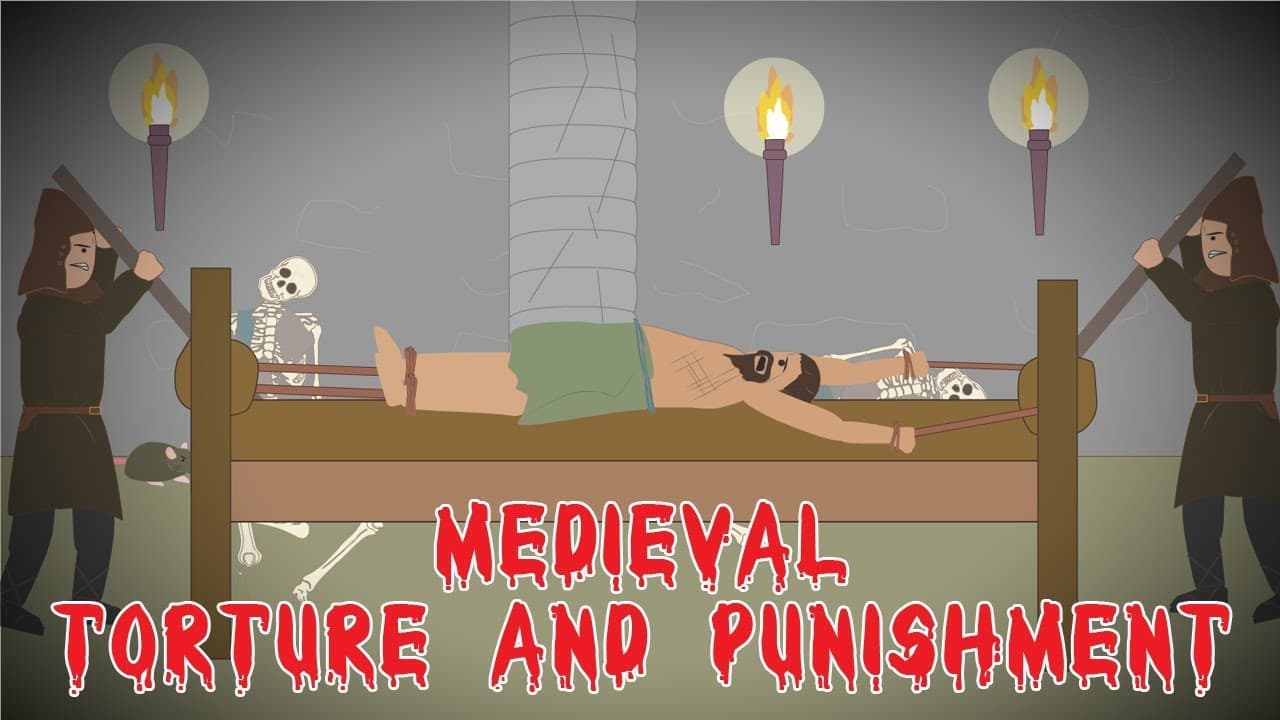
Medieval torture and punishment The medieval period saw brutal violent bloodthirsty Punishments for criminals from stealing to murder the law had no fixed rules Let's look at some of the methods and devices used to inflict agony to torture and punish the pillory The pillory was a form of public shaming and humiliation the prisoner would place their... Read More

Key Insights

  • 👻 Medieval punishment lacked fixed rules, allowing for brutal methods and devices to inflict agony.
  • 🇨🇫 Public shaming, such as the pillory, aimed to humiliate criminals and allow the public to mock and throw objects at them.
  • 🧑‍🦼 Torture methods like the rack, breaking wheel, and iron chair with spikes caused extreme pain and physical damage.
  • 🔥 Burning at the stake was a gruesome execution method for blasphemous thieves and witches.

Install to Summarize YouTube Videos and Get Transcripts

Explore YouTube Video Summarizer or Get YouTube Transcript Extractor

Questions & Answers

Q: What was the purpose of the pillory?

The pillory served as a form of public shaming and humiliation, with the trapped criminal subjected to mockery and object-throwing by passers-by.

Q: How did the rack torture victims?

The rack was used for interrogation, with the victim's limbs stretched to create excruciating pain, potentially causing dislocation of muscles and ligaments.

Q: How did the breaking wheel work?

The breaking wheel involved tying the victim's limbs to the spokes and revolving the wheel while hitting them with a hammer, resulting in mangled arms and legs and broken bones.

Q: How did burning at the stake execute criminals?

Burning at the stake was a horrific form of execution where the condemned would die from suffocation before the flames consumed their flesh, but the suffering could be prolonged if the fire was made small.

Summary & Key Takeaways

  • Medieval punishment was brutal and lacked fixed rules, with methods designed to inflict agony and humiliation on criminals.

  • The pillory was used for public shaming, with passers-by mocking and throwing objects at the trapped criminal.

  • The rack stretched victims to the point of muscle and ligament dislocation, while the breaking wheel mangled limbs and the burning stake condemned people to horrific deaths.


Read in Other Languages (beta)

English

Share This Summary 📚

Summarize YouTube Videos and Get Video Transcripts with 1-Click

Download browser extensions on:

Try YouTube Summary with ChatGPT & Claude or YouTube Transcript Generator

Explore More Summaries from Simple History 📚

The Irish Potato Famine (1845–1852) thumbnail
The Irish Potato Famine (1845–1852)
Simple History
Battle of Bunker Hill (The American Revolution) thumbnail
Battle of Bunker Hill (The American Revolution)
Simple History
When a US Marine Survived a LIVE RPG in his Leg thumbnail
When a US Marine Survived a LIVE RPG in his Leg
Simple History
Bro does Beer Run for his Buddies in Vietnam War thumbnail
Bro does Beer Run for his Buddies in Vietnam War
Simple History
The Man who Fought with a Longbow and a Sword in WWII thumbnail
The Man who Fought with a Longbow and a Sword in WWII
Simple History
Impossible Prison Escapes thumbnail
Impossible Prison Escapes
Simple History

Summarize YouTube Videos and Get Video Transcripts with 1-Click

Download browser extensions on:

Try YouTube Summary with ChatGPT & Claude or YouTube Transcript Generator

Apps & Extensions

  • Chrome Extension
  • Safari Extension
  • Edge Add-ons
  • Firefox Add-ons
  • iOS App
  • Android App

Key Features

  • YouTube Video Summarizer
  • Web & PDF Summarizer
  • Web & PDF Highlighter
  • Chat with PDF
  • Ask AI Clone
  • Audio Transcriber
  • Glasp Reader
  • Kindle Highlight Export
  • Idea Hatch

Integrations

  • Obsidian Plugin
  • Notion Integration
  • Pocket Integration
  • Instapaper Integration
  • Medium Integration
  • Readwise Integration
  • Snipd Integration
  • Hypothesis Integration

More Features

  • APIs
  • MCP Connector
  • Blog & Post
  • Embed Links
  • Image Highlight
  • Personality Test
  • Quote Shots

Company

  • About us
  • Our Story
  • Blog
  • Community
  • FAQs
  • Job Board
  • Newsletter
  • Pricing
Terms

•

Privacy

•

Guidelines

© 2026 Glasp Inc. All rights reserved.