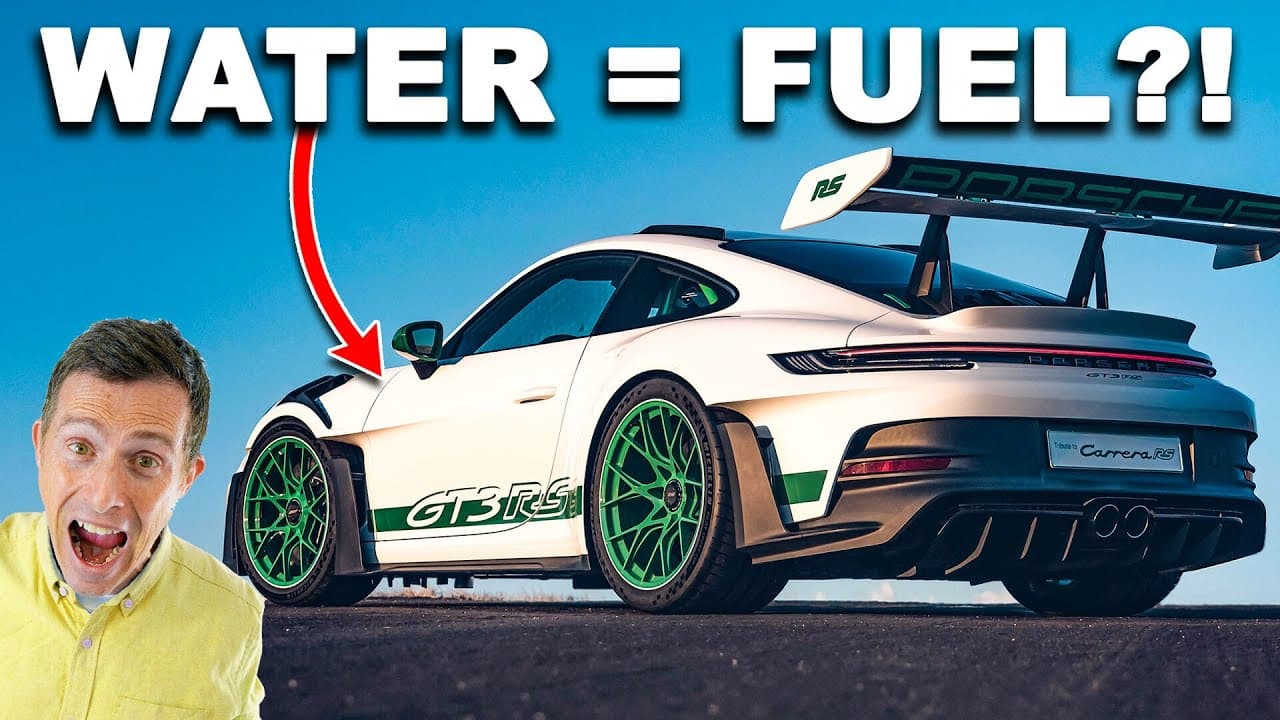
Porsche just SAVED petrol engines FOREVER
TL;DR
Porsche's e-fuel technology has paved the way for internal combustion engines to become carbon neutral, challenging the ban on internal combustion engine cars from 2035.
Transcript
cars with internal combustion engines are dead or are they Porsche has been working on something that could save petrol engines forever but wait a second didn't the UK and European Union decide to ban the sale of cars with internal combustion engines from 2035 well yes but this new tech is so exciting that politicians responsible for regulating new... Read More
Key Insights
- 🚗 Governments are banning the sale of cars with internal combustion engines, including hybrids, by 2035 in the UK, EU, Canada, and California.
- 🏭 Car manufacturers, such as Toyota and BMW, are concerned about the feasibility of electric-only cars due to infrastructure and resource limitations.
- 🔌 EU legislators now allow the sale of internal combustion engine cars after 2035 as long as they use synthetic fuel, known as e-fuel.
- ⛽️ E-fuel is a man-made fuel that can make internal combustion engine cars carbon neutral.
- 🌍 E-fuel production takes carbon dioxide out of the atmosphere and has the potential to reduce global CO2 emissions.
- ⚡️ E-fuels provide a solution to the challenge of charging electric cars quickly, as refueling e-fuel is as fast as filling up with normal petrol or diesel.
- 💡 However, e-fuels are still in the experimental phase, with limited production capacity.
- 🌟 The future of the automotive industry may involve a combination of electric vehicles (EVs) and e-fuels, offering options for different needs and lifestyles.
Install to Summarize YouTube Videos and Get Transcripts
Explore YouTube Video Summarizer or Get YouTube Transcript Extractor
Questions & Answers
Q: How does e-fuel work and its implications for internal combustion engines?
E-fuel is a synthetic fuel that can be produced using carbon dioxide captured from the atmosphere and renewable energy sources. It can be used in internal combustion engines without modifications, making them carbon neutral.
Q: What challenges and limitations does e-fuel face?
E-fuel production is still in the experimental phase, and factories are not yet able to produce e-fuel on a large scale. Additionally, e-fuels are only carbon neutral if the electricity used in their production comes from renewable sources.
Q: How does the EU ruling affect the future of internal combustion engines?
The EU ruling allows car manufacturers to continue selling internal combustion engine cars after 2035, as long as they run on synthetic fuel. This opens up opportunities for scaling up e-fuel production and offers an alternative to fully switching to electric vehicles.
Q: How does e-fuel compare to electric vehicles in terms of refueling time?
Refueling a car with e-fuel takes the same amount of time as filling up with regular petrol or diesel, offering an advantage over the longer charging times associated with electric vehicles.
Q: Can e-fuels be produced using different types of renewable energy?
Yes, e-fuels can be produced using various renewable energy sources such as wind power, hydroelectric power, or solar power. Different regions can leverage their available sources for e-fuel production.
Q: What implications does e-fuel technology have for major oil-producing countries?
For countries heavily reliant on oil production, such as the UAE and Saudi Arabia, e-fuel production using renewable energy could provide a new opportunity once the demand for fossil fuel oil decreases.
Answer: The development of e-fuel technology presents major breakthroughs for the automotive industry and the future of internal combustion engines. With the potential of e-fuels to make cars carbon neutral, a viable alternative to electric vehicles has emerged. While there are still challenges to be addressed, such as scaling up production and ensuring renewable energy sources, this new technology offers hope for preserving iconic cars and accommodating various lifestyles in a post-2035 era.
Summary & Key Takeaways
-
Governments worldwide have planned to ban the sale of internal combustion engine cars by 2035, with the UK government moving the ban forward to 2030.
-
Car manufacturers, including Toyota and BMW, expressed concerns about solely focusing on electric vehicles and advocated for alternative solutions.
-
With the introduction of synthetic fuel (e-fuel), car makers may have a way to make internal combustion engines carbon neutral and continue selling them beyond 2035.
Read in Other Languages (beta)
Share This Summary 📚
Summarize YouTube Videos and Get Video Transcripts with 1-Click
Try YouTube Summary with ChatGPT & Claude or YouTube Transcript Generator
Explore More Summaries from carwow 📚




Summarize YouTube Videos and Get Video Transcripts with 1-Click
Try YouTube Summary with ChatGPT & Claude or YouTube Transcript Generator