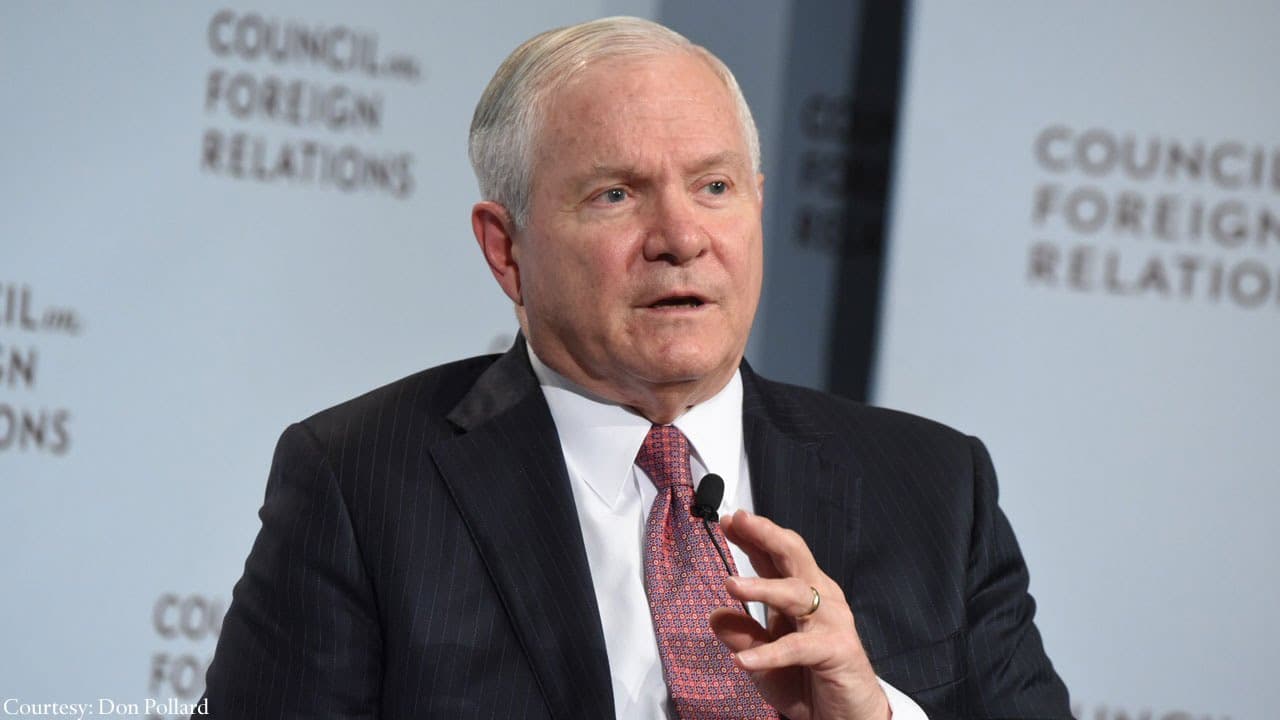
A Conversation With Robert M. Gates
TL;DR
Gates discusses leadership, public service, and U.S. national security challenges.
Transcript
BROKAW: Thank you all very much. I�m Tom Brokaw, a member of the Council, recently excised from the Board of Directors�(laughter)�term-limited. I know you know our distinguished guest, Bob Gates. I�ll talk about him a little more in a moment. We welcome all of you. This is a session that is on the record. We have a teleconference under way as well.... Read More
Key Insights
- Robert Gates emphasizes the importance of public service and expresses concern that younger generations are less engaged due to bureaucratic inefficiencies and lack of opportunities for significant contributions.
- Gates critiques the simplistic political rhetoric surrounding national security, particularly in dealing with ISIS, emphasizing the complexity and long-term nature of such challenges.
- He notes the disconnect between enthusiasm for public service at educational institutions and the frustrations young people face when entering government roles.
- Gates highlights the need for reform in government institutions to make them more appealing and effective for younger generations.
- He discusses the strategic challenges posed by Russia and China, emphasizing the need for careful management of these relationships to maintain international stability.
- Gates expresses concern over the insufficient focus on diplomatic and strategic communication capabilities post-Cold War, which he believes are crucial for countering modern threats like ISIS.
- He argues for the necessity of a predictable defense budget to effectively manage long-term military modernization and maintain national security.
- Gates calls for increased investment in diplomatic and civilian tools as a cost-effective means to enhance U.S. foreign policy and security objectives.
Install to Summarize YouTube Videos and Get Transcripts
Explore YouTube Video Summarizer or Get YouTube Transcript Extractor
Questions & Answers
Q: What concerns does Robert Gates have about younger generations and public service?
Robert Gates is concerned that younger generations are less engaged in public service due to bureaucratic inefficiencies and a lack of opportunities to contribute significantly at a young age. He notes that while young people are idealistic and committed to voluntarism at the college level, this enthusiasm often wanes after graduation due to frustrations with government roles.
Q: How does Gates view the current political discourse on national security?
Gates criticizes the current political discourse on national security as overly simplistic and lacking in sophistication. He is concerned that politicians are making broad, uninformed pronouncements about complex issues like ISIS, which require nuanced understanding and long-term strategies. He stresses the importance of being honest with the public about the challenges and sacrifices involved.
Q: What strategic challenges does Gates identify with Russia and China?
Gates identifies the strategic challenges posed by Russia and China as significant concerns for U.S. national security. He emphasizes the need for careful management of these relationships to maintain international stability. With Russia, he notes the importance of understanding Putin's motivations and the impact of economic sanctions. Regarding China, he highlights the need for a balanced approach that recognizes China's regional dominance ambitions while asserting U.S. rights.
Q: What does Gates say about the U.S. government's strategic communication capabilities?
Gates laments the dismantling of the strategic communication capabilities that were effective during the Cold War. He emphasizes that the U.S. has disarmed a critical part of its national security toolkit by not investing in diplomatic and strategic communication efforts. Gates believes that revitalizing these capabilities is crucial for countering modern threats like ISIS and influencing global narratives.
Q: What is Gates' perspective on defense budgeting and modernization?
Gates argues that the lack of predictability in defense budgeting is a significant obstacle to managing long-term military modernization. He highlights the need for a stable and predictable rate of growth in the defense budget to effectively plan for modernization programs. Gates also points out that times of austerity can be opportunities for reform and efficiency within the Department of Defense.
Q: How does Gates propose increasing investment in diplomatic tools?
Gates advocates for increased investment in diplomatic and civilian tools as a cost-effective means to enhance U.S. foreign policy and security objectives. He argues that marginal investments in these areas can yield disproportionate benefits. However, he acknowledges that political resistance and a lack of visionary leadership on Capitol Hill are significant barriers to achieving this goal.
Q: What is Gates' view on the U.S. military's role in addressing global threats?
Gates emphasizes the importance of the U.S. military in deterring threats and maintaining global stability. However, he cautions against the U.S. becoming the world's policeman and stresses the need to draw a line between exercising leadership and overextending military commitments. He believes that addressing extremist threats requires a long-term approach similar to public health or crime prevention.
Q: How does Gates assess the current U.S. cybersecurity capabilities?
Gates believes that the U.S. has the technical capabilities to protect its networks but faces challenges in consensus-building between the government and private sector. He highlights the need for cooperation and information sharing between businesses and the government to effectively utilize cybersecurity tools. Gates also notes the bureaucratic challenges that hinder progress in cybersecurity efforts.
Summary & Key Takeaways
-
Robert Gates, former U.S. Secretary of Defense, discusses the need for reform in government institutions to engage younger generations in public service. He highlights the disconnect between educational programs and actual government roles, leading to frustration and disengagement.
-
Gates critiques the current political discourse on national security, particularly regarding ISIS, and stresses the complexity and long-term nature of the challenges. He emphasizes the need for honest communication with the public about these issues.
-
He discusses strategic challenges with Russia and China, emphasizing the importance of careful management to maintain stability. Gates also highlights the need for increased investment in diplomatic and civilian tools to support U.S. foreign policy.
Read in Other Languages (beta)
Share This Summary 📚
Summarize YouTube Videos and Get Video Transcripts with 1-Click
Try YouTube Summary with ChatGPT & Claude or YouTube Transcript Generator
Explore More Summaries from Council on Foreign Relations 📚


Summarize YouTube Videos and Get Video Transcripts with 1-Click
Try YouTube Summary with ChatGPT & Claude or YouTube Transcript Generator