Problem 2 Multicavity Klystron - Microwave Linear Beam Tubes O Type - Microwave Engineering
TL;DR
This video discusses the calculation of various parameters in a multi-cavity klystron amplifier, including DC electron velocity, phase constant, plasma frequency, reduced plasma frequency, transit time, and electron velocity leaving the input gap.
Transcript
click the bell icon to get latest videos from akira hello friends i welcome you all to this video here we are with second chapter of microwave engineering in this chapter the linear beam microwave tubes we are learning with very first of all we started with what exactly it makes a different from the Crossfield microbio beam tubes here and now the v... Read More
Key Insights
- 🍃 In a multi-cavity klystron amplifier, various parameters can be calculated, such as DC electron velocity, phase constant, plasma frequency, reduced plasma frequency, transit time, and electron velocity leaving the input gap.
- ❓ The DC electron velocity can be determined using the applied DC potential and a specific formula.
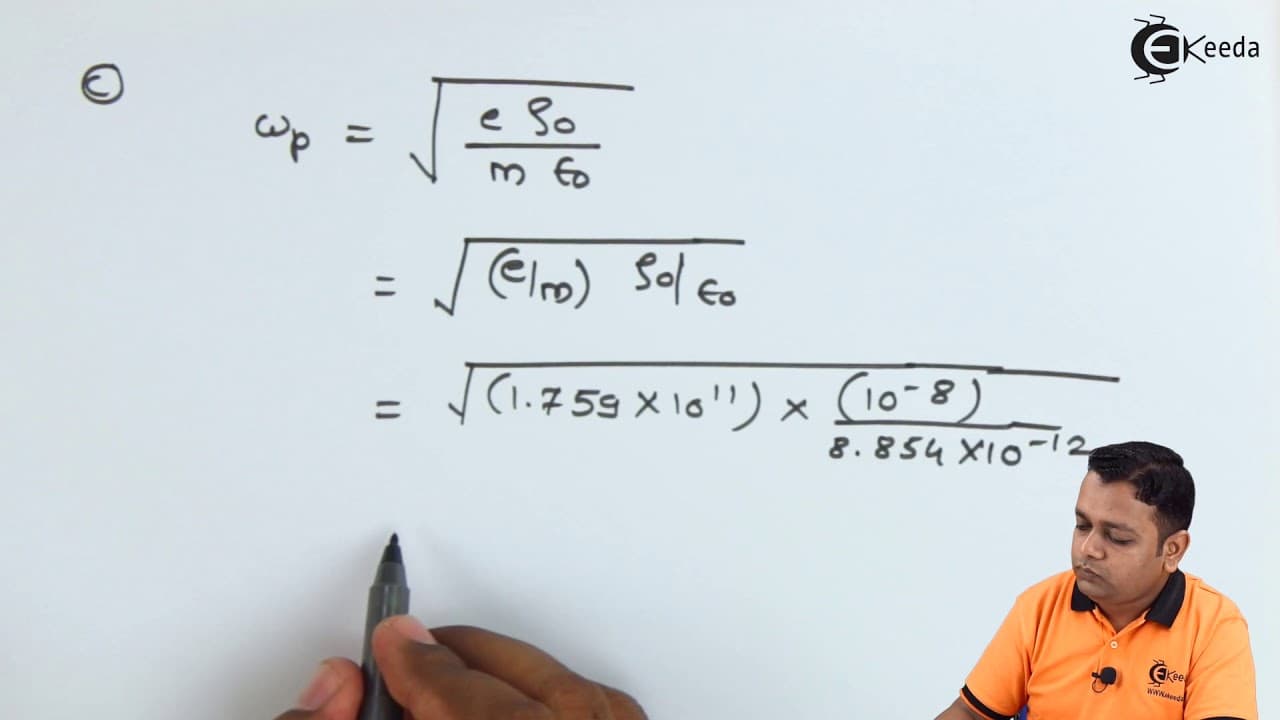
- 🈂️ The plasma frequency is obtained by multiplying the charge density with the square root of the ratio of electronic charge to the electron mass.
- 📣 The transit time across the input gap is calculated by dividing the gap spacing by the velocity of the electron.
Install to Summarize YouTube Videos and Get Transcripts
Explore YouTube Video Summarizer or Get YouTube Transcript Extractor
Questions & Answers
Q: What are the different parameters that can be calculated in a multi-cavity klystron amplifier?
The parameters include DC electron velocity, phase constant, plasma frequency, reduced plasma frequency, transit time, and electron velocity leaving the input gap.
Q: How is the DC electron velocity calculated?
The DC electron velocity can be calculated using the formula 0.593 * 10^6 * square root of the DC potential applied to the terminals of the multi-cavity klystron.
Q: What is the formula for the plasma frequency?
The formula for the plasma frequency is determined by multiplying the charge density of the DC electron with the square root of the ratio of electronic charge to the electron mass.
Q: How is the transit time across the input gap calculated?
The transit time across the input gap can be calculated by dividing the gap spacing by the velocity of the electron.
Summary & Key Takeaways
-
The video discusses the calculation of different parameters in a multi-cavity klystron amplifier, such as DC electron velocity, phase constant, plasma frequency, reduced plasma frequency, transit time, and electron velocity leaving the input gap.
-
The calculations involve formulas and given values for voltage, current, gap spacing, frequency, beam coupling coefficients, and DC charge density.
-
The answers to the given problems are determined step by step, providing clarity on how to calculate the different parameters.
Read in Other Languages (beta)
Share This Summary 📚
Summarize YouTube Videos and Get Video Transcripts with 1-Click
Try YouTube Summary with ChatGPT & Claude or YouTube Transcript Generator
Explore More Summaries from Ekeeda 📚




Summarize YouTube Videos and Get Video Transcripts with 1-Click
Try YouTube Summary with ChatGPT & Claude or YouTube Transcript Generator