How to Make Perfect Pie Crust from Scratch
TL;DR
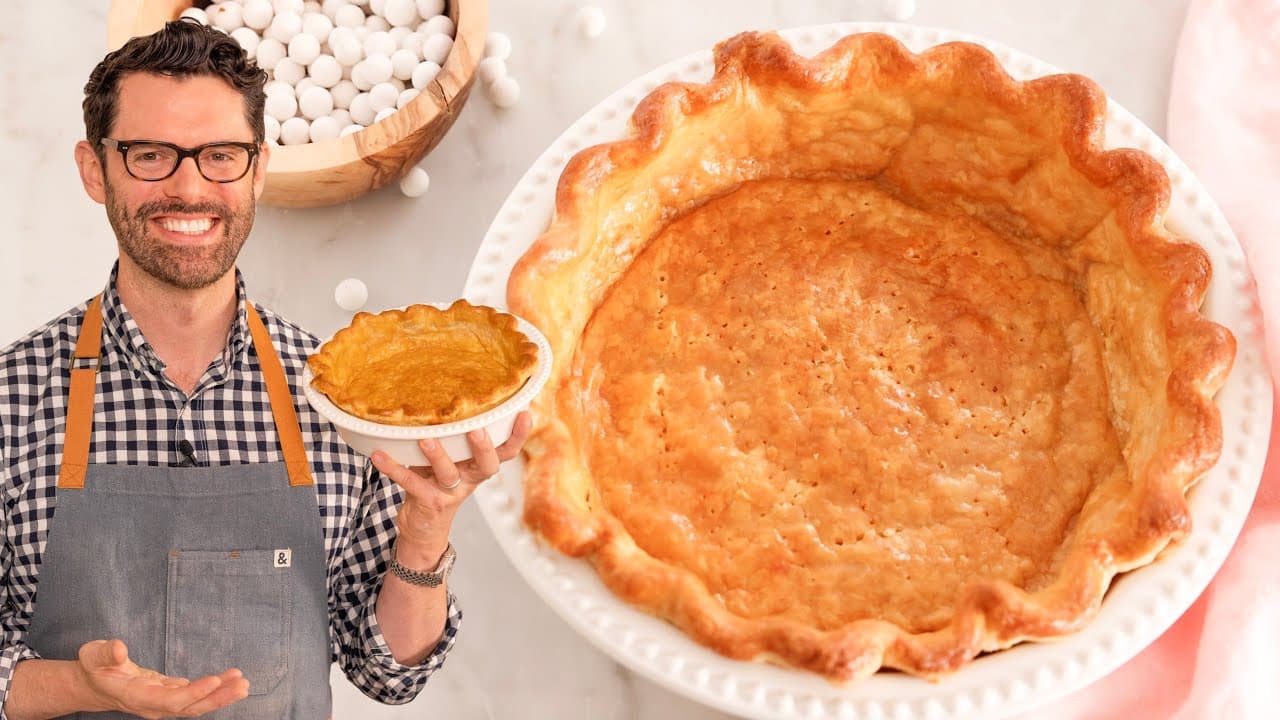
To make a perfect pie crust, combine flour, sugar, and salt, and incorporate cold butter using a food processor or by hand for a flaky texture. Add ice water gradually, form the dough, and chill it before rolling out. Blind bake the crust to prevent sogginess, ensuring a crisp and tender result ready for any filling.
Transcript
- Hey, I'm John Kanell and today on "Preppy Kitchen" we're making perfect pie crust with all my tips and tricks. So let's get started. First off, I'm measuring out 1 1/2 cups, or 180 grams, of all-purpose flour. This recipe calls for double that, but we're working in two batches. The flour goes right into the bowl of my food processor but if you do... Read More
Key Insights
- A perfect pie crust requires cold butter to create flakiness.
- Using a food processor is a convenient way to mix ingredients quickly.
- Hand mixing offers more control over butter size for a flakier texture.
- Ice water is crucial to hold the dough together without overhydrating.
- Blind baking prevents a soggy bottom, ensuring a crisp crust.
- An egg wash adds shine and acts as a moisture barrier.
- Freezing the dough ensures firmness and prevents collapse during baking.
- Flour and a pastry mat help in rolling out the dough without sticking.
Install to Summarize YouTube Videos and Get Transcripts
Explore YouTube Video Summarizer or Get YouTube Transcript Extractor
Questions & Answers
Q: How to make a flaky pie crust?
To make a flaky pie crust, use cold butter and incorporate it into the flour mixture until you have pea-sized pieces. This can be done using a food processor or by hand. The cold butter creates steam pockets during baking, resulting in a flaky texture.
Q: What is blind baking a pie crust?
Blind baking involves pre-baking the pie crust without a filling to ensure it is crisp and not soggy. This is done by lining the crust with parchment paper, adding pie weights, and baking it until the edges are set, then removing the weights to continue baking.
Q: Why use ice water in pie dough?
Ice water is used in pie dough to hydrate the flour without activating gluten, which keeps the crust tender. The cold temperature helps maintain the butter's firmness, contributing to the dough's flaky texture.
Q: How to prevent a pie crust from shrinking?
To prevent a pie crust from shrinking, avoid stretching the dough when placing it in the pie dish. Instead, gently press it into place. Additionally, chilling the dough before baking and using pie weights during blind baking helps maintain its shape.
Q: What is the purpose of an egg wash on pie crust?
An egg wash, made from beaten egg and liquid, is brushed onto pie crusts to give a shiny, golden finish. It also acts as a barrier against moisture from the filling, helping to keep the crust crisp and preventing it from becoming soggy.
Q: How to roll out pie dough without sticking?
To roll out pie dough without sticking, use a floured surface and a floured rolling pin. A pastry mat can also help, as it allows you to lift and move the dough easily. Regularly re-flour the surface and rolling pin as needed.
Q: Why freeze pie dough before baking?
Freezing pie dough before baking ensures that the butter remains firm, which helps maintain the dough's structure and flakiness during baking. It also prevents the dough from collapsing or shrinking in the oven.
Q: How to store pie dough for future use?
To store pie dough for future use, wrap it tightly and refrigerate for up to two days, or freeze it for longer storage. If freezing, ensure it's well-wrapped to avoid freezer burn. Thaw overnight in the refrigerator before using.
Summary & Key Takeaways
-
To make a pie crust, combine flour, sugar, and salt, then incorporate cold butter. Use a food processor or your hands for mixing. Gradually add ice water until the dough holds together. Chill the dough before rolling it out for baking.
-
Blind baking the crust is essential for a non-soggy result. Use parchment paper and pie weights to maintain shape. An egg wash adds shine and helps prevent moisture from the filling affecting the crust.
-
Freeze the dough to ensure it remains firm during baking. Roll out using a pastry mat and flour to avoid sticking. The pie crust should be crisp and flaky, ready to be filled with your choice of filling.
Read in Other Languages (beta)
Share This Summary 📚
Summarize YouTube Videos and Get Video Transcripts with 1-Click
Try YouTube Summary with ChatGPT & Claude or YouTube Transcript Generator
Explore More Summaries from Preppy Kitchen 📚



Summarize YouTube Videos and Get Video Transcripts with 1-Click
Try YouTube Summary with ChatGPT & Claude or YouTube Transcript Generator