Why roller coaster loops aren't circular
TL;DR
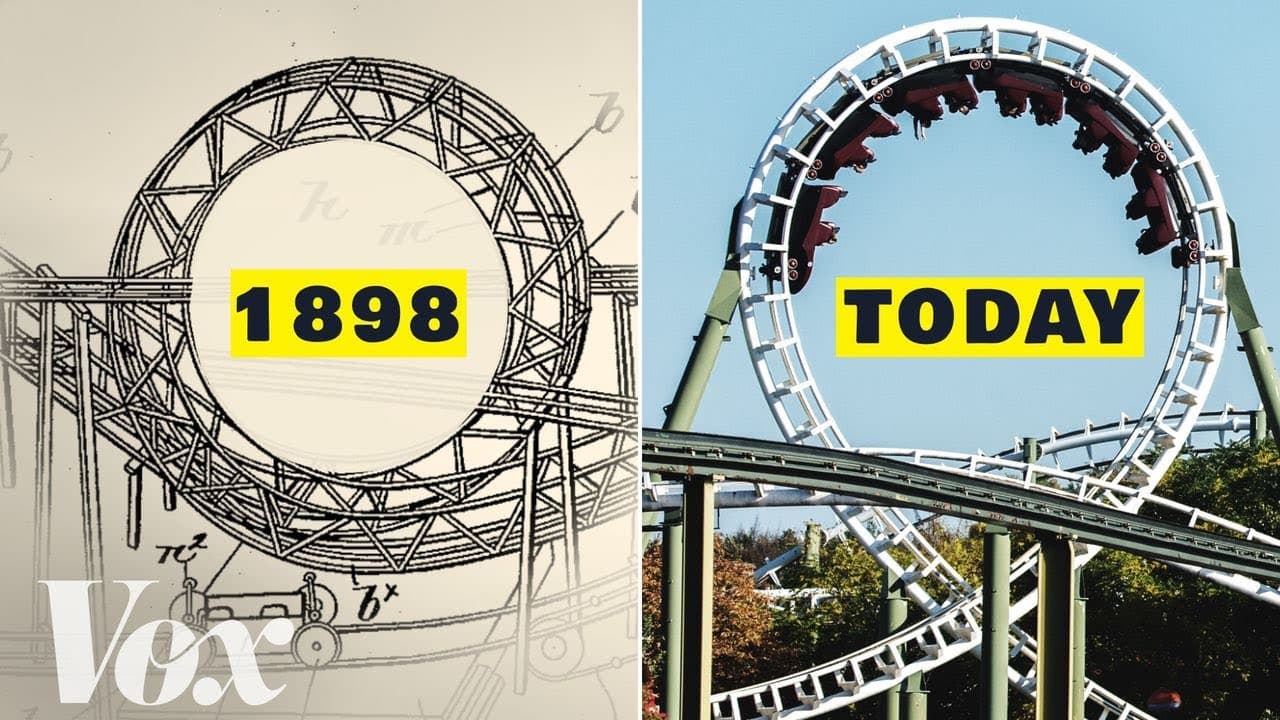
Roller coaster loops evolved from dangerous circles to safe clothoids.
Transcript
There’s this coaster in Hershey Park Pennsylvania, called the Sooperdooperlooper. On it, you come around this bend that’s full of trees blocking your view and before you know it you’re hurtling down the track at 45 miles per hour toward a thrilling 75 foot loop. According to Hershey's website, it’s the “first-ever looping roller coaster on the e... Read More
Key Insights
- Early looping roller coasters, like Coney Island's Flip Flap, used circular loops that caused extreme G-force spikes, making them dangerous and uncomfortable for riders.
- The first looping roller coasters in America appeared in the late 19th century but did not last long due to their poor design and the high G-forces experienced by riders.
- Circular loops required roller coasters to move at high speeds, leading to rapid changes in direction and excessive G-forces that could reach up to 14 Gs.
- The introduction of steel structures, such as the Loop the Loop, improved stability and allowed for more complex shapes like teardrop loops, which reduced G-forces.
- The development of tubular steel in the 1950s allowed for lighter and more flexible coaster designs, paving the way for modern looping coasters.
- Clothoid loops, introduced in the 1970s, distribute G-forces more evenly, providing a smoother ride and allowing roller coasters to accommodate more riders.
- The Great American Revolution at Six Flags Magic Mountain was the first modern vertical looping coaster, using clothoid loops to minimize G-force spikes.
- Modern roller coasters use technological advancements to ensure thrilling yet safe experiences, with loops that are designed to maximize excitement while minimizing physical strain.
Install to Summarize YouTube Videos and Get Transcripts
Explore YouTube Video Summarizer or Get YouTube Transcript Extractor
Questions & Answers
Q: Why were early looping roller coasters considered dangerous?
Early looping roller coasters were considered dangerous because they used circular loops, which caused extreme spikes in G-forces. Riders experienced rapid changes in direction, leading to forces as high as 14 Gs, which could cause physical harm and discomfort. These high G-forces were beyond what the human body could safely handle, making the rides both thrilling and perilous.
Q: What was the main problem with circular loops on roller coasters?
The main problem with circular loops on roller coasters was the extreme G-force spikes they caused. As the coaster moved through the loop, the rapid change in direction led to G-forces jumping from 1 to 14 Gs. This sudden increase in force was beyond what most people could tolerate, leading to discomfort and potential injury, which made these coasters unpopular and short-lived.
Q: How did the introduction of steel improve roller coaster design?
The introduction of steel improved roller coaster design by providing greater stability and allowing for more complex loop shapes. Steel structures, like the Loop the Loop, enabled designers to move away from circular loops to teardrop shapes, which reduced G-forces and provided a smoother ride. Steel's strength and flexibility also allowed for larger and safer coaster designs, accommodating more riders and dynamic movements.
Q: What role did tubular steel play in the evolution of roller coasters?
Tubular steel played a crucial role in the evolution of roller coasters by offering a lightweight and flexible material that could be easily bent into smooth arcs and curves. Introduced with Disney's Matterhorn in 1959, tubular steel allowed for the construction of more dynamic and stable coasters. This innovation paved the way for modern looping coasters, enabling the creation of clothoid loops that distribute G-forces evenly, enhancing rider safety and comfort.
Q: What is a clothoid loop and why is it important?
A clothoid loop is a loop shape used in modern roller coasters that gradually changes curvature, allowing for a more even distribution of G-forces. This design minimizes the extreme spikes in G-forces experienced in circular loops, providing a smoother and safer ride. Clothoid loops are important because they enhance rider comfort and safety, making modern looping coasters more popular and enjoyable.
Q: How did the Great American Revolution change roller coaster design?
The Great American Revolution, introduced in 1976, changed roller coaster design by being the first modern vertical looping coaster to use a clothoid loop. This design innovation allowed for a more even distribution of G-forces, reducing the physical strain on riders and providing a smoother experience. The use of tubular steel also enabled larger loops and more riders, setting a new standard for roller coaster design.
Q: Why did early looping coasters fail to sustain popularity?
Early looping coasters failed to sustain popularity due to their uncomfortable and dangerous rides caused by circular loops. The extreme G-force spikes made them unpleasant for riders, and the small loop sizes limited capacity, making them economically unviable. Many people preferred watching rather than riding, leading to their eventual closure within a decade of operation.
Q: What advancements led to the resurgence of looping coasters in the 1970s?
The resurgence of looping coasters in the 1970s was driven by advancements in engineering and materials. The introduction of clothoid loops and tubular steel allowed for safer and more comfortable rides by evenly distributing G-forces and enabling larger, more stable coaster designs. These innovations made looping coasters more appealing and economically viable, leading to their renewed popularity.
Summary & Key Takeaways
-
Early looping coasters were dangerous due to circular loops causing extreme G-force spikes, making rides uncomfortable and short-lived. Innovations in design and materials eventually led to safer, more popular coasters.
-
The transition from circular to clothoid loops revolutionized roller coasters, reducing G-forces and enhancing rider comfort. Tubular steel allowed for more flexible and stable coaster designs.
-
Modern looping coasters owe their success to advancements in engineering and materials, allowing for thrilling, safe rides with loops that distribute G-forces evenly, unlike their 19th-century predecessors.
Read in Other Languages (beta)
Share This Summary 📚
Summarize YouTube Videos and Get Video Transcripts with 1-Click
Try YouTube Summary with ChatGPT & Claude or YouTube Transcript Generator
Explore More Summaries from Vox 📚


Summarize YouTube Videos and Get Video Transcripts with 1-Click
Try YouTube Summary with ChatGPT & Claude or YouTube Transcript Generator