Is Mass Tourism Ruining Barcelona and Ibiza? | Foreign Correspondent
TL;DR
Mass tourism in Spain causes backlash and housing issues.
Transcript
Read and summarize the transcript of this video on Glasp Reader (beta).
Key Insights
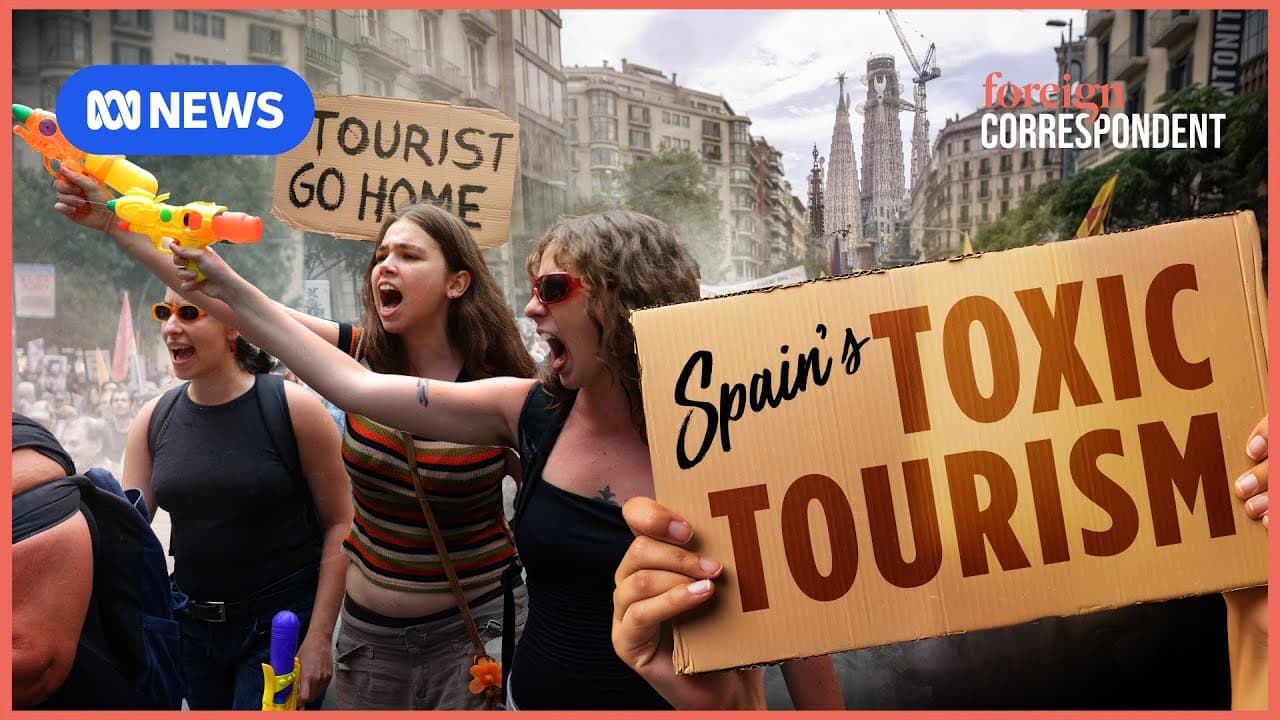
- Mass tourism is causing significant backlash in Spain, with locals protesting against the overwhelming influx of tourists in cities like Barcelona and Ibiza.
- Tourism is a major industry in Spain, employing 3 million people, but the economic benefits are overshadowed by social and environmental costs.
- In Ibiza, mass tourism has led to environmental degradation, particularly affecting the seagrass Posidonia, a UNESCO World Heritage site vital for biodiversity.
- Housing shortages are severe in tourist hotspots, with locals being priced out due to the conversion of apartments into holiday rentals, exacerbating the crisis.
- Protests against mass tourism are becoming more frequent, with locals using water pistols and other symbolic gestures to express their frustration.
- Authorities are attempting to regulate holiday rentals to alleviate housing issues, but locals argue these measures have little impact.
- Airbnb faces criticism for its role in the housing crisis, but claims it is cooperating with local regulations to remove illegal listings.
- Despite protests and regulations, tourists continue to flock to Spain, with many unaware of the local tensions and protests against them.
Install to Summarize YouTube Videos and Get Transcripts
Explore YouTube Video Summarizer or Get YouTube Transcript Extractor
Questions & Answers
Q: What is the main issue causing protests in Barcelona and Ibiza?
The main issue causing protests in Barcelona and Ibiza is mass tourism, which has led to overcrowding, housing shortages, and environmental degradation. Locals feel overwhelmed by the influx of tourists and are protesting to reclaim their neighborhoods and preserve their way of life.
Q: How has mass tourism affected the environment in Ibiza?
Mass tourism in Ibiza has significantly impacted the environment, particularly the seagrass Posidonia, a critical component of the marine ecosystem. The increase in yacht activity has damaged these seagrass meadows, which are vital for biodiversity, as anchors pull up the seagrass, preventing it from regenerating.
Q: What measures are being taken to address the housing crisis in tourist areas?
Authorities are attempting to regulate and reduce holiday apartment listings to free up housing for locals. However, these measures have had limited impact, as locals continue to face housing shortages and high costs, exacerbated by the conversion of apartments into holiday rentals.
Q: How are locals expressing their frustration with tourists?
Locals are expressing their frustration with tourists through protests and symbolic actions, such as using water pistols to spray tourists. These demonstrations aim to highlight the negative impact of mass tourism on their communities and to demand action from authorities to address the issues.
Q: What role does Airbnb play in the housing crisis in Spain?
Airbnb is often criticized for exacerbating the housing crisis in Spain by facilitating the conversion of residential properties into short-term holiday rentals. This reduces the availability of housing for locals and drives up rental prices, although Airbnb claims to be working with local authorities to address illegal listings.
Q: Why is mass tourism important to Spain's economy?
Mass tourism is crucial to Spain's economy as it is one of the largest industries, employing over 3 million people. The influx of tourists contributes significantly to the country's GDP and provides income for many businesses and workers in the hospitality and service sectors.
Q: What are some of the challenges faced by essential workers in tourist areas?
Essential workers in tourist areas face challenges such as housing shortages and high living costs. Many are priced out of the housing market due to the prevalence of holiday rentals, and some are forced to live in temporary accommodations or move frequently to find affordable housing.
Q: How do tourists perceive the protests against mass tourism?
Many tourists are unaware of the protests against mass tourism or do not perceive them as significant. Some see the graffiti and demonstrations as part of the local charm, while others acknowledge the tensions but continue to visit, drawn by Spain's attractions and cultural offerings.
Summary & Key Takeaways
-
Spain is experiencing a backlash against mass tourism, particularly in cities like Barcelona and Ibiza, where locals feel overwhelmed by the influx of visitors. The protests highlight the social and environmental costs of tourism, despite its economic benefits.
-
In Ibiza, environmental concerns are prominent, with the seagrass Posidonia being damaged by increased yacht activity. Locals are also struggling with housing shortages due to the rise in holiday rentals, forcing many to live in temporary accommodations.
-
Barcelona faces similar challenges, with locals protesting against the conversion of homes into holiday rentals. Despite efforts to regulate the industry, the impact on housing availability remains significant, and the protests continue as tourists keep arriving.
Read in Other Languages (beta)
Share This Summary 📚
Summarize YouTube Videos and Get Video Transcripts with 1-Click
Try YouTube Summary with ChatGPT & Claude or YouTube Transcript Generator
Explore More Summaries from ABC News In-depth 📚






Summarize YouTube Videos and Get Video Transcripts with 1-Click
Try YouTube Summary with ChatGPT & Claude or YouTube Transcript Generator