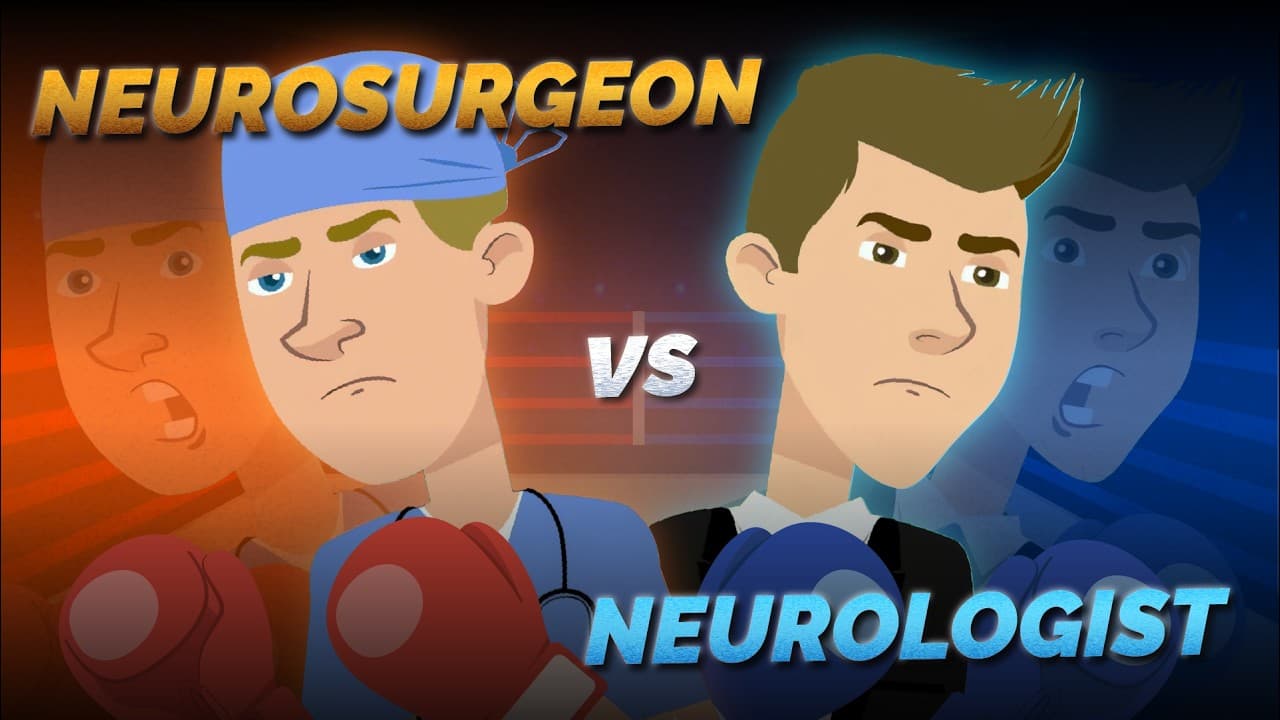
Neurosurgeon vs Neurologist 💥 Career Battle (Training, Lifestyle, & Pay)
TL;DR
Neurologists and neurosurgeons differ in treatment approaches, training, and lifestyle.
Transcript
Read and summarize the transcript of this video on Glasp Reader (beta).
Key Insights
- Neurologists and neurosurgeons both specialize in the nervous system but differ in their treatment approaches; neurologists focus on non-surgical management while neurosurgeons perform surgeries.
- Neurology residency lasts four years, focusing on medical management, while neurosurgery requires a seven-year residency with an emphasis on surgical skills.
- Neurology is the sixth least competitive specialty, with a 93.8% match rate, while neurosurgery is the second most competitive with a 68.7% match rate.
- Neurologists earn an average of $348,000 annually, reflecting the chronic nature of conditions they treat, while neurosurgeons earn over $760,000 due to their demanding surgical responsibilities.
- Neurologists often enjoy a more predictable lifestyle with regular hours, while neurosurgeons face demanding schedules with emergency calls and long surgeries.
- The emotional toll in neurology stems from managing progressive, incurable diseases, whereas in neurosurgery, it's from high-stakes surgeries with life-or-death outcomes.
- Both specialties offer subspecialization opportunities, with neurologists focusing on areas like stroke and epilepsy, and neurosurgeons on spine or pediatric surgery.
- Choosing between neurology and neurosurgery depends on personal preferences for work-life balance, interest in surgical versus medical management, and willingness to endure lengthy training.
Install to Summarize YouTube Videos and Get Transcripts
Explore YouTube Video Summarizer or Get YouTube Transcript Extractor
Questions & Answers
Q: What are the main differences in training between neurologists and neurosurgeons?
Neurologists undergo a four-year residency focusing on non-surgical management of neurological conditions, starting with a year in internal medicine. Neurosurgeons, however, complete a seven-year residency, which is the longest among medical specialties, emphasizing surgical skills and often including a research year. This reflects the complexity of neurosurgical procedures.
Q: How does the competitiveness of neurology compare to neurosurgery?
Neurology is the sixth least competitive specialty with a 93.8% match rate, while neurosurgery ranks as the second most competitive, with a match rate of only 68.7%. Neurosurgery requires a higher Step 2 CK score and significantly more research experience, making it one of the most challenging specialties to enter.
Q: What are the lifestyle differences between neurologists and neurosurgeons?
Neurologists generally have a more predictable lifestyle, working mostly outpatient with regular hours. Neurosurgeons, in contrast, have demanding schedules, including trauma calls and lengthy surgeries, which can extend beyond regular hours. This demanding lifestyle reflects the high-stakes nature of their work, often requiring immediate surgical intervention.
Q: Why is there a significant difference in compensation between neurologists and neurosurgeons?
The compensation difference is due to the nature of their work. Neurosurgeons perform complex surgical procedures that command higher reimbursement, reflecting their extensive training and the high-stakes nature of their work. Neurologists earn less as their work primarily involves medical management of chronic conditions, with fewer high-reimbursement procedures.
Q: What are the emotional challenges faced by neurologists?
Neurologists often deal with progressive, incurable diseases, which can be emotionally taxing. Conditions like ALS and advanced dementia have poor prognoses, requiring neurologists to be adept at palliative care and end-of-life discussions. This emotional toll contributes to high burnout rates among neurologists, despite the intellectual stimulation of their work.
Q: What are the pros and cons of choosing neurosurgery as a career?
Neurosurgery offers the ultimate combination of intellectual challenge and technical skill, with opportunities to perform life-saving surgeries using cutting-edge technology. However, it requires a lengthy and demanding residency, and the lifestyle remains intense with trauma calls. The emotional toll can be significant, as many cases involve life-or-death decisions.
Q: How do neurologists and neurosurgeons collaborate in patient care?
Neurologists and neurosurgeons often work closely together, with neurologists referring patients to neurosurgeons when surgical intervention is necessary. Conversely, neurosurgeons rely on neurologists for postoperative medical management. This collaboration ensures comprehensive care for patients with complex neurological conditions.
Q: What factors should one consider when choosing between neurology and neurosurgery?
Choosing between neurology and neurosurgery depends on personal career priorities, interest in surgical versus medical management, and lifestyle preferences. Neurology suits those valuing work-life balance and long-term patient relationships, while neurosurgery appeals to those willing to sacrifice lifestyle for the opportunity to perform complex surgeries on the brain and nervous system.
Summary & Key Takeaways
-
Neurologists and neurosurgeons are both experts in the nervous system, but their approaches to patient care differ significantly. Neurologists focus on non-surgical management, while neurosurgeons perform surgical interventions. The training, lifestyle, and compensation for each specialty also vary considerably.
-
Neurology residency lasts four years and is less competitive, offering a balanced lifestyle. Neurosurgery requires a seven-year residency and is highly competitive, demanding long hours and high-stakes decision-making. Despite these challenges, neurosurgeons earn significantly more than neurologists.
-
Both specialties provide opportunities for subspecialization and involve working with complex neurological conditions. The choice between them depends on one's career priorities, interest in surgery versus medical management, and willingness to sacrifice lifestyle for professional demands.
Read in Other Languages (beta)
Share This Summary 📚
Summarize YouTube Videos and Get Video Transcripts with 1-Click
Try YouTube Summary with ChatGPT & Claude or YouTube Transcript Generator
Explore More Summaries from Med School Insiders 📚






Summarize YouTube Videos and Get Video Transcripts with 1-Click
Try YouTube Summary with ChatGPT & Claude or YouTube Transcript Generator