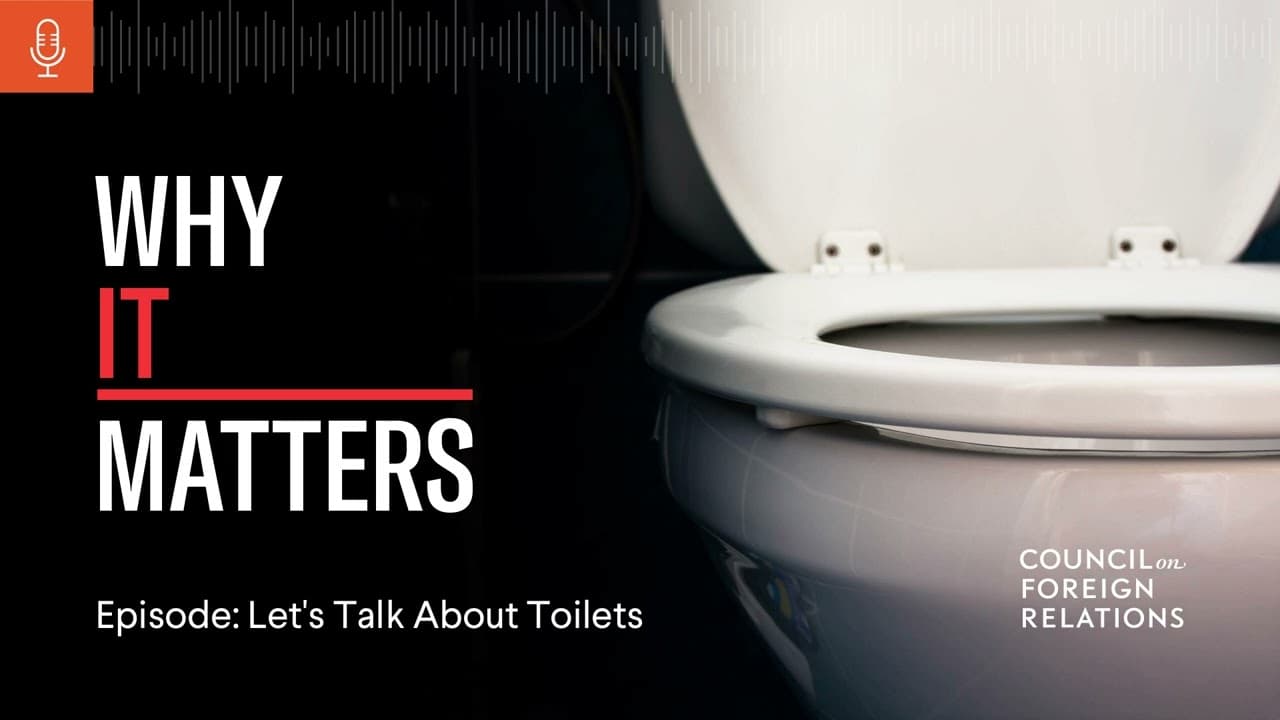
Should Toilet Access be an Essential Human Need?
TL;DR
Over half the world lacks safe sanitation, impacting health and dignity.
Transcript
(Toilet flushing). SIERRA: Toilets. Out of sight, out of mind, until one can’t be found. But just like healthcare and nutrition, access to a clean toilet has enormous health consequences. More than a million people die every year from diseases tied to poor sanitation, and millions more suffer illness, stunting and lifetime debilitations. All told, ... Read More
Key Insights
- Access to clean toilets is a critical health issue, with over a million deaths annually linked to poor sanitation.
- Cultural barriers, not just funding or technology, are significant obstacles to improving global sanitation.
- India accounts for a large portion of the world's open defecation, tied to deep-rooted cultural beliefs and caste systems.
- Sanitation is a human right, recognized by the UN, essential for dignity and health.
- Poor sanitation leads to severe health issues, including diarrheal diseases, malnutrition, and antimicrobial resistance.
- Lack of sanitation can hinder economic development and participation, especially affecting women and marginalized communities.
- Strong government leadership is crucial for progress in sanitation, as shown by success stories in East Asia.
- Global awareness and political will are lacking, but sanitation is vital for public health and economic growth.
Install to Summarize YouTube Videos and Get Transcripts
Explore YouTube Video Summarizer or Get YouTube Transcript Extractor
Questions & Answers
Q: What are the global statistics on toilet access?
Globally, 673 million people practice open defecation, and around 4.2 billion lack safe sanitation. This issue affects over half the world's population, with significant health risks, particularly in regions like Sub-Saharan Africa, South Asia, and Southeast Asia.
Q: How does poor sanitation impact health?
Poor sanitation leads to the spread of diseases such as diarrhea, cholera, and other tropical diseases. It also contributes to malnutrition and stunting in children, affecting their physical and cognitive development. Additionally, it can increase the risk of antimicrobial resistance.
Q: Why is sanitation considered a human right?
Sanitation is essential for maintaining health, dignity, and overall quality of life. The UN recognizes it as a human right, emphasizing safe, hygienic, and culturally acceptable sanitation for all. Access to sanitation is crucial for achieving gender equality, health, and economic development.
Q: What are the cultural barriers to improving sanitation in India?
In India, sanitation practices are deeply tied to cultural and religious beliefs, particularly the caste system. The stigma associated with handling waste and the tradition of open defecation are significant barriers. Efforts to improve sanitation must address these cultural norms and beliefs.
Q: How can government leadership improve sanitation?
Government leadership is crucial in prioritizing sanitation, implementing policies, and investing in infrastructure. Successful examples from East Asia show that strong governmental support can lead to significant improvements in sanitation, even in resource-constrained environments.
Q: What are the economic impacts of poor sanitation?
Poor sanitation hinders economic development by affecting public health, reducing workforce participation, and increasing healthcare costs. It disproportionately impacts women and marginalized communities, limiting their economic opportunities and contributing to societal inequalities.
Q: How does sanitation relate to global health challenges?
Sanitation is closely linked to global health challenges such as disease outbreaks and antimicrobial resistance. Poor sanitation can exacerbate these issues, highlighting the importance of universal access to safe sanitation for global health security and development.
Q: What role does public awareness play in addressing sanitation issues?
Public awareness is crucial for garnering political support and motivating community action. Educating people about the health risks and benefits of sanitation can drive behavior change and encourage investment in sanitation infrastructure, ultimately improving public health outcomes.
Summary & Key Takeaways
-
The global sanitation crisis affects over four billion people, leading to severe health consequences and hindering development. Cultural barriers, particularly in India, exacerbate the issue. Strong government leadership and public awareness are needed to address this critical human need.
-
Sanitation is recognized as a human right, essential for health and dignity. Poor sanitation leads to diseases like diarrhea and stunting, impacting millions, especially in developing regions. Addressing this issue requires changing social norms and investing in infrastructure.
-
Despite progress in some regions, sanitation remains a neglected topic globally. Political will and cultural understanding are key to solving this issue. Sanitation improvements can drive economic growth and improve quality of life, highlighting its importance as a public good.
Read in Other Languages (beta)
Share This Summary 📚
Summarize YouTube Videos and Get Video Transcripts with 1-Click
Try YouTube Summary with ChatGPT & Claude or YouTube Transcript Generator
Explore More Summaries from Council on Foreign Relations 📚


Summarize YouTube Videos and Get Video Transcripts with 1-Click
Try YouTube Summary with ChatGPT & Claude or YouTube Transcript Generator