How to Design a Resistance Training Program
TL;DR
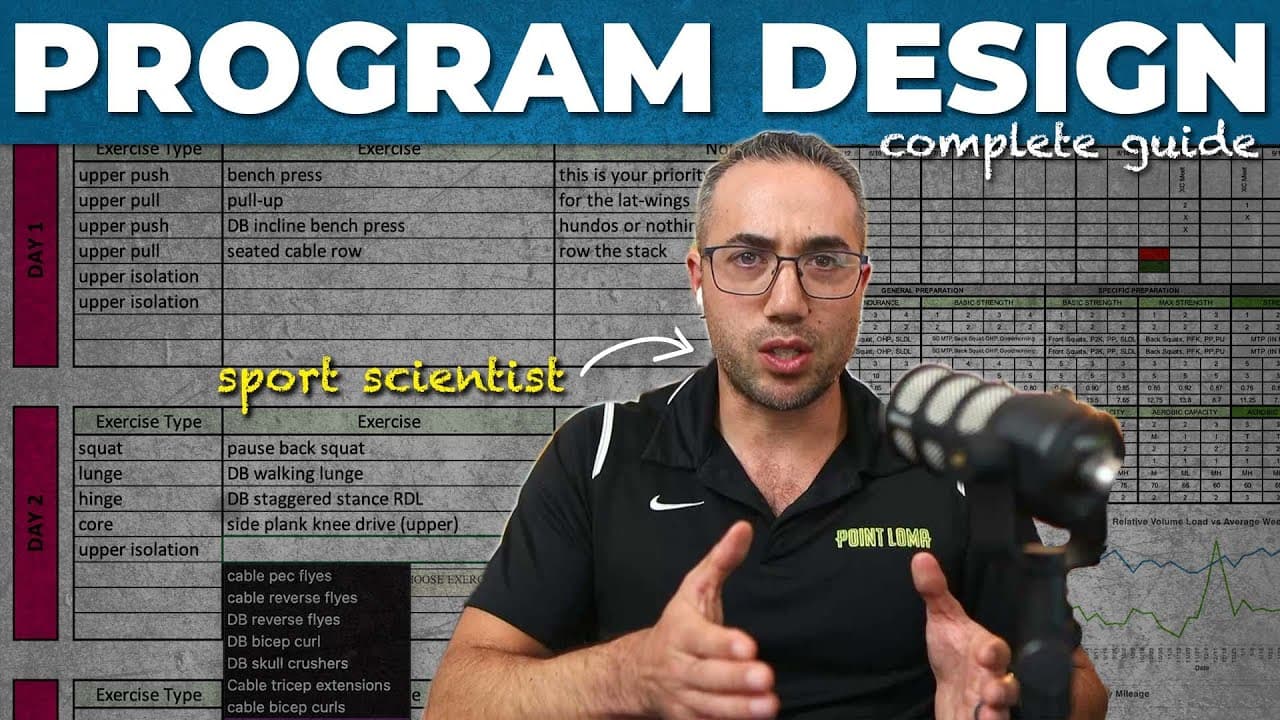
Creating a resistance training program involves a needs analysis, exercise selection, and periodization based on scientific principles. Consideration of training frequency, loads, repetitions, and rest periods is essential. Tailoring the program to individual athlete needs and goals ensures effectiveness and safety.
Transcript
hey guys a while ago I did a Hands-On lecture for a group of physical therapy students via zoom and I recorded the entire thing so that you guys could check it out as well now what I've done is I've included the slides in a link Down Below in the description so check that out and follow along with me as we cover everything to do with creating a res... Read More
Key Insights
- Needs analysis involves assessing sport-specific demands and individual athlete evaluation.
- Training frequency should align with goals and individual recovery capacity.
- Exercise selection includes compound, isolation, and functional movements.
- Load and repetitions are determined by the athlete's goals and training phase.
- Volume is a key driver of hypertrophy and strength adaptations.
- Exercise order typically follows compound before isolation movements.
- Rest periods influence training adaptations and should vary by goal.
- Periodization involves organizing training into cycles to peak at the right time.
Install to Summarize YouTube Videos and Get Transcripts
Explore YouTube Video Summarizer or Get YouTube Transcript Extractor
Questions & Answers
Q: How to conduct a needs analysis for resistance training?
A needs analysis involves assessing sport-specific demands and individual athlete evaluation. This includes evaluating the physiological, biomechanical, and psychological aspects of the sport, as well as the athlete's physical capacities, technical skills, injury history, and personal goals. This analysis helps tailor the training program to meet the specific needs and objectives of the athlete.
Q: What factors influence training frequency?
Training frequency is influenced by the athlete's goals, recovery capacity, age, experience, and the nature of the exercises. For instance, compound movements with high CNS fatigue require more rest, while isolation movements may allow for more frequent training. The athlete's level, whether beginner or advanced, also dictates how often they can train effectively.
Q: How to select exercises for a resistance training program?
Exercise selection should align with the athlete's goals and the needs analysis. It involves choosing a mix of compound, isolation, and functional exercises that target specific muscle groups and performance goals. Considerations include specificity, safety, and efficiency, ensuring exercises are appropriate for the athlete's skill level and sport demands.
Q: How to determine training load and repetitions?
Training load and repetitions are determined by the athlete's goals and training phase. Load is often quantified as sets times reps times weight, and should be balanced with volume and intensity. Repetition ranges vary based on goals: lower reps for strength, moderate for hypertrophy, and higher for endurance. Adjustments should be made based on the athlete's progress and feedback.
Q: What is the role of volume in resistance training?
Volume, defined as the total amount of work performed, is a key driver of hypertrophy and strength adaptations. It is calculated as the product of sets, reps, and load. Higher volumes are typically associated with greater hypertrophy gains, while strength gains require a balance of volume and intensity. Volume should be adjusted based on the athlete's experience and goals.
Q: How should exercises be ordered in a training session?
Exercises in a training session should generally be ordered with compound movements before isolation movements, and high-intensity exercises before low-intensity ones. This order ensures that the most demanding exercises are performed when the athlete is freshest, maximizing performance and safety. Specific goals like hypertrophy or power may alter this order slightly.
Q: What are the guidelines for rest periods in training?
Rest periods vary by training goal: strength and power require longer rests (up to five minutes) to ensure complete recovery, while hypertrophy can benefit from shorter rests (90 seconds to 3 minutes) to increase metabolic stress. Endurance training may involve even shorter rests. Rest needs also depend on the individual's fitness level and the nature of the exercises.
Q: What is periodization in resistance training?
Periodization is the systematic organization of training into cycles to progressively build fitness components and peak at the right time. It involves phases like preparatory, competitive, and transition, each focusing on different goals such as hypertrophy, strength, or power. Periodization helps manage fatigue, enhance performance, and reduce overtraining risk by varying volume and intensity.
Summary & Key Takeaways
-
Creating a resistance training program starts with a needs analysis, assessing both the sports-specific demands and individual athlete needs. This step helps determine exercise selection, training frequency, and volume. Tailoring the program to the athlete's goals ensures effectiveness and safety.
-
Training load and repetitions are crucial in designing a program. They should be aligned with the athlete's goals, whether for strength, hypertrophy, or power. Volume, exercise order, and rest periods further influence the program's effectiveness and should be adjusted based on individual recovery capacity.
-
Periodization is key in resistance training, organizing the program into cycles that progressively build up to peak performance. It helps manage fatigue, enhance performance, and reduce the risk of overtraining by systematically targeting different fitness components.
Read in Other Languages (beta)
Share This Summary 📚
Summarize YouTube Videos and Get Video Transcripts with 1-Click
Try YouTube Summary with ChatGPT & Claude or YouTube Transcript Generator
Explore More Summaries from Dr. Jacob Goodin 📚

Summarize YouTube Videos and Get Video Transcripts with 1-Click
Try YouTube Summary with ChatGPT & Claude or YouTube Transcript Generator