Do You Really Want to Live Forever?
TL;DR
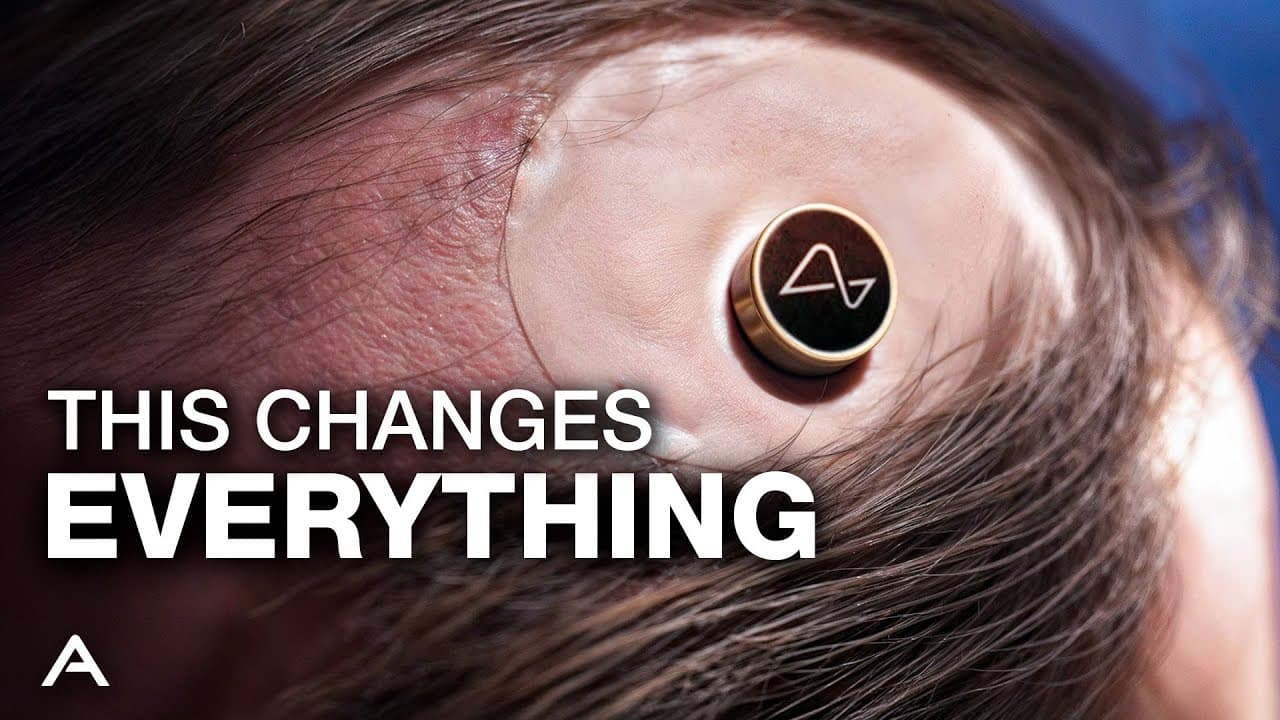
Neuralink and AI could redefine human life and healthcare.
Transcript
Read and summarize the transcript of this video on Glasp Reader (beta).
Key Insights
- Neuralink aims to merge human brains with machines, potentially extending life by overcoming biological limitations.
- Brain-machine interfaces (BMIs) could revolutionize medical treatments by enabling direct brain-to-device communication.
- Neuralink's technology could allow for immersive experiences in virtual reality and telepathic communication.
- AI is transforming healthcare by improving diagnostics, treatment personalization, and administrative efficiency.
- AI tools are being used to rapidly develop cancer treatments, promising faster and more effective medical advances.
- AI can assist in mental health care by providing virtual therapy and personalized treatment plans.
- AI is enhancing education by customizing learning experiences and making knowledge more accessible.
- Ethical concerns about AI in healthcare include data privacy and the potential misuse of sensitive information.
Install to Summarize YouTube Videos and Get Transcripts
Explore YouTube Video Summarizer or Get YouTube Transcript Extractor
Questions & Answers
Q: What is Neuralink's primary goal?
Neuralink's primary goal is to merge human brains with machines, aiming to transcend biological limitations and extend human capabilities. By developing brain-machine interfaces (BMIs), Neuralink seeks to enhance cognitive functions, improve medical treatments, and potentially extend human life by addressing communication bandwidth issues within the brain.
Q: How do brain-machine interfaces work?
Brain-machine interfaces (BMIs) work by connecting the brain to external devices, allowing for direct communication between the two. This is achieved by placing electrodes near neurons to detect electrical signals, which can then be translated into actions on a machine. BMIs can facilitate both input and output of data, enabling control over devices and the potential for immersive experiences.
Q: What role does AI play in healthcare?
AI plays a transformative role in healthcare by improving diagnostics, personalizing treatment plans, and increasing administrative efficiency. AI tools can rapidly develop new treatments, assist in mental health care, and enhance patient monitoring. By analyzing large datasets, AI can identify patterns and provide insights that improve patient outcomes while reducing costs.
Q: How is AI being used in cancer treatment development?
AI is used in cancer treatment development by rapidly analyzing data to identify new targets and molecules for drug development. AI tools can speed up the design and synthesis of potential treatments, as demonstrated in studies where AI identified new molecules to treat liver cancer in just 30 days. This accelerates the drug development process and enhances the effectiveness of treatments.
Q: What are the ethical concerns surrounding AI in healthcare?
Ethical concerns surrounding AI in healthcare include data privacy and the potential misuse of sensitive health information. There is a risk that AI could be used to discriminate against individuals based on health data, such as by insurance companies. Ensuring data security and addressing potential biases in AI algorithms are crucial to maintaining public trust and ethical standards.
Q: How can AI improve education?
AI can improve education by personalizing learning experiences, tailoring content to individual students' needs, and providing accessible knowledge. AI tools can identify students' strengths and weaknesses, offering customized support and resources. This can reduce educational inequality and foster a more inclusive learning environment, bridging the gap between well-resourced and underresourced schools.
Q: What potential does AI have in mental health care?
AI has significant potential in mental health care by providing virtual therapy, personalizing treatment plans, and offering support through chatbots and interactive platforms. AI can increase access to mental health services, reduce stigma, and improve treatment outcomes by offering immediate, judgment-free assistance and resources tailored to individual needs.
Q: What are the challenges in implementing AI in healthcare?
Challenges in implementing AI in healthcare include ensuring data privacy, addressing algorithmic biases, and gaining public trust. There is also a need to integrate AI tools with existing healthcare systems and to train healthcare professionals to work alongside AI. Overcoming these challenges is essential to fully realize AI's potential to improve healthcare outcomes and efficiency.
Summary & Key Takeaways
-
Neuralink is developing brain-machine interfaces that could merge human brains with technology, potentially extending life and enhancing cognitive abilities. The technology aims to address bandwidth issues in brain communication, allowing for faster and more efficient information exchange.
-
AI is revolutionizing healthcare by improving diagnostics, treatment personalization, and administrative efficiency. It is being used to develop cancer treatments rapidly and to assist in mental health care, offering virtual therapy and personalized treatment plans.
-
AI is also transforming education by customizing learning experiences and making knowledge more accessible. However, ethical concerns about data privacy and the potential misuse of sensitive information remain significant challenges to be addressed.
Read in Other Languages (beta)
Share This Summary 📚
Summarize YouTube Videos and Get Video Transcripts with 1-Click
Try YouTube Summary with ChatGPT & Claude or YouTube Transcript Generator
Explore More Summaries from Aperture 📚






Summarize YouTube Videos and Get Video Transcripts with 1-Click
Try YouTube Summary with ChatGPT & Claude or YouTube Transcript Generator