Why Adding Highway Lanes Can Make Traffic Worse
TL;DR
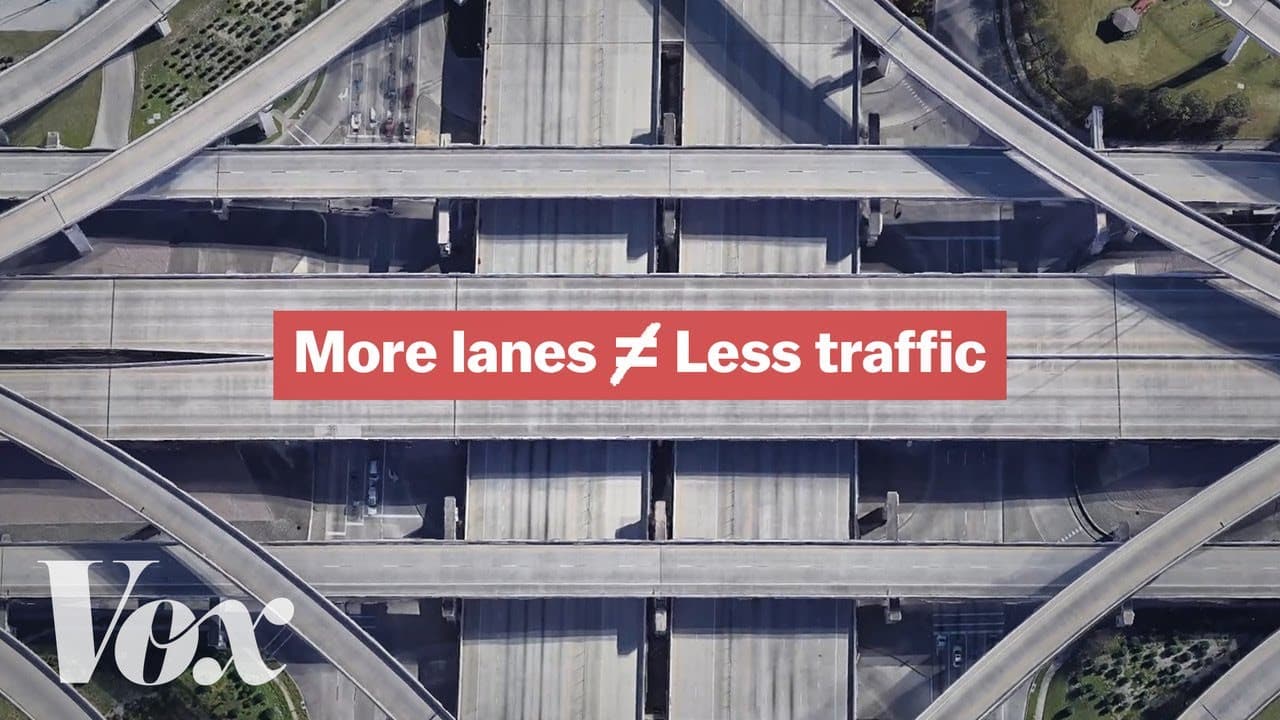
Adding lanes to highways often worsens traffic due to 'induced demand,' where increased capacity leads to more drivers using the road. This cycle not only fails to alleviate congestion but also promotes urban sprawl and necessitates further expansions. Effective solutions include improving public transit, implementing congestion pricing, and revising land use policies.
Transcript
The Katy Freeway in Texas connects Houston’s western suburbs with the city’s downtown. At its widest point, right here, it spans 26 lanes including parallel roads, before it intersects with another freeway, creating this massive web of pavement. The Katy Freeway is among the widest in the world. But it didn’t start out this big. The freeway was ini... Read More
Key Insights
- The Katy Freeway in Texas expanded from 6 to 26 lanes, yet congestion worsened due to increased demand.
- Highway expansion encourages urban sprawl, leading to more development and necessitating further expansions.
- Induced demand explains why more lanes lead to more traffic, as drivers adjust their behavior to use the expanded capacity.
- Flexible commuters are enticed to use highways when congestion initially reduces, ultimately worsening traffic.
- Public transit improvements can offer alternatives, but new drivers often replace transit commuters on highways.
- Congestion pricing and remote work programs can help reduce peak traffic by disincentivizing highway use.
- Highway removal projects, like Boston's, have successfully reduced congestion by promoting alternative transportation modes.
- Investments in diverse transportation options and better land use policies can encourage less car dependency and reduce traffic.
Install to Summarize YouTube Videos and Get Transcripts
Explore YouTube Video Summarizer or Get YouTube Transcript Extractor
Questions & Answers
Q: Why did the Katy Freeway expansion fail to reduce traffic?
The Katy Freeway expansion failed to reduce traffic due to the concept of induced demand. When additional lanes were added, it initially provided more space for vehicles, but this also encouraged more drivers to use the highway, including those who previously avoided it due to congestion. As a result, the increased capacity was quickly absorbed, and traffic congestion returned to or exceeded previous levels.
Q: What is induced demand in the context of highway expansion?
Induced demand refers to the phenomenon where increasing the supply of something, like highway lanes, leads to an increase in its use. In the context of highway expansion, adding more lanes initially reduces congestion, which attracts more drivers who previously took alternative routes or modes of transportation. Over time, this increased usage negates any initial congestion relief and can even worsen traffic conditions.
Q: How does highway expansion contribute to urban sprawl?
Highway expansion contributes to urban sprawl by facilitating easier access to suburban areas, encouraging development along these routes. As more people move to suburbs, the demand for highways increases, prompting further expansions. This cycle continues, leading to widespread suburbanization and increased reliance on cars, which exacerbates traffic congestion and creates a need for even more highway infrastructure.
Q: What alternatives to highway expansion can help reduce congestion?
Alternatives to highway expansion that can help reduce congestion include improving public transit systems, such as adding more bus routes and train lines, and implementing policies like congestion pricing to discourage peak-hour highway use. Encouraging remote work and flexible commuting options can also reduce traffic during rush hours. Additionally, better land use policies that promote mixed-use development can decrease reliance on cars by placing people closer to work and amenities.
Q: How can congestion pricing help manage traffic on highways?
Congestion pricing involves charging drivers a fee to use certain roads during peak traffic times. This economic disincentive encourages drivers to seek alternative routes, travel during off-peak hours, or use public transportation, thereby reducing the number of vehicles on the highway during rush hours. By managing demand through pricing, congestion pricing can effectively alleviate traffic and improve overall traffic flow.
Q: What impact did Boston's highway removal have on congestion?
Boston's highway removal project involved replacing a central freeway with a boulevard that included biking and bus lanes and more pedestrian space. This transformation significantly reduced congestion by 62%, as it encouraged alternative transportation modes and improved accessibility for non-car commuters. The project demonstrated that removing highways can lead to more efficient use of urban space and less reliance on cars.
Q: Why are public transit improvements not a complete solution to congestion?
Public transit improvements alone are not a complete solution to congestion because new drivers often replace transit commuters on highways. While better transit options can provide alternatives for some, the underlying issue of induced demand means that as long as there is available road capacity, more drivers will fill it. A holistic approach that includes transit improvements, land use changes, and demand management is necessary to effectively reduce congestion.
Q: How do land use policies influence transportation behavior?
Land use policies influence transportation behavior by determining the layout and accessibility of urban areas. Policies that promote mixed-use development and higher density living can reduce the need for long commutes by placing residential, commercial, and employment areas closer together. This can decrease reliance on cars, encourage walking, biking, and public transit use, and ultimately lead to less traffic congestion and more sustainable urban development.
Summary & Key Takeaways
-
The Katy Freeway expansion in Texas aimed to reduce congestion by adding lanes, but traffic worsened due to induced demand. This phenomenon occurs when increased road capacity leads to more drivers using the highway, negating any initial relief.
-
Highway expansions often result in urban sprawl, as they encourage development along the new routes. This creates a cycle of congestion and further expansions, which ultimately fails to solve traffic issues and instead exacerbates them.
-
To effectively address congestion, cities must consider alternatives such as improving public transit, implementing congestion pricing, and encouraging remote work. Additionally, better land use policies and highway removal projects can promote less car dependency and alleviate traffic.
Read in Other Languages (beta)
Share This Summary 📚
Summarize YouTube Videos and Get Video Transcripts with 1-Click
Try YouTube Summary with ChatGPT & Claude or YouTube Transcript Generator
Explore More Summaries from Vox 📚



Summarize YouTube Videos and Get Video Transcripts with 1-Click
Try YouTube Summary with ChatGPT & Claude or YouTube Transcript Generator