Why Are Victorian Mansions Associated with Horror?
TL;DR
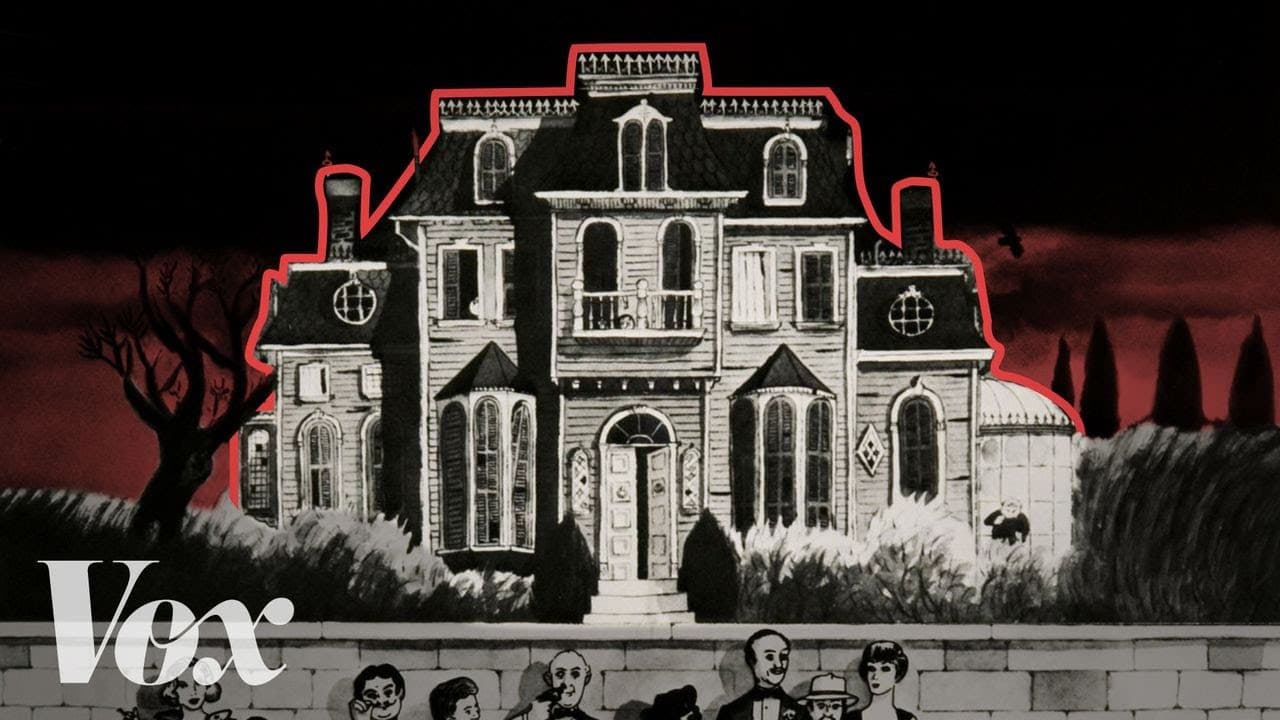
Victorian mansions are associated with horror due to their extravagant Gothic design and the historical context of the Gilded Age, which saw a decline in their reputation. Once symbols of wealth, these homes became neglected and eerie after World War I, culminating in their portrayal as haunted houses in works like Charles Addams' cartoons and Alfred Hitchcock's 'Psycho.'
Transcript
Imagine a haunted house. Does it look like … this? A decaying structure with severe angles and intricate woodwork? Maybe some bats flying out of a tower. This is the Victorian mansion. It’s ghostly presence traces back to paintings like this one from the 1920s: artist Edward Hopper’s “House by the Railroad,” which shows an old Victorian house, aban... Read More
Key Insights
- Victorian mansions are often depicted as haunted due to their decaying structure, steep angles, and Gothic features, which evoke a sense of dread.
- These mansions were originally symbols of wealth during the Gilded Age, a period marked by income inequality and political corruption in America.
- The architectural style of Victorian mansions was borrowed from medieval Europe's Gothic architecture, featuring towers, turrets, and ornate trims.
- After World War I, Victorian mansions were perceived as outdated and excessive, leading to their abandonment and association with decay.
- The Great Depression further led to the decline of these mansions, as they became boarding houses for the working poor, reinforcing their image of decay.
- Charles Addams' cartoons, featuring a Victorian mansion for the Addams Family, solidified the association of these houses with horror.
- Alfred Hitchcock's film 'Psycho' used a Victorian mansion to evoke a sense of dread, drawing inspiration from Edward Hopper's 'House by the Railroad.'
- Victorian mansions continue to be a symbol of horror in pop culture, representing something sinister and not quite right.
Install to Summarize YouTube Videos and Get Transcripts
Explore YouTube Video Summarizer or Get YouTube Transcript Extractor
Questions & Answers
Q: Why are Victorian mansions often depicted as haunted?
Victorian mansions are often depicted as haunted due to their architectural features, such as decaying woodwork, steep angles, and Gothic towers, which evoke a sense of dread. Historically, these mansions were symbols of wealth during the Gilded Age, but after World War I, they were seen as outdated and excessive, leading to their association with decay and the supernatural.
Q: What historical period led to the construction of Victorian mansions?
The construction of Victorian mansions took place during the Gilded Age in America, a period marked by significant income inequality and political corruption. This era followed the American Civil War and was characterized by rapid industrialization, which created a new wealthy class that sought to display their affluence through grand and ornate homes, such as the Victorian mansions.
Q: How did the perception of Victorian mansions change after World War I?
After World War I, the perception of Victorian mansions shifted from symbols of wealth and affluence to representations of outdated excess. Modern architecture, with its emphasis on clean lines and simplicity, became the new standard of taste, rendering Victorian mansions as antiquated. This change in perception contributed to their decline and eventual association with decay and horror.
Q: What role did Charles Addams play in associating Victorian mansions with horror?
Charles Addams played a pivotal role in associating Victorian mansions with horror through his cartoons for the New Yorker, which featured the Addams Family living in a Victorian mansion. These cartoons depicted the family as morbidly anti-social and mysteriously wealthy, with their mansion representing a dark perversion of the ideal American family. This portrayal helped cement the Victorian mansion as a symbol of horror.
Q: How did Alfred Hitchcock's 'Psycho' contribute to the horror iconography of Victorian mansions?
Alfred Hitchcock's film 'Psycho' contributed significantly to the horror iconography of Victorian mansions by using such a mansion as the setting for the Bates family home. The film's depiction of the house as sinister and foreboding, coupled with its isolation and decay, reinforced the association of Victorian mansions with horror. Hitchcock drew inspiration from Edward Hopper's painting 'House by the Railroad,' further solidifying the mansion's menacing image.
Q: What architectural features characterize Victorian mansions?
Victorian mansions are characterized by their Gothic architectural features, which include towers, turrets, ornate gingerbread trim, and sloped, bloated roofs known as Mansard roofs. These elements were borrowed from medieval Europe's Gothic architecture and were designed to be imposing and make a statement. Inside, these mansions featured a maze of rooms, such as parlors, drawing rooms, and libraries, often left unoccupied and contributing to their eerie atmosphere.
Q: Why did Victorian mansions become associated with decay during the Great Depression?
During the Great Depression, many Victorian mansions became associated with decay as they were abandoned by their wealthy owners and turned into boarding houses for the working poor. Without the financial means to maintain them, these once-grand structures fell into disrepair, deepening their association with decay and contributing to their image as haunted and ghostly in both fine art and pop culture.
Q: How has the Victorian mansion remained a symbol of horror in modern times?
The Victorian mansion has remained a symbol of horror in modern times due to its persistent presence in Gothic-inspired art and pop culture. Its architectural features evoke a sense of dread, and its historical association with the troubling Gilded Age and subsequent decline reinforce its eerie reputation. This enduring image serves as an immediate signal to audiences that there is something not quite right about such houses, making them iconic symbols of horror.
Summary & Key Takeaways
-
Victorian mansions, once symbols of wealth during the Gilded Age, have become iconic representations of horror in pop culture. Their Gothic architectural style, marked by towers and ornate trims, evokes a sense of dread. Over time, these mansions were abandoned, leading to their association with decay and the supernatural.
-
The Gilded Age in America was characterized by severe income inequality and political corruption. During this time, wealthy families built Victorian mansions as displays of affluence. However, following World War I, these houses were seen as outdated and excessive, leading to their decline and eventual association with horror.
-
Charles Addams' cartoons and Alfred Hitchcock's 'Psycho' played significant roles in cementing the Victorian mansion as a horror icon. These cultural works depicted the mansions as sinister and foreboding, drawing on their historical context and Gothic architectural features to create a sense of unease and fear.
Read in Other Languages (beta)
Share This Summary 📚
Summarize YouTube Videos and Get Video Transcripts with 1-Click
Try YouTube Summary with ChatGPT & Claude or YouTube Transcript Generator
Explore More Summaries from Vox 📚

Summarize YouTube Videos and Get Video Transcripts with 1-Click
Try YouTube Summary with ChatGPT & Claude or YouTube Transcript Generator