How to Develop Agility in Athletes
TL;DR
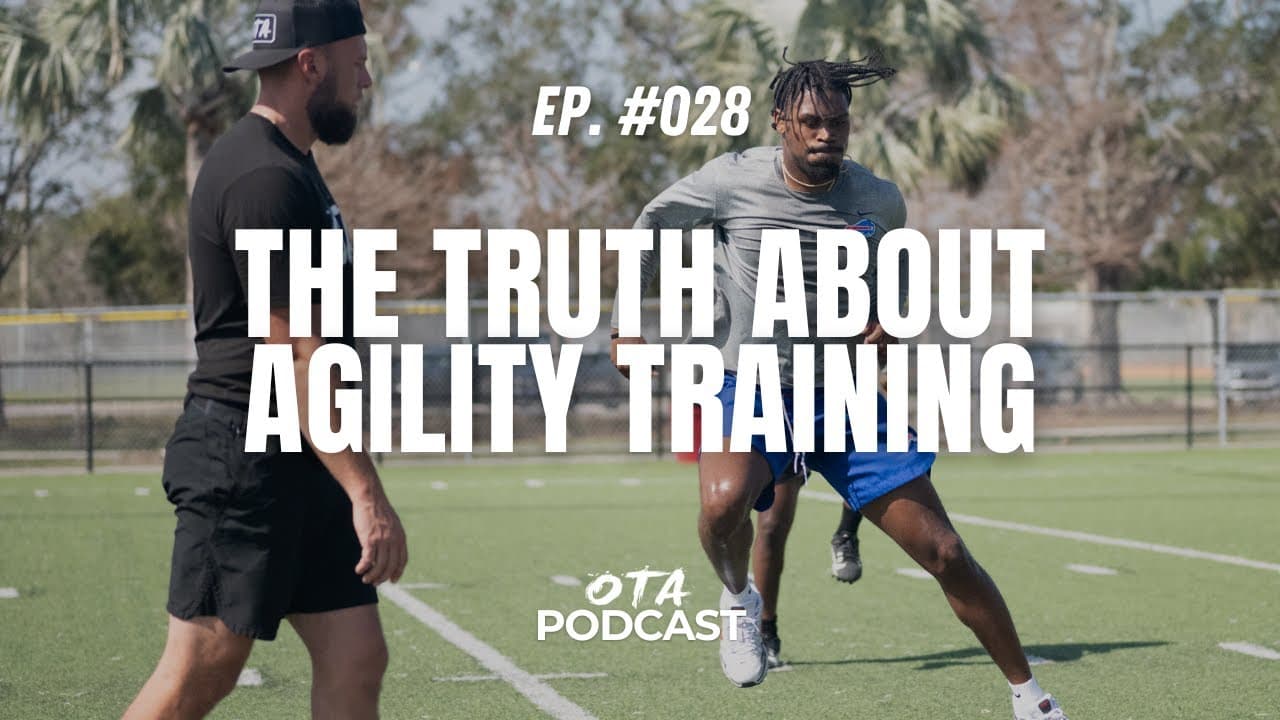
To develop true agility in athletes, focus on both change of direction and reactionary components. Start with predetermined drills to build foundational skills, then progress to reaction-based agility training. Emphasize prerequisites like plyometrics and resistance training to elevate an athlete's ability to change direction effectively.
Transcript
Welcome to the OTAA podcast where we discuss everything performance training. I'm Coach Chris Barard. Let's get into it. Hey, what's going on guys? Welcome back to the OTAA podcast. I'm your host, Coach Chris Barard, founder of OTAA. And for today's video, I wanted to discuss the truth about agility training and being able to develop an athletes ab... Read More
Key Insights
- Agility is the ability to change direction in response to an external stimulus, unlike predetermined change of direction drills.
- True agility training should include reactionary components, such as responding to audio or visual cues.
- Building agility requires a progression from basic change of direction drills to more complex, reaction-based exercises.
- Plyometrics and resistance training are crucial for increasing the threshold of an athlete's ability to redirect force.
- Isolating and strengthening specific movements in plyometrics can enhance an athlete's ability to perform cuts and directional changes.
- Progression in training should move from static to dynamic exercises, incorporating resistance and increased complexity over time.
- Focusing on foundational prerequisites is essential for long-term agility improvements in athletes.
- Agility training should be tailored to the specific demands of the athlete's sport, with a focus on elevating their performance threshold.
Install to Summarize YouTube Videos and Get Transcripts
Explore YouTube Video Summarizer or Get YouTube Transcript Extractor
Questions & Answers
Q: How to differentiate between change of direction and agility?
Change of direction involves predetermined movements where the athlete knows when and where to change direction, such as running between cones. In contrast, agility includes a reactionary component, requiring the athlete to respond to external stimuli like audio or visual cues, making it more dynamic and unpredictable.
Q: Why is plyometric training important for agility?
Plyometric training is crucial for agility because it helps increase the threshold of an athlete's ability to redirect force. By focusing on jump training and specific movement isolations, athletes can improve their strength and stability in the foot, ankle, knee, and hip, enhancing their ability to perform agile movements effectively.
Q: What are the prerequisites for effective agility training?
Effective agility training requires focusing on foundational prerequisites such as plyometrics and resistance training. These help elevate the athlete's ability to redirect force, increase stability in key joints, and enhance kinesthetic awareness, all of which are essential for executing agile movements efficiently in sports.
Q: How can athletes progress in agility training?
Athletes can progress in agility training by starting with basic change of direction drills and gradually incorporating more complex, reaction-based exercises. This progression should include increasing the complexity of plyometric exercises, adding resistance, and integrating reactionary components, allowing athletes to build on their foundational skills.
Q: What role do reactionary components play in agility training?
Reactionary components are vital in agility training as they simulate real-game scenarios where athletes must respond to external stimuli. By incorporating cues like audio or visual signals, athletes can practice making quick decisions and executing movements without prior knowledge, enhancing their overall agility and responsiveness in sports.
Q: How can training be tailored to an athlete's specific sport?
Training can be tailored to an athlete's specific sport by focusing on the movements and demands unique to that sport. This includes isolating and strengthening specific movements, incorporating sport-specific drills, and ensuring the training progression aligns with the athlete's performance goals and the sport's requirements.
Q: Why is it important to focus on foundational skills in agility training?
Focusing on foundational skills in agility training is important because it builds the necessary strength, stability, and movement efficiency required for more complex exercises. By establishing a strong base, athletes can safely progress to advanced drills, ensuring long-term improvements in their agility and performance capabilities.
Q: What is the benefit of isolating movements in plyometric training?
Isolating movements in plyometric training benefits athletes by targeting specific muscles and movements, allowing for focused strength and stability improvements. This targeted approach helps athletes enhance their ability to perform precise cuts and directional changes, ultimately contributing to better agility and performance in their sport.
Summary & Key Takeaways
-
Agility involves both change of direction and the ability to react to stimuli, making it more complex than simple directional changes. Training should begin with basic drills and progress to reaction-based exercises. Plyometrics and resistance training are key to improving an athlete's ability to redirect force effectively.
-
To enhance agility, athletes must focus on foundational skills and prerequisites like plyometrics. Training should include isolating specific movements, increasing complexity, and integrating reactionary components. This approach ensures athletes can perform cuts and directional changes efficiently in their respective sports.
-
Effective agility training requires a structured progression from basic drills to complex, reaction-based exercises. By emphasizing prerequisites such as plyometrics and resistance training, athletes can improve their ability to change direction and respond to stimuli, ultimately enhancing their performance in sports.
Read in Other Languages (beta)
Share This Summary 📚
Summarize YouTube Videos and Get Video Transcripts with 1-Click
Try YouTube Summary with ChatGPT & Claude or YouTube Transcript Generator
Explore More Summaries from overtimeathletes 📚

Summarize YouTube Videos and Get Video Transcripts with 1-Click
Try YouTube Summary with ChatGPT & Claude or YouTube Transcript Generator