What is the Fibonacci Sequence & the Golden Ratio? Simple Explanation and Examples in Everyday Life
TL;DR
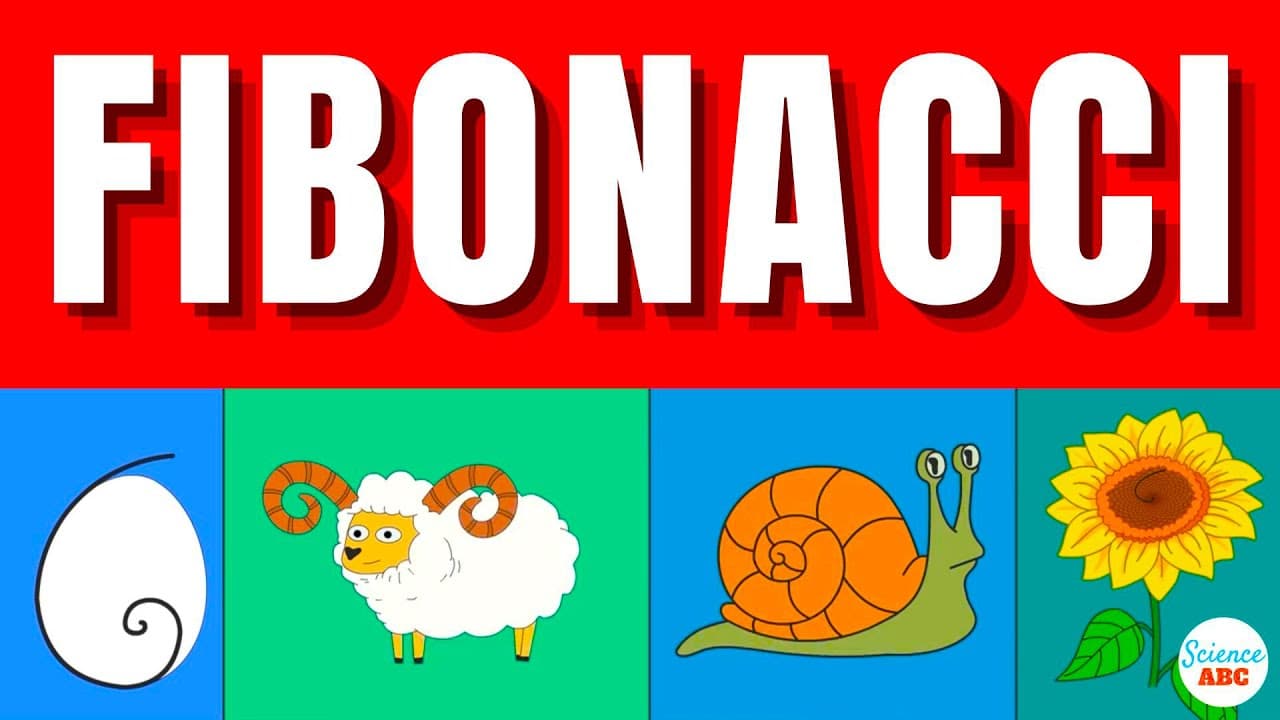
Fibonacci sequence and golden ratio appear widely in nature and art.
Transcript
Read and summarize the transcript of this video on Glasp Reader (beta).
Key Insights
- The Fibonacci sequence is a series where each number is the sum of the two preceding ones, starting from 0 and 1.
- Fibonacci numbers frequently appear in nature, such as in the number of petals on flowers and the arrangement of leaves.
- Leonardo of Pisa, known as Fibonacci, introduced the Hindu-Arabic numeral system to Europe through his book Liber Abaci in 1202.
- The golden ratio, often associated with the Fibonacci sequence, is a unique mathematical ratio approximately equal to 1.618033.
- The golden ratio is represented by the Greek letter phi (ϕ) and is prevalent in art, architecture, and nature.
- Examples of the golden ratio in nature include seashells, hurricanes, and galaxies, while artists and architects use it in their designs.
- The Fibonacci sequence was described in ancient Indian texts as early as the 6th century, before Fibonacci's introduction.
- The golden spiral, a manifestation of the golden ratio, expands by a factor of phi for every quarter turn, seen in various natural forms.
Install to Summarize YouTube Videos and Get Transcripts
Explore YouTube Video Summarizer or Get YouTube Transcript Extractor
Questions & Answers
Q: What is the Fibonacci sequence and how is it formed?
The Fibonacci sequence is a series of numbers where each number is the sum of the two preceding ones, starting from 0 and 1. This sequence begins with 0, followed by 1, and continues as 1, 2, 3, 5, 8, 13, 21, and so on. It is a simple yet fascinating mathematical pattern.
Q: Who was Fibonacci and what was his contribution to mathematics?
Fibonacci, also known as Leonardo of Pisa, was an Italian mathematician from the Republic of Pisa. He is known for popularizing the Hindu-Arabic numeral system in Europe through his book Liber Abaci in 1202. Although he did not discover the Fibonacci sequence, his work helped spread its knowledge across Europe.
Q: How is the Fibonacci sequence related to the golden ratio?
The Fibonacci sequence is closely associated with the golden ratio, which is approximately 1.618033. As the Fibonacci numbers increase, the ratio of consecutive Fibonacci numbers approximates the golden ratio. This relationship is evident in various natural phenomena and is used in art and architecture.
Q: What are some natural examples of the Fibonacci sequence?
The Fibonacci sequence appears in numerous natural phenomena. For instance, the number of petals on flowers often corresponds to Fibonacci numbers, such as 3, 5, 8, or 13. Additionally, the arrangement of leaves, seeds, and spirals in plants frequently follows the Fibonacci pattern, demonstrating its prevalence in nature.
Q: What is the golden ratio and where can it be found?
The golden ratio is a mathematical ratio approximately equal to 1.618033, often symbolized by the Greek letter phi (ϕ). It is found in various natural and man-made forms, including seashells, hurricanes, galaxies, and famous artworks. The golden ratio is also used in architectural designs to achieve aesthetic proportions.
Q: How did Fibonacci contribute to the spread of the Hindu-Arabic numeral system?
Fibonacci played a crucial role in spreading the Hindu-Arabic numeral system in Europe through his book Liber Abaci. Published in 1202, the book compared the Hindu-Arabic system with Roman numerals, highlighting its efficiency in calculations. This work significantly influenced European mathematics and commerce.
Q: What is a golden spiral and how is it related to the golden ratio?
A golden spiral is a logarithmic spiral that grows wider by a factor of the golden ratio (phi) for every quarter turn it makes. This spiral is a visual representation of the golden ratio and is observed in various natural forms, such as seashells and hurricanes, as well as in artistic and architectural designs.
Q: What are some artistic applications of the golden ratio?
The golden ratio is widely used in art and architecture to create aesthetically pleasing compositions. Artists like Salvador Dali have incorporated the golden ratio into their works, such as in The Sacrament of the Last Supper. Architects, including Le Corbusier, have used the golden ratio in designing buildings and structures to achieve harmonious proportions.
Summary & Key Takeaways
-
The Fibonacci sequence is a mathematical series where each number is the sum of the two preceding numbers, starting from 0 and 1. This sequence frequently appears in nature, such as in the arrangement of petals and seeds in flowers and plants, and is associated with the golden ratio.
-
Leonardo of Pisa, also known as Fibonacci, introduced the Hindu-Arabic numeral system to Europe in the 13th century through his book Liber Abaci. The Fibonacci sequence, although named after him, was described earlier in ancient Indian texts. It has applications in mathematics, nature, and art.
-
The golden ratio is a mathematical ratio approximately equal to 1.618033, often associated with the Fibonacci sequence. It appears in nature, art, and architecture, with examples including seashells, hurricanes, and famous artworks. The golden spiral, a form of the golden ratio, is seen in natural and man-made structures.
Read in Other Languages (beta)
Share This Summary 📚
Summarize YouTube Videos and Get Video Transcripts with 1-Click
Try YouTube Summary with ChatGPT & Claude or YouTube Transcript Generator
Explore More Summaries from Science ABC 📚





Summarize YouTube Videos and Get Video Transcripts with 1-Click
Try YouTube Summary with ChatGPT & Claude or YouTube Transcript Generator