How deadly is Covid-19?
TL;DR
Covid-19 is deadlier than known, but less fatal percentage-wise.
Transcript
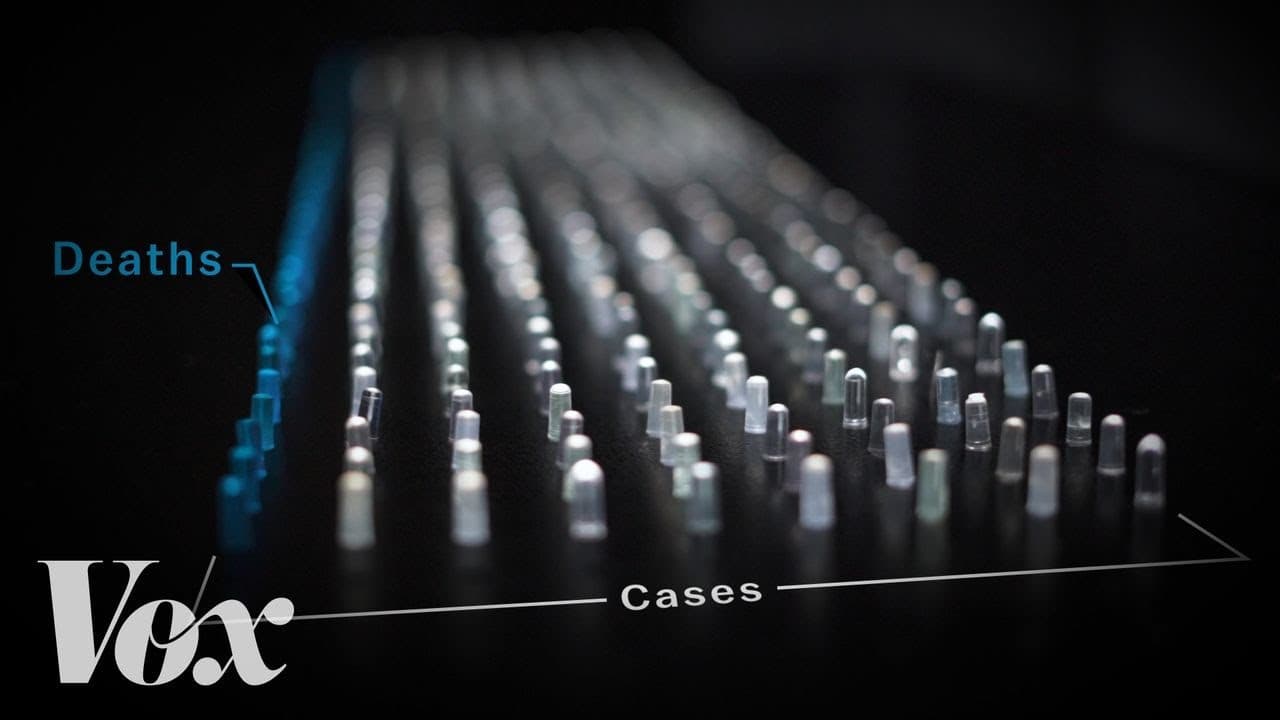
On the morning of March 28, Domingo Vega of Queens, New York, went to the hospital with symptoms of pneumonia and tested positive for Covid-19. This is Domingo. But not just him. This light represents 500 people who have been infected with the novel coronavirus in New York City. By May 16th, there were nearly 190,000 known cases of Covid-19 there. ... Read More
Key Insights
- Covid-19 testing has been limited, providing an incomplete picture of the pandemic's spread and impact, likened to a narrow flashlight in a dark room.
- Case fatality rates vary widely across different regions, influenced more by local factors like healthcare capacity and demographics than by the virus itself.
- Excess deaths, those above typical levels, provide a more comprehensive understanding of the pandemic's mortality impact, indicating more deaths than officially reported.
- Antibody surveys reveal that many more people have been infected with Covid-19 than official case counts suggest, leading to a lower fatality rate than initially thought.
- The pandemic's death toll is higher than known, yet the virus's fatality rate is lower due to undetected cases, suggesting a complex and unpredictable threat.
- Comparisons to other causes of death, like car crashes or cancer, highlight the unique and contagious nature of Covid-19, complicating direct comparisons.
- The pandemic's full impact remains uncertain, as human behavior and the virus's spread are difficult to predict, leaving the eventual death toll unknown.
- Public health officials are gaining a clearer picture of Covid-19 mortality through new data sources like death certificates and seroprevalence surveys.
Install to Summarize YouTube Videos and Get Transcripts
Explore YouTube Video Summarizer or Get YouTube Transcript Extractor
Questions & Answers
Q: What challenges do health officials face in assessing Covid-19's deadliness?
Health officials face challenges in assessing Covid-19's deadliness due to limited testing, which provides an incomplete picture of the virus's spread and impact. Variability in case fatality rates across regions, influenced by local healthcare capacity and demographics, further complicates understanding the virus's true mortality risk.
Q: How do excess deaths provide a fuller picture of the pandemic's impact?
Excess deaths, which are deaths above typical levels, provide a fuller picture of the pandemic's impact by accounting for undiagnosed Covid-19 deaths and those from other causes linked to the pandemic. This data reveals a higher mortality impact than official counts, highlighting the pandemic's broader effects on public health.
Q: What role do antibody surveys play in understanding Covid-19's fatality rate?
Antibody surveys play a crucial role in understanding Covid-19's fatality rate by identifying individuals who had the virus but were not diagnosed. This data reveals a larger number of infections than official case counts, leading to a lower fatality rate and providing a more accurate assessment of the virus's true impact.
Q: Why is the pandemic's death toll difficult to predict?
The pandemic's death toll is difficult to predict due to the unpredictable nature of human behavior and the virus's spread. Factors such as adherence to public health measures, the emergence of new variants, and varying healthcare responses contribute to the uncertainty, making it challenging to determine the pandemic's eventual impact.
Q: How does Covid-19's contagious nature complicate comparisons to other causes of death?
Covid-19's contagious nature complicates comparisons to other causes of death, like car crashes or cancer, because it spreads through human contact, making its impact unpredictable and potentially far-reaching. Unlike non-contagious causes, Covid-19's spread is influenced by human behavior, adding complexity to mortality assessments.
Q: What insights have been gained from new data sources like death certificates and seroprevalence surveys?
New data sources, such as death certificates and seroprevalence surveys, have provided insights into Covid-19's true mortality impact. These sources reveal a higher number of deaths and infections than previously reported, indicating a lower fatality rate and offering a clearer understanding of the pandemic's scope and severity.
Q: How does the variability in case fatality rates reflect local factors rather than the virus itself?
Variability in case fatality rates reflects local factors, such as healthcare system capacity and population demographics, rather than the virus itself. Regions with overwhelmed healthcare systems or older populations may experience higher fatality rates, highlighting the influence of external factors on mortality assessments.
Q: What challenges remain in fully understanding the pandemic's mortality impact?
Challenges in fully understanding the pandemic's mortality impact include limited testing, undiagnosed cases, and the unpredictable nature of human behavior and virus spread. These factors contribute to uncertainty in mortality assessments, making it difficult to determine the pandemic's true toll and future trajectory.
Summary & Key Takeaways
-
Covid-19's impact has been challenging to measure due to limited testing, resulting in incomplete data. However, new research methods are providing a clearer picture, revealing more deaths and infections than initially reported, leading to a lower fatality rate than previously thought.
-
Case fatality rates differ widely across regions, influenced by factors such as healthcare capacity and population demographics. Excess death data shows the pandemic's mortality impact is greater than official counts, including undiagnosed Covid-19 deaths and those from other causes.
-
Antibody surveys suggest many more people have been infected than known, lowering the fatality rate. Despite more deaths than expected, the virus is less deadly percentage-wise. The pandemic's full toll remains uncertain, as human actions and virus behavior are unpredictable.
Read in Other Languages (beta)
Share This Summary 📚
Summarize YouTube Videos and Get Video Transcripts with 1-Click
Try YouTube Summary with ChatGPT & Claude or YouTube Transcript Generator
Explore More Summaries from Vox 📚




Summarize YouTube Videos and Get Video Transcripts with 1-Click
Try YouTube Summary with ChatGPT & Claude or YouTube Transcript Generator