CPU Scheduling and Basic Concepts
TL;DR
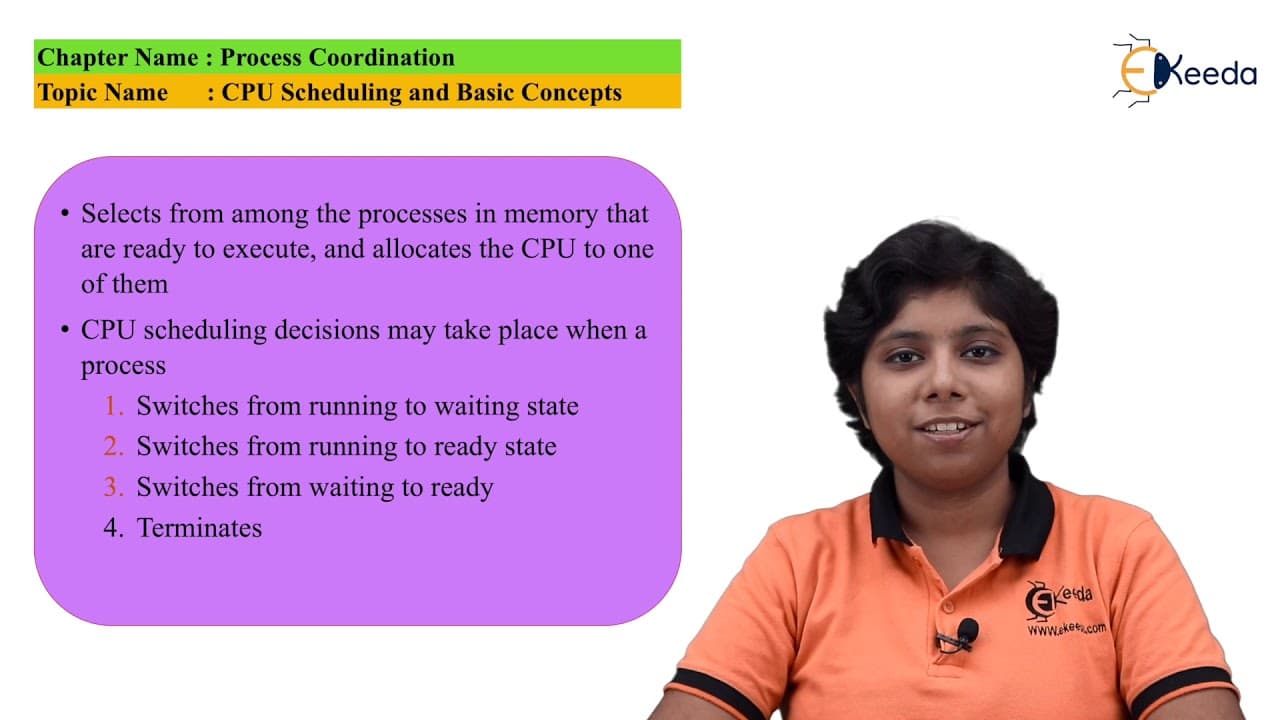
This video explains the basic concepts of CPU scheduling, including CPU bursts, schedulers, pre-emptive scheduling issues, and the dispatcher.
Transcript
click the bell icon to get latest videos from akira hello friends today we will discuss about what is Sapir scheduling and the basic concepts involved in the CPU scheduling such as CPU i/o burr cycle the scheduler the pre-emptive scheduling issues and the dispatcher in a single processor system only one CPU and allotted a one process at a time and ... Read More
Key Insights
- ⌛ CPU scheduling is crucial for efficient utilization of CPU time and maximizing the performance of the operating system.
- 👌 Processes alternate between CPU bursts and I/O bursts during their execution, and different scheduling algorithms can be used based on the burst characteristics.
- 👂 The CPU scheduler selects processes from the ready queue, which can be organized as a FIFO queue, a tree, a priority queue, or an unordered linked list.
- 😑 Pre-emptive scheduling allows processes to be interrupted and replaced by other processes, while non pre-emptive scheduling requires a process to release the CPU voluntarily.
- 🎭 Dispatcher performs the necessary operations to switch the context and start the execution of the selected process on the CPU.
- 😑 Pre-emptive scheduling can introduce risks and require careful handling of data inconsistency during context switching.
- ⌛ Real-time systems require careful scheduling to ensure processes complete within given time frames and handle interrupts effectively.
Install to Summarize YouTube Videos and Get Transcripts
Explore YouTube Video Summarizer or Get YouTube Transcript Extractor
Questions & Answers
Q: What is CPU scheduling and why is it important?
CPU scheduling is the algorithm used by the operating system to allocate CPU time to processes. It is important to ensure efficient utilization of the CPU, maximize throughput, and reduce waiting time for processes.
Q: How are CPU bursts and I/O bursts related in the execution of a process?
CPU bursts are periods when a process executes on the CPU, while I/O bursts occur when the process waits for I/O completion. Processes alternate between CPU bursts and I/O bursts during their execution.
Q: What is the role of the CPU scheduler?
The CPU scheduler selects processes from the ready queue to be allocated the CPU. It determines which process should run next based on factors like priority, scheduling algorithm, and fairness.
Q: What is the function of the dispatcher?
The dispatcher is responsible for switching the context, user mode, and jumping to the code section of the selected process. It executes the necessary operations to start the execution of the process on the CPU.
Summary & Key Takeaways
-
CPU scheduling is essential in both single processor and multi-programming environments to efficiently allocate CPU time to processes.
-
CPU bursts are the periods when a process executes on the CPU, while I/O bursts occur when the process waits for I/O completion.
-
The CPU scheduler selects processes from the ready queue to be allocated the CPU, and the dispatcher switches the context and user mode to start executing the selected process.
Read in Other Languages (beta)
Share This Summary 📚
Summarize YouTube Videos and Get Video Transcripts with 1-Click
Try YouTube Summary with ChatGPT & Claude or YouTube Transcript Generator
Explore More Summaries from Ekeeda 📚






Summarize YouTube Videos and Get Video Transcripts with 1-Click
Try YouTube Summary with ChatGPT & Claude or YouTube Transcript Generator