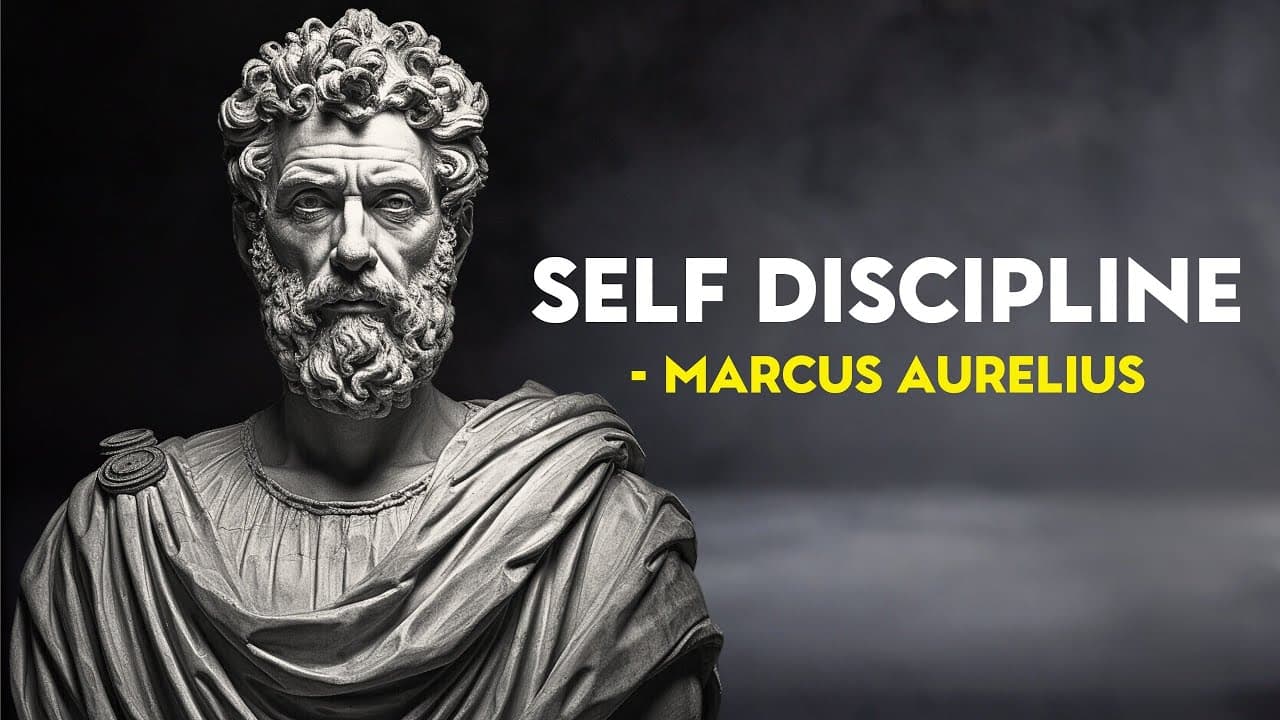
10 Stoic Principles To Build SELF DISCIPLINE | Marcus Aurelius Stoicism
TL;DR
Marcus Aurelius teaches self-discipline through Stoic principles.
Transcript
Read and summarize the transcript of this video on Glasp Reader (beta).
Key Insights
- Marcus Aurelius exemplified living with purpose, focusing on aligning daily actions with deeper personal values to cultivate self-discipline.
- Self-reliance is central to Stoicism, emphasizing personal accountability and independence while recognizing the value of external support.
- Consistency in daily tasks builds character and discipline, transforming routine actions into meaningful rituals that align with one's values.
- Voluntary hardship strengthens resilience, teaching appreciation for comforts and preparing the mind for life's unpredictabilities.
- The dichotomy of control helps focus energy on what is within one's control, fostering peace and reducing anxiety.
- Rejecting a victim mentality empowers individuals to focus on their responses and choices, emphasizing personal growth and resilience.
- Delayed gratification aligns actions with long-term goals, promoting mastery over desires and leading to lasting fulfillment.
- Emulating wise individuals provides practical examples of Stoic virtues, guiding personal development and decision-making.
Install to Summarize YouTube Videos and Get Transcripts
Explore YouTube Video Summarizer or Get YouTube Transcript Extractor
Questions & Answers
Q: How does Marcus Aurelius define purpose in Stoicism?
Marcus Aurelius defines purpose as discovering what truly matters to an individual and aligning daily actions with this deeper calling. This involves understanding one's role in the larger scheme of things and acting in harmony with personal virtues, which serves as a compass guiding decisions and fostering self-discipline.
Q: What role does self-reliance play in Stoic philosophy?
In Stoic philosophy, self-reliance is about personal accountability and independence, emphasizing that the ultimate responsibility for one's actions and growth lies within oneself. It encourages individuals to trust in their abilities to navigate life's challenges, fostering resilience and confidence without rejecting external support.
Q: Why is consistency important in Stoicism?
Consistency is crucial in Stoicism because it builds character and discipline through steady dedication to daily tasks. This regularity transforms routine actions into meaningful rituals, aligning with one's values and fostering personal growth. It emphasizes that small, consistent efforts are more impactful than sporadic monumental efforts.
Q: What is the purpose of voluntary hardship in Stoicism?
Voluntary hardship in Stoicism serves to strengthen resilience by preparing the mind for life's unpredictabilities. It involves experiencing discomfort voluntarily to fortify oneself against involuntary adversities, enhancing appreciation for comforts and encouraging growth by stepping outside comfort zones.
Q: How does the dichotomy of control reduce anxiety in Stoicism?
The dichotomy of control reduces anxiety by urging individuals to focus energy on what is within their control, such as actions and reactions, rather than external events. This focus fosters peace and resilience, as it liberates individuals from the futility of trying to control uncontrollable aspects of life.
Q: What is the Stoic perspective on playing the victim?
Stoicism rejects a victim mentality, emphasizing personal responsibility and self-mastery. It encourages individuals to focus on their responses and choices, viewing challenges as opportunities for growth rather than succumbing to external circumstances. This perspective empowers individuals to maintain emotional independence and resilience.
Q: How does delayed gratification align with Stoic values?
Delayed gratification aligns with Stoic values by promoting mastery over desires and prioritizing long-term fulfillment over immediate pleasure. It involves making choices that lead to lasting well-being and growth, reinforcing the Stoic practice of aligning actions with one's values and long-term goals.
Q: Why is emulating wise individuals important in Stoicism?
Emulating wise individuals is important in Stoicism as it provides practical examples of Stoic virtues in action. Observing and reflecting on the lives of those who embody wisdom, courage, and integrity helps individuals internalize these virtues, guiding personal development and decision-making in alignment with Stoic principles.
Summary & Key Takeaways
-
Marcus Aurelius's teachings on Stoicism emphasize the importance of living with purpose, aligning actions with personal values to cultivate self-discipline and resilience.
-
Self-reliance and consistency in daily tasks are key Stoic principles, fostering personal accountability and transforming routines into meaningful practices.
-
Voluntary hardship and the dichotomy of control are strategies to strengthen resilience and focus on controllable aspects of life, promoting peace and growth.
Read in Other Languages (beta)
Share This Summary 📚
Summarize YouTube Videos and Get Video Transcripts with 1-Click
Try YouTube Summary with ChatGPT & Claude or YouTube Transcript Generator
Explore More Summaries from Stoic Journal 📚






Summarize YouTube Videos and Get Video Transcripts with 1-Click
Try YouTube Summary with ChatGPT & Claude or YouTube Transcript Generator