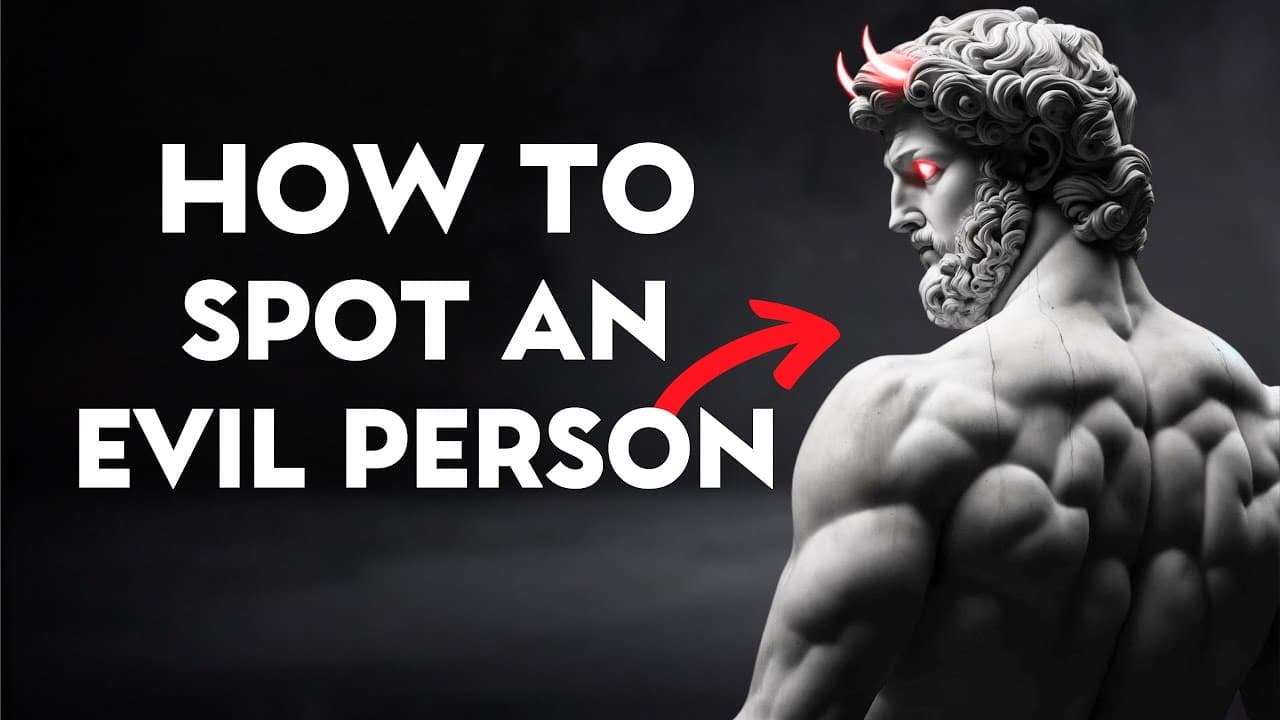
5 Signs You're Dealing With An Evil Person | Stoicism
TL;DR
Learn to identify five signs of toxic individuals to safeguard your mental health.
Transcript
It's a harsh reality but some people in our lives take pleasure in causing harm and chaos think about it you could be sharing moments trusting someone only to discover they are the very source of your turmoil today we dive deep into a topic that's as fascinating as it is frightening recognizing the signs you're dealing with an evil person whethe... Read More
Key Insights
- 😷 The charm of toxic individuals can mask harmful intentions, making it important to recognize early signs of manipulation or control.
- 📪 Lack of empathy is a significant red flag that can lead to deep emotional wounds in relationships, highlighting the need for awareness of interpersonal dynamics.
- 🖐️ Manipulation tactics, such as gaslighting and playing the victim, are commonly employed by toxic individuals to gain leverage in relationships.
- 🥸 Controlling behavior can strip away autonomy and independence, often disguised as care or concern, urging individuals to assert their boundaries.
- 😌 Pathological lying undermines trust and creates confusion within relationships, necessitating vigilance and a commitment to honesty.
- 💭 The Stoic principles of observation, self-control, and rational thought offer powerful tools for recognizing and navigating toxic behaviors.
- 🫡 Setting and maintaining boundaries is essential to safeguard mental health and foster self-respect in the face of manipulative behaviors.
Install to Summarize YouTube Videos and Get Transcripts
Explore YouTube Video Summarizer or Get YouTube Transcript Extractor
Questions & Answers
Q: What are the key signs that indicate someone may be toxic?
There are five primary signs to look out for: a lack of empathy, manipulative behavior, controlling tendencies, chronic lying, and superficial charm. Observing how someone interacts in various situations, especially during disagreements or stressful moments, can reveal their true character. Toxic individuals often use deceit and charm to mask their harmful intentions, making it essential to trust your instincts and pay attention to red flags.
Q: How can Stoic principles aid in recognizing these behaviors?
Stoicism teaches the importance of rational thought, observation, and self-control. By practicing these principles, individuals can avoid being caught up in the initial charm of a toxic person. The Stoics encourage evaluating actions over words, recognizing that true character is revealed through consistent behavior, especially in challenging situations.
Q: What impact can a lack of empathy have on relationships?
A lack of empathy can severely damage relationships, leading to feelings of isolation and misunderstanding. People who lack empathy tend to undermine others' feelings and fail to support or celebrate their successes. This can create a toxic environment where emotional support is absent, causing distress and resentment for those involved.
Q: What is manipulation, and how does it manifest in relationships?
Manipulation involves deceitful tactics used to control or influence others for personal gain. It can manifest as gaslighting, where a person makes you doubt your reality. Manipulators often twist situations, play the victim, and use charm initially to gain trust, but eventually show intentions focused on domination and control.
Q: How can I effectively set boundaries with toxic individuals?
Setting boundaries involves clearly communicating what behaviors you will not accept and being consistent in enforcing those boundaries. It requires self-respect and assertiveness, ensuring that your needs and limits are respected. The Stoics advocate for maintaining integrity and making difficult choices if someone repeatedly violates your boundaries.
Q: What should I do if I find myself involved with a pathological liar?
If you suspect someone is a pathological liar, it is crucial to assess your relationship and establish firm boundaries. Recognize that constant dishonesty is detrimental to trust and overall well-being. Focus on maintaining your integrity and peace of mind, and be prepared to distance yourself from the toxic influence.
Q: What are the risks of ignoring the signs of toxic behavior?
Ignoring signs of toxic behavior can lead to emotional distress, eroded trust, and unhealthy relationship dynamics. Over time, it may result in anxiety, confusion, or a dependency on the toxic person. Recognizing these behaviors early on can prevent significant harm to one’s mental health and foster healthier interactions.
Q: How does self-care play a role in dealing with toxic relationships?
Self-care is essential when navigating toxic relationships as it reinforces the importance of your well-being. Engaging in activities that promote mental and emotional health allows you to build resilience against negativity from others. The Stoics highlight that taking care of oneself enables better interactions with others.
Summary & Key Takeaways
-
Understanding the behavior of toxic individuals is crucial for protecting your mental well-being; this content explores five signs that indicate someone may have harmful intentions.
-
The Stoic philosophy plays a key role in recognizing these traits, emphasizing the importance of observation, self-control, empathy, and setting firm boundaries to maintain personal integrity.
-
The content aims to equip viewers with practical strategies for identifying manipulative behavior and establishing boundaries while cultivating healthy relationships.
Read in Other Languages (beta)
Share This Summary 📚
Summarize YouTube Videos and Get Video Transcripts with 1-Click
Try YouTube Summary with ChatGPT & Claude or YouTube Transcript Generator
Explore More Summaries from Stoic Journal 📚




Summarize YouTube Videos and Get Video Transcripts with 1-Click
Try YouTube Summary with ChatGPT & Claude or YouTube Transcript Generator