Why is Lithium in Short Supply?
TL;DR
Lithium is crucial for clean energy but faces supply challenges.
Transcript
National Geographic: Lithium, a soft, silver-gray metal, is the third lightest element in the universe. Originally discovered in 1817 in a piece of volcanic stone. PBS NewsHour: We’re standing on some lithium now, right? It’s there, you just can’t really tell it on the surface. WION: Beneath the desert lies a treasure, the white gold, better known ... Read More
Key Insights
- Lithium is essential for lithium-ion batteries, which power electric vehicles and store renewable energy, making it vital for the green energy transition.
- The demand for lithium is skyrocketing as countries aim to reduce carbon emissions, but the current supply cannot meet this growing demand.
- China controls a significant portion of the lithium processing and battery manufacturing market, posing geopolitical and economic challenges for other countries.
- The United States and other nations are exploring ways to diversify the lithium supply chain and increase domestic production to reduce reliance on China.
- Lithium extraction is environmentally challenging, requiring careful consideration of mining practices and their impact on local communities and ecosystems.
- Electric vehicles currently represent a small percentage of car sales, but governments and automakers are investing heavily to increase their market share.
- China's strategic investments in lithium and clean energy technologies are part of a broader plan to dominate the new energy economy.
- There is a need for international cooperation and frameworks to ensure a stable and equitable supply of lithium and other critical minerals.
Install to Summarize YouTube Videos and Get Transcripts
Explore YouTube Video Summarizer or Get YouTube Transcript Extractor
Questions & Answers
Q: Why is lithium important for the green energy transition?
Lithium is crucial for the green energy transition because it is a key component in lithium-ion batteries. These batteries are used to power electric vehicles and store energy from renewable sources like wind and solar. As countries aim to reduce carbon emissions and transition to cleaner energy sources, the demand for lithium is rapidly increasing.
Q: What challenges does the lithium supply chain face?
The lithium supply chain faces several challenges, including a significant gap between supply and demand, as the current production levels cannot meet the rapidly growing demand. Additionally, China controls a large portion of the global lithium processing and battery manufacturing, creating geopolitical and economic dependencies for other countries. The extraction process is also environmentally challenging.
Q: How does China's dominance in lithium processing affect global markets?
China's dominance in lithium processing affects global markets by creating dependencies for countries that rely on lithium for their clean energy initiatives. China controls over 60% of the global processing capacity and nearly 75% of lithium battery manufacturing, giving it significant market power. This dominance can lead to price volatility and supply chain disruptions, posing risks to energy security for other nations.
Q: What are the environmental concerns associated with lithium extraction?
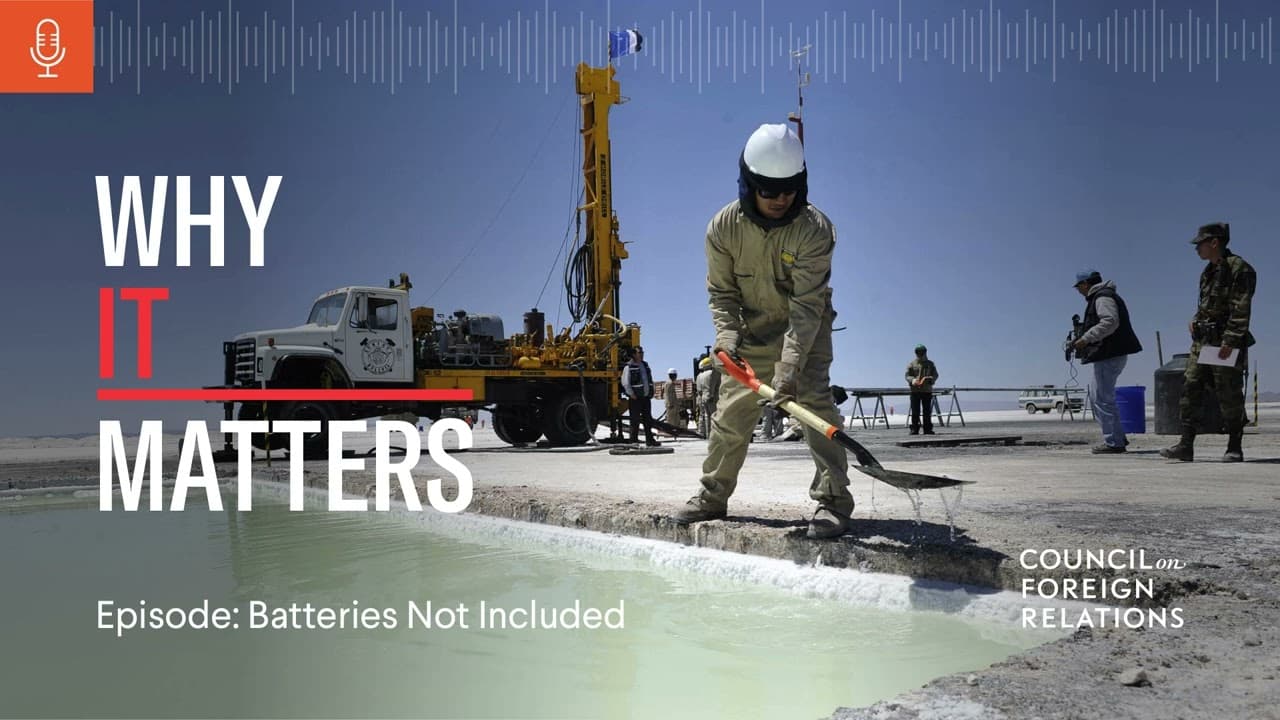
Lithium extraction poses environmental concerns due to the significant water usage and potential pollution associated with mining processes. In South America, lithium is extracted from salt flats, requiring large amounts of water for evaporation, which can affect local water resources. Additionally, mining can lead to habitat destruction and pollution, impacting local ecosystems and communities.
Q: How are governments and companies addressing the lithium supply issue?
Governments and companies are addressing the lithium supply issue by investing in domestic production, exploring new mining technologies, and seeking to diversify the supply chain. In the US, there is a push to develop lithium resources and processing capabilities to reduce reliance on China. International cooperation and frameworks are also being considered to ensure a stable and equitable supply of lithium.
Q: What role do electric vehicles play in the demand for lithium?
Electric vehicles play a significant role in the demand for lithium as they rely on lithium-ion batteries for power. As governments and automakers invest in transitioning from internal combustion engines to electric vehicles, the demand for lithium is expected to grow exponentially. This shift is part of broader efforts to reduce carbon emissions and combat climate change.
Q: What are the geopolitical risks associated with lithium supply?
The geopolitical risks associated with lithium supply include the potential for market manipulation and supply disruptions due to China's control over a significant portion of lithium processing and battery manufacturing. Reliance on a single dominant supplier can lead to price volatility and strategic vulnerabilities, especially as clean energy technologies become more critical to global economies.
Q: Can the US increase its domestic lithium production?
The US has the potential to increase its domestic lithium production, as it possesses significant lithium resources. However, developing these resources faces challenges such as lengthy permitting processes, environmental concerns, and local opposition to mining projects. Addressing these barriers and investing in sustainable mining practices are crucial for the US to enhance its lithium supply capabilities and reduce reliance on foreign sources.
Summary & Key Takeaways
-
Lithium is a critical component in lithium-ion batteries, essential for powering electric vehicles and storing renewable energy. The demand for lithium is rapidly increasing as countries transition to green energy, but supply struggles to keep pace.
-
China dominates the lithium processing and battery manufacturing markets, posing challenges for other countries that rely on these resources for their clean energy initiatives. Diversifying the supply chain is crucial for energy security.
-
The environmental impact of lithium extraction and the geopolitical risks associated with China's market control highlight the need for sustainable mining practices and international cooperation to ensure a stable lithium supply.
Read in Other Languages (beta)
Share This Summary 📚
Summarize YouTube Videos and Get Video Transcripts with 1-Click
Try YouTube Summary with ChatGPT & Claude or YouTube Transcript Generator
Explore More Summaries from Council on Foreign Relations 📚


Summarize YouTube Videos and Get Video Transcripts with 1-Click
Try YouTube Summary with ChatGPT & Claude or YouTube Transcript Generator