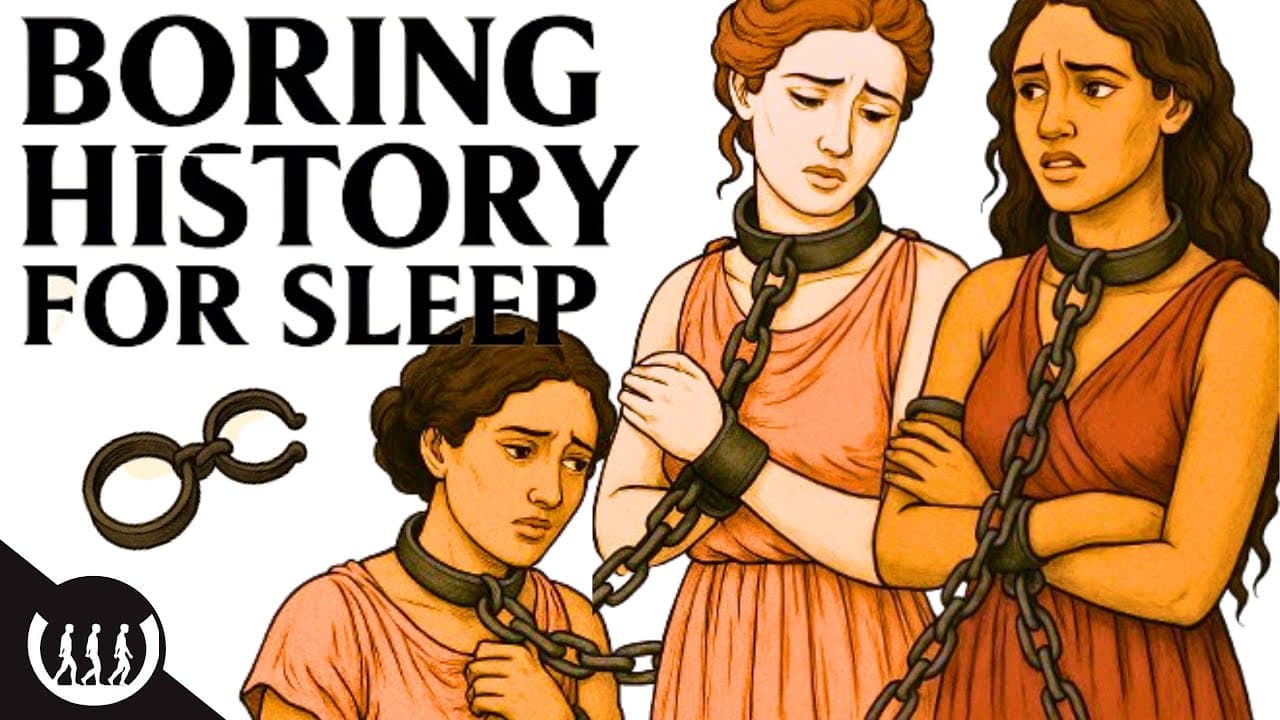
How Much Did Roman Slaves Cost and more
TL;DR
Explore historical insights on Roman slavery, Athenian parties, war elephants, and medieval bread.
Transcript
Read and summarize the transcript of this video on Glasp Reader (beta).
Key Insights
- Roman slaves were sold in chaotic markets, often displayed and auctioned based on skills, appearance, and health, with prices ranging significantly based on these factors.
- Athenian symposiums were intellectual gatherings where wine, music, and conversation intertwined, reflecting the competitive and social nature of Greek society.
- Carthaginian war elephants were both feared and revered, used as psychological weapons against enemies but required meticulous training and care.
- Bread and ale were essential to medieval life, serving as daily sustenance and carrying deep social and spiritual significance across different social classes.
- Roman slaves could buy their freedom through a system called peculium, though it depended heavily on the master's permission and the slave's ability to save money.
- Hannibal's use of elephants in the Second Punic War, especially during his crossing of the Alps, remains a legendary military feat, though ultimately unsustainable.
- The bread and ale economy in medieval Europe was fragile, with famines and shortages leading to social unrest and highlighting the disparity between rich and poor.
- Symposiums in Athens were not only social events but also platforms for philosophical discourse, political maneuvering, and expressions of personal and communal identity.
Install to Summarize YouTube Videos and Get Transcripts
Explore YouTube Video Summarizer or Get YouTube Transcript Extractor
Questions & Answers
Q: What factors influenced the price of Roman slaves?
The price of Roman slaves was influenced by several factors, including age, health, skills, appearance, and origin. Young, healthy slaves with specific skills, such as reading or cooking, commanded higher prices. Additionally, slaves from certain regions, like Greece, were valued for their intellectual capabilities, further affecting their market value.
Q: How did Athenian symposiums reflect Greek society?
Athenian symposiums were a microcosm of Greek society, reflecting its emphasis on intellectual discourse, social hierarchy, and competitive spirit. These gatherings combined wine, music, and conversation, allowing participants to engage in philosophical debates and display their wit and eloquence. The symposiums were also venues for political discussions and personal rivalries, highlighting the interconnectedness of social and political life in ancient Athens.
Q: What role did war elephants play in Carthaginian military strategy?
War elephants were a key component of Carthaginian military strategy, used to intimidate and disrupt enemy formations. Their sheer size and strength made them effective shock troops, capable of breaking through enemy lines and causing chaos. However, they required extensive training and could be unpredictable in battle, posing risks to both enemy and allied forces. Despite these challenges, elephants symbolized Carthage's military might and ambition.
Q: How did bread and ale shape medieval daily life?
Bread and ale were central to medieval daily life, serving as the primary sources of sustenance across all social classes. Bread varied in quality, with the wealthy enjoying fine white loaves and the poor consuming coarse, dark bread. Ale was a safer alternative to water, consumed by everyone from peasants to nobles. These staples were not only essential for survival but also carried social and spiritual significance, influencing rituals, economy, and community interactions.
Q: How did Roman slaves achieve freedom through peculium?
Roman slaves could achieve freedom through peculium, a system allowing them to accumulate money and eventually buy their freedom. This personal fund was technically owned by the master but often left for the slave to manage. Skilled slaves could earn peculium through side work or gifts, and once they saved enough to match their market value, they could negotiate for their freedom. However, this process required the master's consent, and not all slaves were granted the opportunity.
Q: What was the significance of Hannibal's use of elephants in the Second Punic War?
Hannibal's use of elephants in the Second Punic War, particularly during his crossing of the Alps, was a bold and strategic move designed to instill fear in Roman forces. The elephants symbolized Carthaginian power and Hannibal's audacity, creating a psychological advantage. However, the harsh conditions of the Alps and the challenges of sustaining the elephants in Italy limited their long-term effectiveness. Despite their initial impact, the elephants' role diminished as Rome adapted its tactics.
Q: How did bread and ale shortages affect medieval society?
Bread and ale shortages had profound effects on medieval society, leading to increased prices, social unrest, and even riots. Poor harvests or supply disruptions could make these staples scarce, forcing peasants to rely on inferior substitutes and causing widespread hunger. The disparity between the wealthy, who could still access fine bread, and the poor, who suffered the most, highlighted social inequalities and sometimes fueled rebellion against the ruling classes.
Q: What cultural significance did symposiums hold in ancient Greece?
Symposiums in ancient Greece held significant cultural importance as venues for intellectual exchange, social bonding, and political discourse. These gatherings allowed participants to explore philosophical ideas, showcase their rhetorical skills, and engage in competitive drinking games. The symposiums were also a reflection of Greek values, emphasizing the importance of dialogue, community, and the pursuit of knowledge. They served as spaces where personal and political relationships were forged and tested.
Summary & Key Takeaways
-
Roman slave markets were brutal and dehumanizing, with slaves sold based on skills and physical attributes. Prices varied widely, reflecting the economic and social complexities of ancient Rome.
-
Athenian symposiums were gatherings of intellect and indulgence, where men engaged in philosophical debates, enjoyed music, and participated in drinking games, reflecting the cultural values of ancient Greece.
-
Carthaginian war elephants were formidable military assets, used to instill fear and chaos in enemy ranks. Their deployment required careful training and handling, showcasing the strategic prowess of Carthaginian generals.
Read in Other Languages (beta)
Share This Summary 📚
Summarize YouTube Videos and Get Video Transcripts with 1-Click
Try YouTube Summary with ChatGPT & Claude or YouTube Transcript Generator
Explore More Summaries from Sleepless Historian 📚
Summarize YouTube Videos and Get Video Transcripts with 1-Click
Try YouTube Summary with ChatGPT & Claude or YouTube Transcript Generator