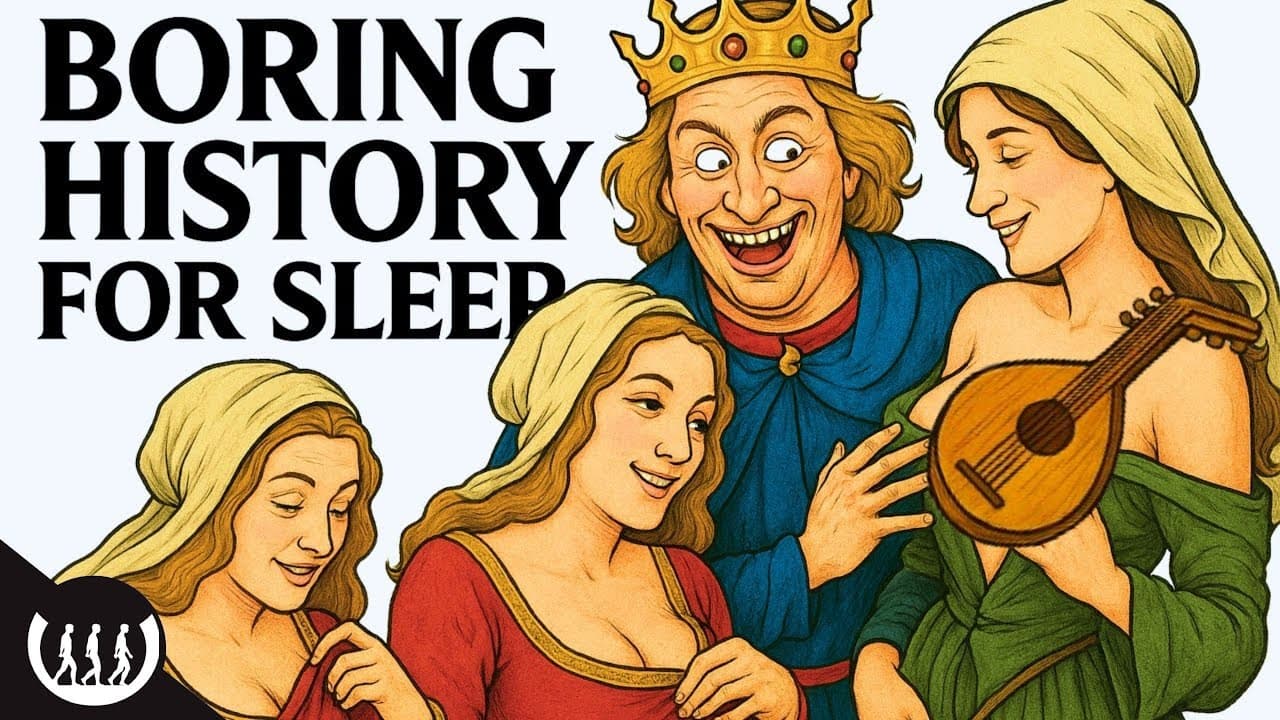
The Most Perverted Kings In Medieval History and more
TL;DR
Explore the scandalous lives of historical figures and the rise of legendary empires.
Transcript
Read and summarize the transcript of this video on Glasp Reader (beta).
Key Insights
- King John of England was infamous for his inappropriate behavior with noble women, using seduction as a political tool, which nearly led to rebellion.
- Charles VI of France, known as Charles the Mad, juggled mental illness with royal affairs, including a mistress who stayed through his most unhinged years.
- Jung Yi Sao transformed from a prostitute to a powerful pirate queen, commanding a fleet larger than many European navies and negotiating her way to peace.
- The Knights Templar evolved from a small group of warrior monks into a powerful financial institution, only to be dismantled by King Philip IV of France.
- Notre-Dame de Paris was a masterpiece of Gothic architecture, symbolizing religious and royal power, and survived revolutions and wars to remain a cultural icon.
- Ferdinand I of Naples used psychological warfare by displaying executed enemies in a 'museum of mummies,' showcasing his brutal approach to governance.
- Eric XIV of Sweden's reign was marked by paranoia and disastrous romantic pursuits, leading to his eventual overthrow and imprisonment.
- The French Revolution transformed Notre-Dame from a symbol of monarchy into a secular temple, before Victor Hugo's novel spurred its restoration.
Install to Summarize YouTube Videos and Get Transcripts
Explore YouTube Video Summarizer or Get YouTube Transcript Extractor
Questions & Answers
Q: What was King John of England known for during his reign?
King John of England was notorious for his inappropriate behavior with noble women, using seduction as a political strategy to break up powerful families and impose double taxes on alienated husbands. His actions nearly led to a rebellion, as many nobles feared leaving their wives unattended during royal visits.
Q: How did Charles VI of France earn his nickname 'Charles the Mad'?
Charles VI of France earned his nickname 'Charles the Mad' due to his mental illness, which led him to believe he was made of glass and engage in erratic behavior. Despite his delusions, he managed to maintain a royal mistress and navigate civil war, showcasing his ability to multitask amidst personal challenges.
Q: What was significant about Jung Yi Sao's leadership as a pirate queen?
Jung Yi Sao's leadership was significant because she transformed from a prostitute to a powerful pirate queen, commanding a fleet larger than many European navies. She implemented a strict pirate code, maintained loyalty through structure and rewards, and eventually negotiated her way to peace, retiring as a wealthy and respected woman.
Q: How did the Knights Templar rise to power, and what led to their downfall?
The Knights Templar rose to power by evolving from a small group of warrior monks into a powerful financial institution, trusted by kings and the Church. Their downfall was orchestrated by King Philip IV of France, who, deep in debt to the Templars, spread rumors of heresy and executed mass arrests, leading to their dissolution by the Pope.
Q: What role did Notre-Dame de Paris play during the French Revolution?
During the French Revolution, Notre-Dame de Paris was stripped of its religious significance and transformed into a secular 'temple of reason.' Statues were beheaded, relics hidden, and the cathedral was used for revolutionary festivals and as a warehouse, symbolizing the revolution's attack on monarchy and religion.
Q: How did Ferdinand I of Naples use psychological warfare against his enemies?
Ferdinand I of Naples used psychological warfare by executing rebellious nobles and displaying their embalmed bodies in a 'museum of mummies' beneath his castle. This gruesome exhibit served as a warning to potential traitors and showcased his brutal approach to governance, leaving visitors deeply unsettled.
Q: What led to Eric XIV of Sweden's downfall?
Eric XIV of Sweden's downfall was caused by his paranoia and catastrophic romantic pursuits. His obsession with astrology and erratic behavior, including imprisoning nobles and committing murder during a dinner party, led to his overthrow by the nobility, who imprisoned him and removed him from power.
Q: How did Victor Hugo's novel impact Notre-Dame de Paris?
Victor Hugo's novel 'Notre-Dame de Paris' (The Hunchback of Notre-Dame) brought attention to the cathedral's dilapidated state, sparking a public outcry for its preservation. The novel's success led to a full-scale restoration in the 19th century, saving the iconic structure and restoring its cultural significance.
Summary & Key Takeaways
-
The content explores the scandalous lives of medieval monarchs, focusing on their controversial behaviors and political machinations. It highlights how these rulers navigated power, relationships, and governance, often leading to turmoil and rebellion.
-
The rise and fall of the Knights Templar are chronicled, detailing their transformation from a monastic military order to a powerful financial entity, ultimately leading to their downfall orchestrated by King Philip IV of France.
-
The story of Jung Yi Sao, a pirate queen who commanded a vast fleet and negotiated her way out of piracy, showcases her strategic brilliance and defiance of societal norms, leaving a lasting legacy in maritime history.
Read in Other Languages (beta)
Share This Summary 📚
Summarize YouTube Videos and Get Video Transcripts with 1-Click
Try YouTube Summary with ChatGPT & Claude or YouTube Transcript Generator
Explore More Summaries from Sleepless Historian 📚


Summarize YouTube Videos and Get Video Transcripts with 1-Click
Try YouTube Summary with ChatGPT & Claude or YouTube Transcript Generator