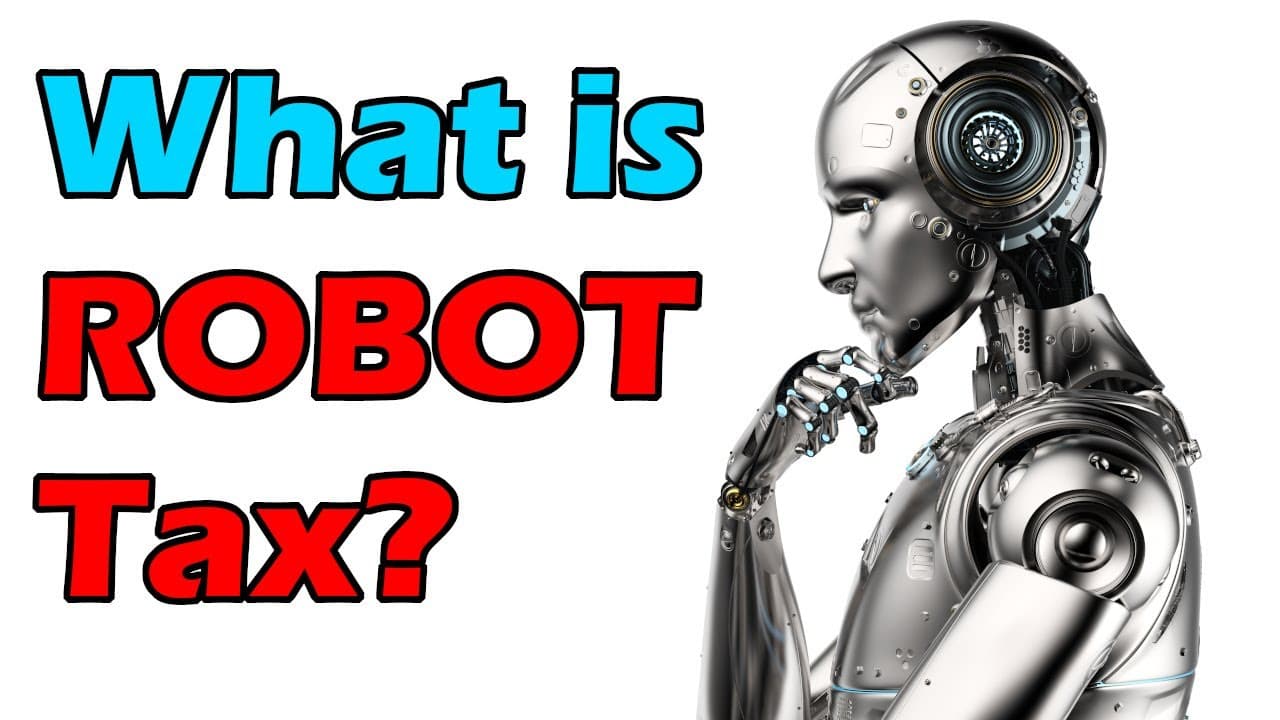
Proposing a ROBOT Tax: Decoupling Economic Growth from Human Labor
TL;DR
Implementing a robot tax can address the economic impact of AI and automation, redistribute wealth, and incentivize innovation in a post-labor economy.
Transcript
hey everybody David Shapiro here with a video today's video is going to be a slightly different flavor from what I normally do still centered around artificial intelligence so what I'm going to do today is I'm going to talk about a robot tax this is a proposal that I've been kind of cooking around on the back burner but I figured it's time to talk ... Read More
Key Insights
- 🌸 Automation and AI have already caused job losses and will continue to do so.
- 😌 The choice lies between social unrest or wealth redistribution.
- 🤖 GDP growth from AI can be captured and distributed through a robot tax.
- 🤖 The robot tax incentivizes innovation, economic growth, and national security.
- 👋 Implementation challenges include measuring economic impact and deciding which goods and services to tax.
- 🤖 The robot tax can mitigate unintended consequences through experimentation and modification.
- ⚖️ Concerns about governmental overreach can be balanced by the cost of inaction.
Install to Summarize YouTube Videos and Get Transcripts
Explore YouTube Video Summarizer or Get YouTube Transcript Extractor
Questions & Answers
Q: Why is the implementation of a robot tax necessary?
The rise of automation and AI will lead to widespread unemployment, and without redistribution, social unrest is inevitable. A robot tax offers a solution to ensure the fair distribution of wealth and incentivize innovation.
Q: How does a robot tax differ from a universal basic income (UBI)?
Unlike UBI, a robot tax is not an entitlement. Instead, it is directly tied to a tax system, ensuring that it is self-funded and proportional to the economic impact of AI and automation.
Q: How would a robot tax be implemented?
The robot tax could be similar to a value-added tax (VAT) and target goods and services produced efficiently with AI and automation. By raising the prices of these products slightly, the tax can be redistributed to benefit all citizens.
Q: What are the potential objections to a robot tax?
Some objections include concerns of governmental overreach, unintended consequences, difficulty of implementation, market distortions and inefficiencies, and moral concerns regarding rewarding people for not working.
Summary & Key Takeaways
-
Automation and AI have already destroyed more jobs than they have created, and this trend will continue.
-
Without redistribution or a robot tax, mass unemployment will lead to social unrest and economic turmoil.
-
A robot tax can be implemented as a comprehensive proposal to incentivize economic gains through automation and ensure that the benefits of AI are distributed to all citizens.
Read in Other Languages (beta)
Share This Summary 📚
Summarize YouTube Videos and Get Video Transcripts with 1-Click
Try YouTube Summary with ChatGPT & Claude or YouTube Transcript Generator
Explore More Summaries from David Shapiro 📚

Summarize YouTube Videos and Get Video Transcripts with 1-Click
Try YouTube Summary with ChatGPT & Claude or YouTube Transcript Generator