How to Handle JavaScript SEO Challenges
TL;DR
Handling JavaScript SEO involves understanding the impact of third-party scripts like reCAPTCHA and Google Analytics on page speed. These scripts can affect performance but not crawlability. For large websites, optimizing JavaScript by removing unused code and deferring non-essential scripts can improve user experience and potentially impact rankings.
Transcript
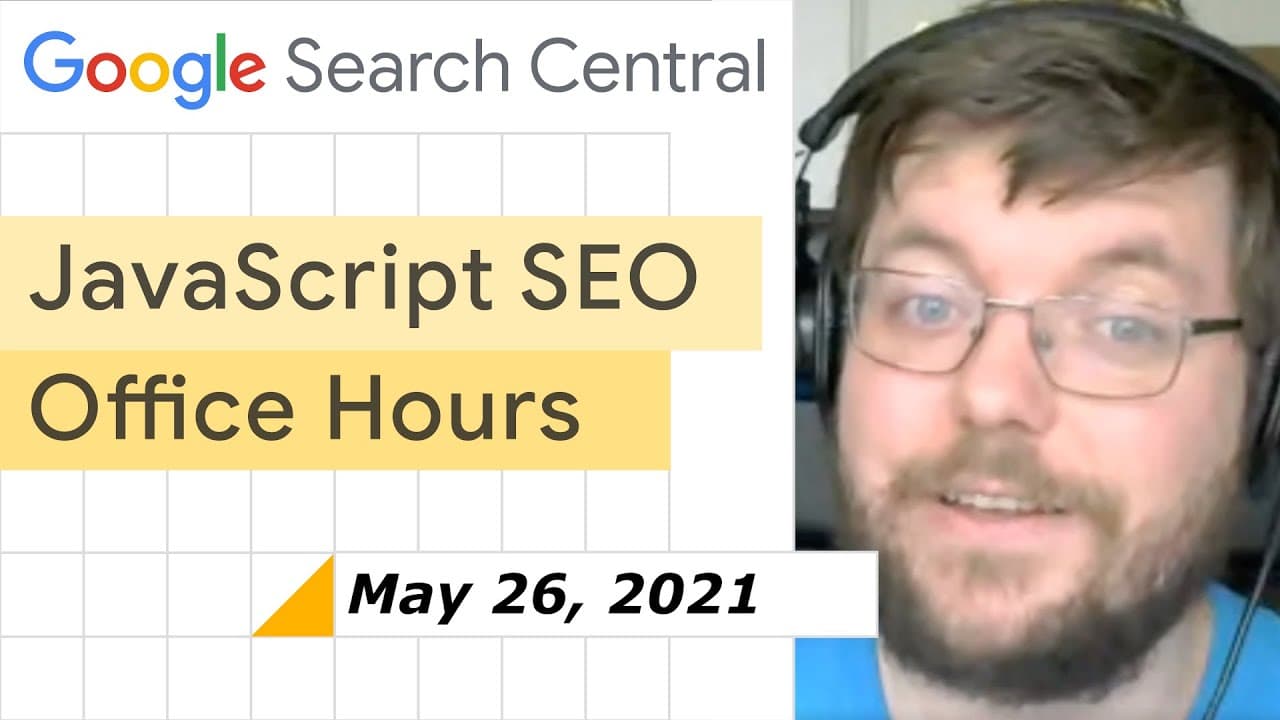
MARTIN SPLITT: Hello, and welcome to the last JavaScript of Q&A, or office hours, for May 2021. Today is the 26th of May. The next one will be on the 9th of June, we have just established. If you are not familiar with the format, every two weeks, I offer these where you can ask questions on YouTube. So if you are watching these on the YouTube recor... Read More
Key Insights
- JavaScript can impact page speed but not crawlability directly.
- Third-party scripts like reCAPTCHA can slow down a page and should be optimized or removed if unnecessary.
- Mobile-first indexing affects websites that are not responsive, but a well-optimized responsive site should not worry.
- Canonical tags are suggestions, not directives, and Google may choose different canonicals based on various signals.
- Core Web Vitals are global and impact rankings; focus on improving LCP, FID, and CLS.
- Fragment URLs can cause issues with indexing; consider moving away from them.
- JavaScript blocking the main thread affects user experience but not crawling.
- Engage with open-source communities for practical JavaScript SEO learning.
Install to Summarize YouTube Videos and Get Transcripts
Explore YouTube Video Summarizer or Get YouTube Transcript Extractor
Questions & Answers
Q: How does JavaScript affect SEO?
JavaScript impacts SEO primarily through page speed and user experience. Scripts can slow down a page if not optimized, affecting performance metrics like Core Web Vitals, which are ranking factors. However, JavaScript doesn't directly affect crawlability, as crawling focuses on retrieving the HTML document.
Q: What should I do if reCAPTCHA slows down my page?
If reCAPTCHA impacts page speed, consider reaching out to their support for optimization advice. If it's not essential, removing it can improve performance. Alternatively, explore loading it on-demand or deferring its loading to reduce its impact on the main thread.
Q: Does mobile-first indexing affect responsive sites?
For responsive sites, mobile-first indexing should not be a concern, as these sites are designed to work well across devices. Ensuring that the mobile version has the same content and functionality as the desktop version is key to handling mobile-first indexing effectively.
Q: How can I optimize JavaScript for a large website?
For large websites, optimize JavaScript by removing unused code, deferring non-critical scripts, and bundling scripts by page type. This reduces the number of requests and the load on the main thread, improving page speed and user experience, which can indirectly affect rankings.
Q: Is AMP necessary for better rankings?
AMP is not a direct ranking factor, but it can improve page speed, which is a ranking factor. If your site is already fast and responsive, AMP may not be necessary. Focus on optimizing Core Web Vitals for better performance and potential ranking benefits.
Q: Can I use canonical tags to control which URL Google indexes?
Canonical tags are suggestions, not directives. Google may choose different canonicals based on its algorithms. Ensure your canonical tags are set correctly, but understand that Google might select a different URL if it deems it more appropriate.
Q: How can I ensure content in modals is indexed?
To ensure content in modals is indexed, use fragments to express the state in the URL. This approach indicates that the content is part of the main page and can be crawled and indexed effectively by search engines.
Q: What are Core Web Vitals, and how do they affect SEO?
Core Web Vitals are metrics that assess page speed and user experience, focusing on Largest Contentful Paint (LCP), First Input Delay (FID), and Cumulative Layout Shift (CLS). They are part of Google's ranking factors, so optimizing them can improve your site's visibility in search results.
Summary & Key Takeaways
-
JavaScript SEO focuses on optimizing scripts to improve page speed and user experience. Third-party scripts, like reCAPTCHA, can affect performance, and it's crucial to address these through support channels or by removing unnecessary scripts. While JavaScript doesn't impact crawlability, it can influence rankings indirectly through page speed metrics.
-
Responsive websites generally handle mobile-first indexing well, but AMP can offer speed advantages. However, AMP itself is not a ranking factor. For large sites, optimizing JavaScript by deferring non-essential scripts and removing unused code can enhance performance and user experience.
-
Canonical tags are not absolute; Google may choose different canonicals based on its algorithms. It's essential to ensure that important content is not hidden behind scripts or modals, and to use fragments appropriately. Engaging with open-source communities can help improve JavaScript SEO understanding and application.
Read in Other Languages (beta)
Share This Summary 📚
Summarize YouTube Videos and Get Video Transcripts with 1-Click
Try YouTube Summary with ChatGPT & Claude or YouTube Transcript Generator
Explore More Summaries from Google Search Central 📚

Summarize YouTube Videos and Get Video Transcripts with 1-Click
Try YouTube Summary with ChatGPT & Claude or YouTube Transcript Generator