How Does the Squeeze Theorem Determine Sequence Convergence?
TL;DR
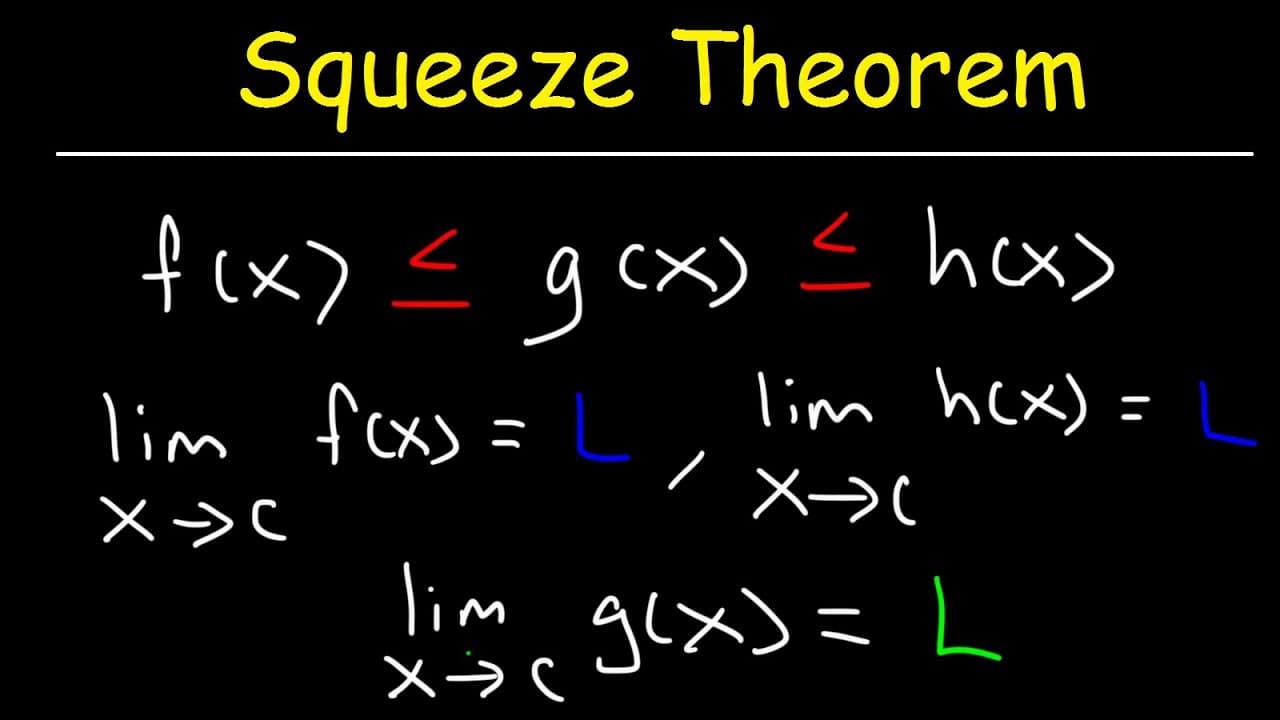
The squeeze theorem determines if a sequence converges or diverges by comparing it to two known functions. For the sequence sine n over n squared, the limit as n approaches infinity is 0, indicating convergence. Graphing the function can also provide visual insights into its behavior and convergence properties.
Transcript
consider the sequence a sub n which is 1 over n squared times sine of n so how can we determine if this sequence will converge or if it will diverge we need to find the limit as n approaches infinity and see if it converges into a specific value like a constant or if it diverges to infinity or negative infinity so how can we find the answer well fo... Read More
Key Insights
- 🔨 The squeeze theorem is a useful tool for determining the convergence or divergence of a sequence.
- 📈 Graphing the sequence as a continuous function helps visualize its behavior and can provide insights into its convergence or divergence.
- 👨💼 The limit of the sequence sine n over n squared, as n approaches infinity, is found to be 0 using the squeeze theorem.
- 🚥 For a sequence to converge, its graph must approach a horizontal asymptote; otherwise, it will diverge.
- ☺️ Understanding the behavior of sine x and its range helps in applying the squeeze theorem effectively.
- 🙃 Dividing all sides of an inequality involving a sequence by n squared can simplify the analysis using the squeeze theorem.
- ❓ The squeeze theorem compares the given sequence with two other functions to determine its convergence or divergence.
Install to Summarize YouTube Videos and Get Transcripts
Explore YouTube Video Summarizer or Get YouTube Transcript Extractor
Questions & Answers
Q: How can we determine if a sequence will converge or diverge?
To determine if a sequence will converge or diverge, we can find the limit as n approaches infinity and see if it converges to a specific value or diverges to infinity or negative infinity.
Q: What is the squeeze theorem used for?
The squeeze theorem is used to determine the convergence or divergence of a sequence by comparing it to two other functions that have the same limit.
Q: How do we apply the squeeze theorem to a given sequence?
To apply the squeeze theorem, we need to find two functions, one that is greater than or equal to the sequence and one that is less than or equal to the sequence. If the limits of these two functions are equal, then the limit of the sequence is also equal to that value.
Q: How can graphing the sequence help determine convergence or divergence?
Graphing the sequence as a continuous function allows us to observe its behavior as x approaches infinity. If the graph approaches a horizontal asymptote, the sequence will converge. If it increases indefinitely, the sequence will diverge.
Summary & Key Takeaways
-
The squeeze theorem is used to determine the convergence or divergence of a sequence by comparing it to two other functions.
-
The limit as n approaches infinity for the sequence sine n over n squared is found to be 0 using the squeeze theorem.
-
Graphing the sequence as a continuous function can also help determine if it will converge or diverge.
Read in Other Languages (beta)
Share This Summary 📚
Summarize YouTube Videos and Get Video Transcripts with 1-Click
Try YouTube Summary with ChatGPT & Claude or YouTube Transcript Generator
Explore More Summaries from The Organic Chemistry Tutor 📚





Summarize YouTube Videos and Get Video Transcripts with 1-Click
Try YouTube Summary with ChatGPT & Claude or YouTube Transcript Generator