How Does 'Beasts of No Nation' Portray War?
TL;DR
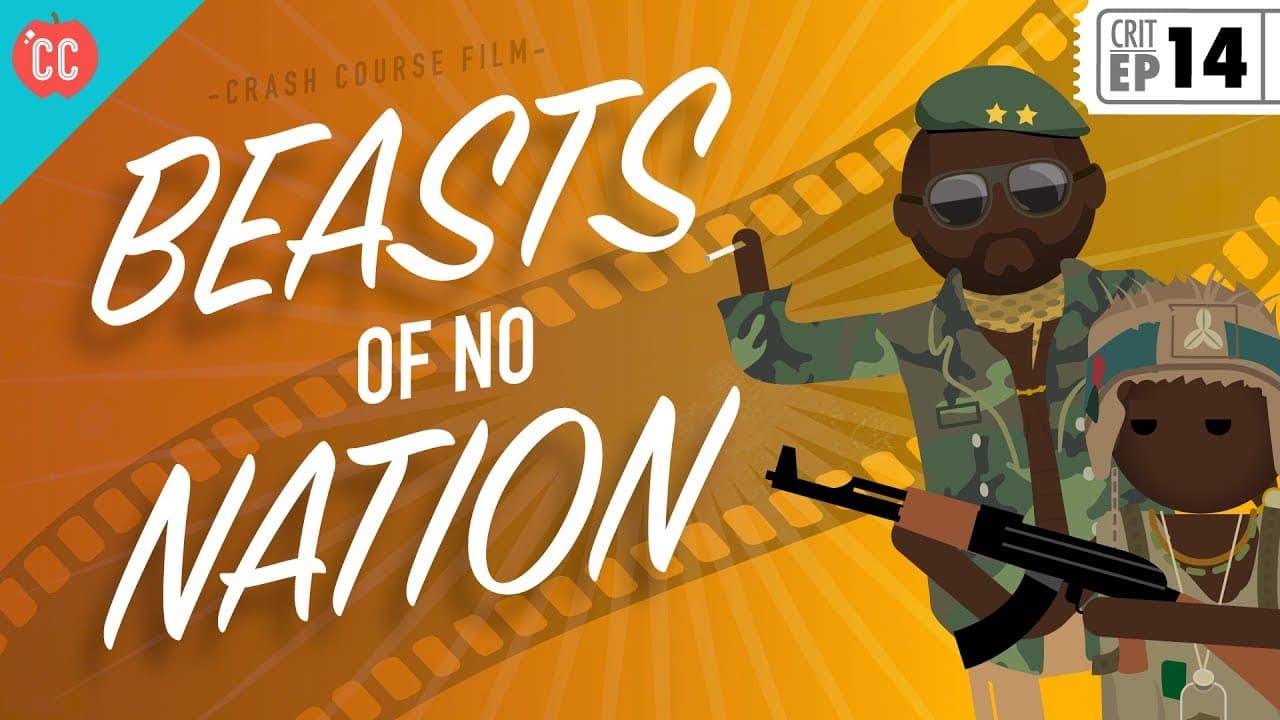
Beasts of No Nation, directed by Cary Fukunaga, explores the harrowing journey of a child soldier named Agu in a fictional African country torn by civil war. The film uses intense cinematography and a gripping narrative to depict Agu's loss of innocence and struggle to reclaim his childhood. With powerful performances and a compassionate lens, it delves into the brutality and emotional toll of war on children.
Transcript
There are movies about war. And there are movies about kids. But the movies about war starring kids are more rare. Some are science fiction, like 2013’s Ender’s Game. Others follow children trying to survive during wartime, movies like Stephen Spielberg’s Empire of the Sun starring a young Christian Bale. Or John Boorman’s semi-autobiographical Hop... Read More
Key Insights
- Beasts of No Nation is a film about child soldiers in a fictional African country during a civil war.
- Cary Fukunaga directed and shot the film, bringing a unique perspective and intense cinematography.
- The film is based on the 2005 novel by Uzodinma Iweala.
- Agu, the protagonist, is played by Abraham Attah, who delivers a focused and compelling performance.
- Idris Elba plays the Commandant, a brutal leader who indoctrinates child soldiers.
- The film uses handheld camerawork and close-ups to immerse viewers in Agu's perspective.
- The score by Dan Romer adds an otherworldly feel, enhancing the film's emotional depth.
- The film concludes with a glimmer of hope as Agu begins to reclaim his childhood at a rehabilitation school.
Install to Summarize YouTube Videos and Get Transcripts
Explore YouTube Video Summarizer or Get YouTube Transcript Extractor
Questions & Answers
Q: How does 'Beasts of No Nation' depict the life of a child soldier?
Beasts of No Nation portrays the life of a child soldier through the eyes of Agu, a young boy forced into a rebel group in a fictional African country. The film captures his loss of innocence and the brutal reality of war, using intense cinematography and a gripping narrative to immerse viewers in Agu's harrowing journey. It highlights the emotional and psychological toll on children involved in warfare.
Q: What role does the Commandant play in 'Beasts of No Nation'?
In Beasts of No Nation, the Commandant, played by Idris Elba, is a brutal yet charismatic leader of a rebel group that indoctrinates child soldiers. He plays a fatherly role to Agu and the other children, guiding them through violent acts and manipulation. The Commandant's complex character adds depth to the film, showcasing the psychological control exerted over the child soldiers.
Q: What cinematic techniques does Cary Fukunaga use in the film?
Cary Fukunaga employs various cinematic techniques in Beasts of No Nation to enhance the storytelling. He uses handheld camerawork and close-ups to capture Agu's perspective, creating an immersive and intense experience for viewers. The film also incorporates natural lighting and diegetic sound to convey realism, while the score by Dan Romer adds an otherworldly feel, emphasizing Agu's emotional journey.
Q: How does the film's setting contribute to its narrative?
The film's setting in a fictional, unnamed African country allows it to focus on the universal experiences of child soldiers without being tied to a specific political context. The lush, dangerous jungles and war-torn villages serve as a backdrop to Agu's journey, highlighting his vulnerability and the chaos of war. This setting amplifies the film's emotional impact and underscores the widespread issue of child soldiers globally.
Q: What is the significance of the film's ending?
The ending of Beasts of No Nation offers a glimmer of hope as Agu begins his journey towards recovery at a coastal rehabilitation school. After enduring the horrors of war, Agu is given a chance to reclaim his childhood and humanity. The film's stable cinematography in these final scenes reflects Agu's newfound stability and potential for healing, leaving viewers with a sense of optimism amidst the darkness.
Q: How does the film address the theme of lost innocence?
Beasts of No Nation addresses the theme of lost innocence through Agu's transformation from a playful child to a hardened soldier. The film depicts his forced participation in violent acts and the psychological impact of war, emphasizing the tragic loss of childhood. Through Agu's journey, the film explores the devastating effects of conflict on young lives and the struggle to regain a sense of normalcy and humanity.
Q: What role does music play in 'Beasts of No Nation'?
Music in Beasts of No Nation, composed by Dan Romer, plays a crucial role in enhancing the film's emotional depth. The score often feels otherworldly, reflecting Agu's disconnection from reality and his internal struggle. It underscores key moments, such as Agu's initiation into violence, and helps convey the film's themes of loss and resilience, adding a layer of complexity to the narrative.
Q: How does the film use visual storytelling to convey Agu's perspective?
The film uses visual storytelling to convey Agu's perspective by employing low-angle shots, handheld camerawork, and close-ups that immerse viewers in his world. These techniques allow the audience to experience Agu's emotions and reactions to the chaos around him. The film's visual style shifts from stable to chaotic, mirroring Agu's journey from innocence to the harsh realities of war, effectively capturing his inner turmoil and resilience.
Summary & Key Takeaways
-
Beasts of No Nation, directed by Cary Fukunaga, tells the story of Agu, a child soldier in a fictional African country torn by civil war. With a focus on Agu's perspective, the film uses intense cinematography and an emotional narrative to explore the brutality of war and its impact on children. The film's conclusion offers a glimpse of hope as Agu starts his journey towards recovery.
-
The film features powerful performances, particularly from Abraham Attah as Agu and Idris Elba as the Commandant, who leads a group of child soldiers. Fukunaga employs various cinematic techniques, such as handheld camerawork and a compelling score, to immerse viewers in Agu's harrowing journey and emotional turmoil.
-
Beasts of No Nation combines realism with moments of heightened reality, using cinema's language to depict Agu's loss of innocence and struggle for redemption. The film's compassionate portrayal of its characters makes the sliver of hope at the end all the more impactful, offering a poignant reflection on the resilience of the human spirit in the face of adversity.
Read in Other Languages (beta)
Share This Summary 📚
Summarize YouTube Videos and Get Video Transcripts with 1-Click
Try YouTube Summary with ChatGPT & Claude or YouTube Transcript Generator
Explore More Summaries from CrashCourse 📚





Summarize YouTube Videos and Get Video Transcripts with 1-Click
Try YouTube Summary with ChatGPT & Claude or YouTube Transcript Generator