What Is React's useEffect and Why Is It Confusing?
TL;DR
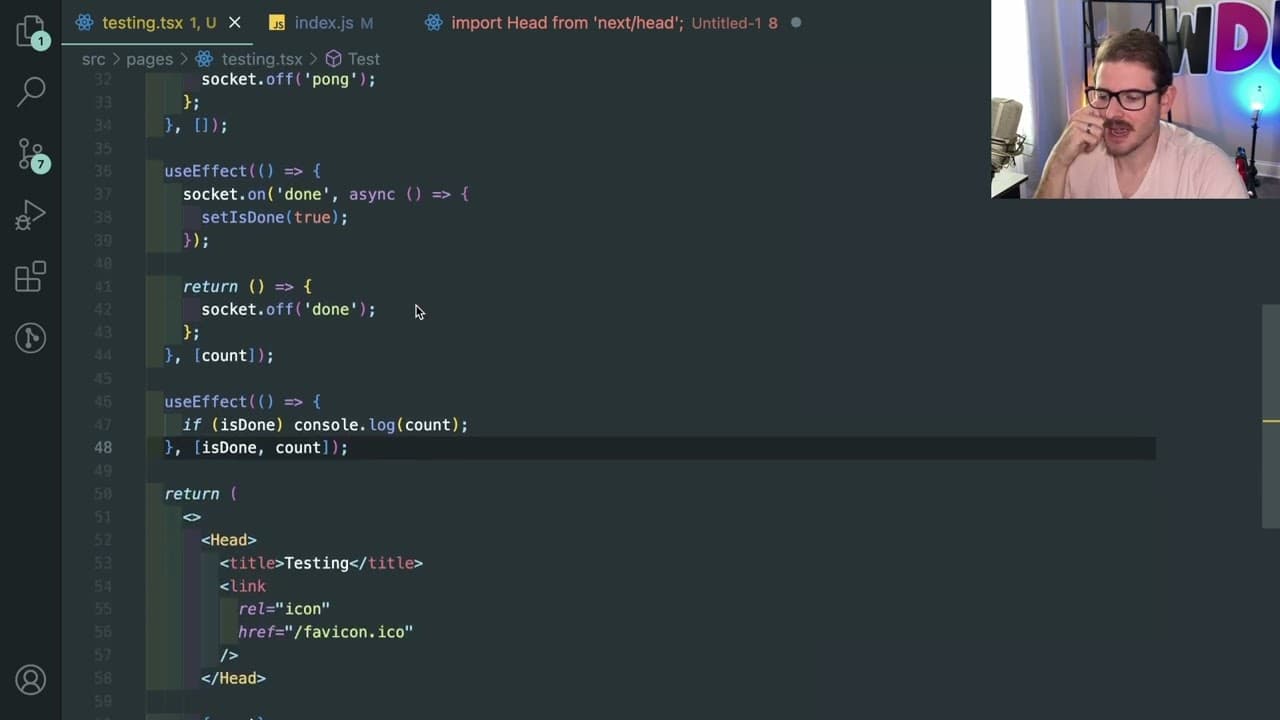
React's useEffect hook can be challenging to understand because it often leads to stale state issues during asynchronous updates, especially with websockets. The complexity arises from React's state management and component lifecycle, which can feel unnecessarily convoluted compared to other frameworks like Svelte or Vue. Developers frequently encounter difficulties when trying to effectively manage updates and re-renders, highlighting the need for more intuitive design in React.
Transcript
how's it going everyone so I have been for the past couple days I've just been playing around with use effect just trying to make sure I really understand it because I feel like it's one of those hooks that I just neglected really understanding how it works under the hood and I still don't feel like I even understand it because it's just so confusi... Read More
Key Insights
- 🚱 Understanding useEffect fully requires grappling with React's state and component lifecycle, which can be non-intuitive.
- 🍵 Managing websocket data in React necessitates a clear strategy for handling asynchronous updates to avoid stale state issues.
- 💝 Using refs can provide a solution for maintaining the latest state values without the need for a component re-render, although this may not always result in UI updates.
- 💄 The speaker emphasizes that many of React's complexities are not often discussed in beginner tutorials, making it harder for newcomers to learn effectively.
- 🐢 There is frustration among developers about the perceived slow evolution of React's hooks compared to other frameworks which may offer simpler solutions.
- 🎨 The confusion surrounding effects and state management in React reveals a need for more intuitive design features in the library, such as the proposed useEvent hook.
- ✊ The speaker’s journey reflects a common sentiment among React developers about the balance between power and complexity in library design.
Install to Summarize YouTube Videos and Get Transcripts
Explore YouTube Video Summarizer or Get YouTube Transcript Extractor
Questions & Answers
Q: What is the primary focus of the speaker’s exploration with useEffect?
The primary focus is on understanding the complexities and nuances of the useEffect hook in React, particularly in relation to managing local state and its behavior when working with asynchronous tasks like websockets. The speaker aims to clarify common misconceptions and the challenges beginners face while navigating these issues.
Q: How does the prototype using websockets demonstrate the issues with useEffect?
The prototype sends a ping message to a websocket server, which responds with a series of pong messages. The speaker illustrates issues with stale state by showing how the updated count doesn't reflect the expected value after receiving all pong responses, highlighting a common pitfall in managing state with useEffect.
Q: What are some workarounds suggested by the speaker for managing state in React?
The speaker suggests using a ref to store the current count, as refs maintain their values without causing re-renders. They also discuss adding a state variable to trigger re-renders when certain conditions are met, as well as creating custom helper functions to manage state more intuitively, despite these methods being considered hacky.
Q: Why does the speaker express a desire to switch to other frameworks?
The speaker expresses frustration with the complexity of handling state and interactions in React, finding the process convoluted compared to frameworks like Svelte and Vue, which they perceive as more straightforward. This leads them to consider transitioning their content focus away from React due to the challenges encountered.
Q: What does the speaker mean by “leaky abstraction” in the context of useEffect?
The term "leaky abstraction" refers to the speaker's view that useEffect hides some underlying complexities of state management, making it challenging for developers, especially beginners, to understand how to properly handle state updates and effects. This metaphor highlights the disconnect between the accessible API and the intricate behaviors it encompasses.
Q: How do race conditions impact the behavior of the useEffect hook?
Race conditions occur in this context when state updates do not reflect the latest values due to React's asynchronous nature. As the speaker demonstrates, even when code seems logical in terms of execution order, the closure created by useEffect may capture stale values resulting in unexpected or incorrect output, such as seeing an old count.
Q: What benefits of the proposed useEvent hook did the speaker mention?
The proposed useEvent hook is designed to address some of the issues faced with useEffect by providing access to the latest state values without the complications currently present. It aims to simplify event handling and state updates, hence preventing stale state issues that developers often encounter, which would be a substantial improvement for React developers.
Q: What resources does the speaker suggest for further engagement and support?
The speaker invites viewers to join their Discord community for discussions and assistance with React-related queries. Additionally, they encourage viewers to subscribe, like, and comment on their content to foster further interactive learning and engagement within the developer community.
Summary & Key Takeaways
-
The speaker explores the complexities of the useEffect hook in React, revealing confusion around its operation and state management, particularly when utilizing websockets.
-
A prototype was created to demonstrate sending a ping message and handling responses that initially reveal issues with how React updates state variables and manages component re-renders.
-
The speaker discusses various workarounds for effectively managing state and updating the UI, while expressing dissatisfaction with the convoluted nature of React compared to other frameworks like Svelte and Vue.
Read in Other Languages (beta)
Share This Summary 📚
Summarize YouTube Videos and Get Video Transcripts with 1-Click
Try YouTube Summary with ChatGPT & Claude or YouTube Transcript Generator
Explore More Summaries from Web Dev Cody 📚


Summarize YouTube Videos and Get Video Transcripts with 1-Click
Try YouTube Summary with ChatGPT & Claude or YouTube Transcript Generator