Which crypto coins are scams? | Vitalik Buterin and Lex Fridman
TL;DR
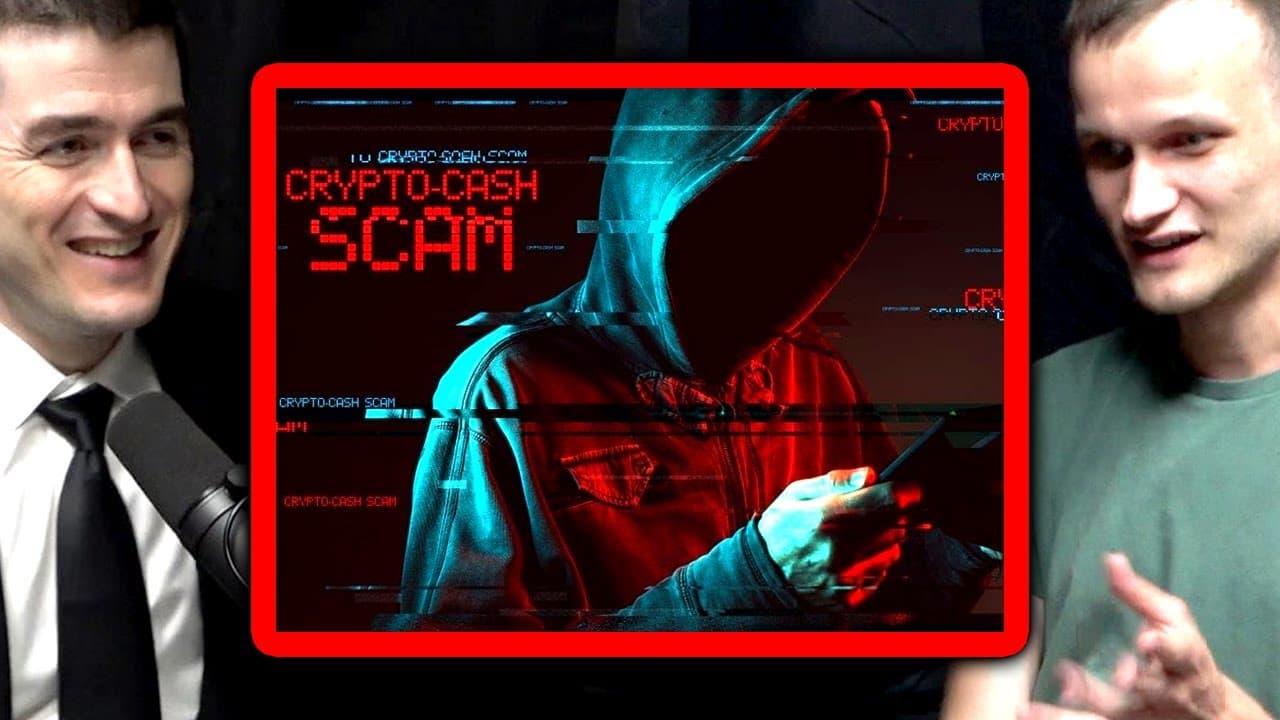
Vitalik Buterin describes crypto scams as a spectrum: Bitconnect was a pure scam, while Bitcoin SV and Tron combine usable technology with scammy qualities. He points to false claims, money-grab behavior, questionable leaders, and plagiarism, Tron copied the IPFS white paper, but says an enthusiastic community alone does not prove fraud. Read on for a practical framework for separating projects, communities, and claims.
Transcript
okay let me ask you a weird question we talked about craig wright a little bit but a lot of people write to me one of two emails one email uh is uh calling any coin outside of bitcoin a uh a scam and then the other email is saying my my favorite coin is the best coin it's going to save the world whatever that coin is uh and so i sit back and i look... Read More
Key Insights
- 👾 Evaluating cryptocurrencies is complex, as the space contains both scams and genuine yet flawed projects.
- 😌 The characteristics of a scam coin may include intentional lies, fraudulent claims, and a lack of genuine intent to do good.
- 🪙 The enthusiasm within a coin's community can cloud judgment, but it does not necessarily make the coin a scam.
- 📽️ Differentiating between scams and legitimate projects requires considering the credibility, actions, and claims made by the coin and its community.
- 😒 The language used to describe coins varies, ranging from harsh labels to conservative use of the term "scam."
- 🤑 Money's involvement in cryptocurrency intensifies debates and impacts individuals' lives, making evaluation more critical.
Install to Summarize YouTube Videos and Get Transcripts
Explore YouTube Video Summarizer or Get YouTube Transcript Extractor
Questions & Answers
Q: Which crypto coins does Vitalik Buterin describe as scams or scammy?
Vitalik Buterin identifies Bitconnect as a pure, complete scam and places Bitcoin SV around the scammy end of the spectrum. He also says Tron has scammy qualities because it plagiarized the IPFS white paper, although its platform can still be used.
Q: Is calling a cryptocurrency a scam a binary judgment or a gray area?
Buterin says it is definitely a gray area. He describes a spectrum running from pure scams through usable projects with sketchy communities or unrealistic goals to genuinely good projects.
Q: Why does Vitalik Buterin call Bitconnect a pure scam?
Bitconnect promoted its coin at a conference in Vietnam with claims that it would rise in value. Buterin describes it as the peak of pure, completely scammy coins and says it was terrible.
Q: Why does Bitcoin SV seem scammy despite having a functioning blockchain?
Bitcoin SV is a fork of Bitcoin that can process transactions and could potentially store files. However, Buterin says Craig Wright is a scammer, members of the community make obviously wrong claims about what BSV can accomplish, and several aspects make it feel like a money grab.
Q: What scammy quality does Tron have?
Tron is a usable platform on which people can do things. Buterin nevertheless says it has scammy qualities because it plagiarized the IPFS white paper.
Q: Does a highly enthusiastic crypto community mean its coin is a scam?
No. Lex Fridman notes that both questionable coins and genuinely exciting ideas can attract intensely positive communities, just as space exploration attracts exceptional enthusiasm. He says he learned to separate a community from the underlying ideas.
Q: What warning signs can help people evaluate whether a coin is scammy?
The discussion highlights obviously wrong claims about what a project can accomplish, behavior that feels like a money grab, dishonest leadership, and plagiarism. It also distinguishes flaws in the technology from sketchiness in the community, since either can affect where a project falls on the spectrum.
Q: Does the discussion describe Bitcoin as a scam?
No. Fridman says Bitcoin’s dogmatically excited community initially gave him cult-like concerns, but he later learned to separate the community from the ideas. He concludes that Bitcoin is a revolutionary idea on many fronts.
Summary & Key Takeaways
-
Cryptocurrency evaluation is challenging because some coins are scams, while others have genuine yet flawed projects with sketchy communities.
-
Craig Wright's Bitconnect was an example of a pure scam, while Bitcoin SV falls into a gray area due to questionable claims and a divided community.
-
Tron plagiarized the IPFS white paper, making it another example of a coin with scammy qualities.
Read in Other Languages (beta)
Share This Summary 📚
Summarize YouTube Videos and Get Video Transcripts with 1-Click
Try YouTube Summary with ChatGPT & Claude or YouTube Transcript Generator
Explore More Summaries from Lex Clips 📚




Summarize YouTube Videos and Get Video Transcripts with 1-Click
Try YouTube Summary with ChatGPT & Claude or YouTube Transcript Generator