How Do Hypergraphs Derive Physics Theories?
TL;DR
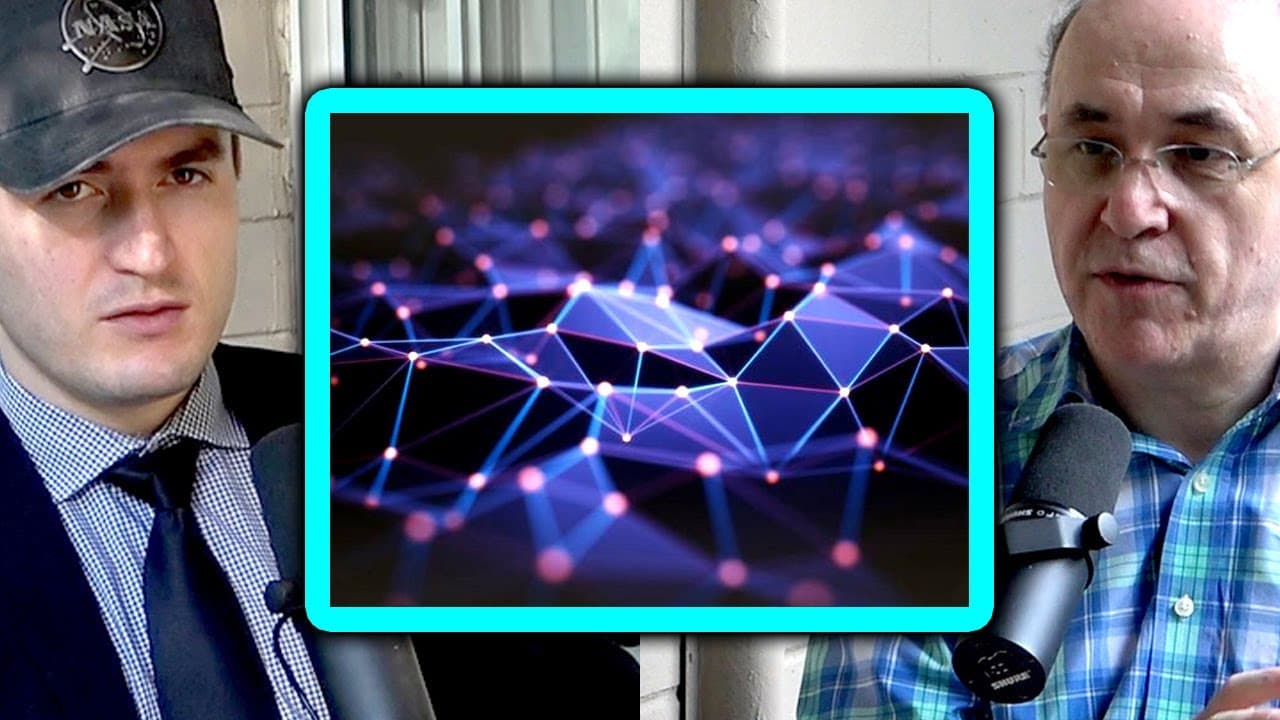
The Wolfram Physics Project utilizes hypergraphs to derive fundamental physics theories, including special relativity and quantum mechanics. By applying mathematical and computational principles, it reveals how these theories emerge from rule-based systems, offering a new perspective on the structure of space and time.
Transcript
so if i were to try to summarize the wolfram physics project which is uh you know something that's been in your brain for a long time but really has just exploded in activity you know only just months ago yes uh so it's an evolving thing and next week i'll try to publish this conversation as quickly as possible because by the time it's published al... Read More
Key Insights
- ⚾ The Wolfram Physics Project aims to derive known physics theories using hypergraphs and rule-based computational systems.
- 🚠 The project is able to make general statements that correspond to 20th-century physics using mathematical and computational ideas.
- 🥺 Energy in the hypergraphs is defined as the amount of activity, and this interpretation leads to the derivation of famous equations like E=mc².
- 👾 Curvature in hypergraphs corresponds to the structure of space and is determined through the size increase of a ball as the radius increases.
- 👾 The project explores the possibility of dimension fluctuations and the concept of space-like hypersurfaces to define moments in time.
- ❓ The familiarity of known physics theories arising from the Wolfram Physics Project is unexpected but intriguing.
- 🥺 Assumptions of causal invariance, finite dimensional computational irreducibility, and finite dimensional space lead to the derivation of Einstein's equations for the vacuum.
Install to Summarize YouTube Videos and Get Transcripts
Explore YouTube Video Summarizer or Get YouTube Transcript Extractor
Questions & Answers
Q: How does the Wolfram Physics Project approach deriving known physics theories?
The project uses hypergraphs to represent space and time and explores rule-based computational systems to find rules that generate known physical theories.
Q: What is the significance of being able to derive special relativity, general relativity, and quantum mechanics from hypergraphs?
It is surprising and exciting because it was not expected that the project would be able to find rules that correspond to known physics theories. This achievement showcases the potential of the Wolfram Physics Project.
Q: How does the project define curvature in a hypergraph?
Curvature in a hypergraph is determined by looking at how the size of a ball within the hypergraph increases as the radius increases. Curvature is a correction term to the increase in size associated with dimension.
Q: Can hypergraphs be infinitely dimensional?
In a hypergraph, it is not possible for the dimension to be infinite. However, there can be dimension fluctuations, and certain regions of the universe may have slightly different dimensions, potentially even surpassing three dimensions.
Summary & Key Takeaways
-
The Wolfram Physics Project is focused on using hypergraphs to represent space and time and finding rules that generate known physical theories.
-
By applying computational and mathematical ideas, the project has been able to make general statements that correspond to 20th-century physics.
-
The project has successfully derived special relativity, general relativity, and quantum mechanics from the hypergraphs and rule-based computational systems.
Read in Other Languages (beta)
Share This Summary 📚
Summarize YouTube Videos and Get Video Transcripts with 1-Click
Try YouTube Summary with ChatGPT & Claude or YouTube Transcript Generator
Explore More Summaries from Lex Clips 📚






Summarize YouTube Videos and Get Video Transcripts with 1-Click
Try YouTube Summary with ChatGPT & Claude or YouTube Transcript Generator