What Is Euthanasia and Its Legal Status in the UK?
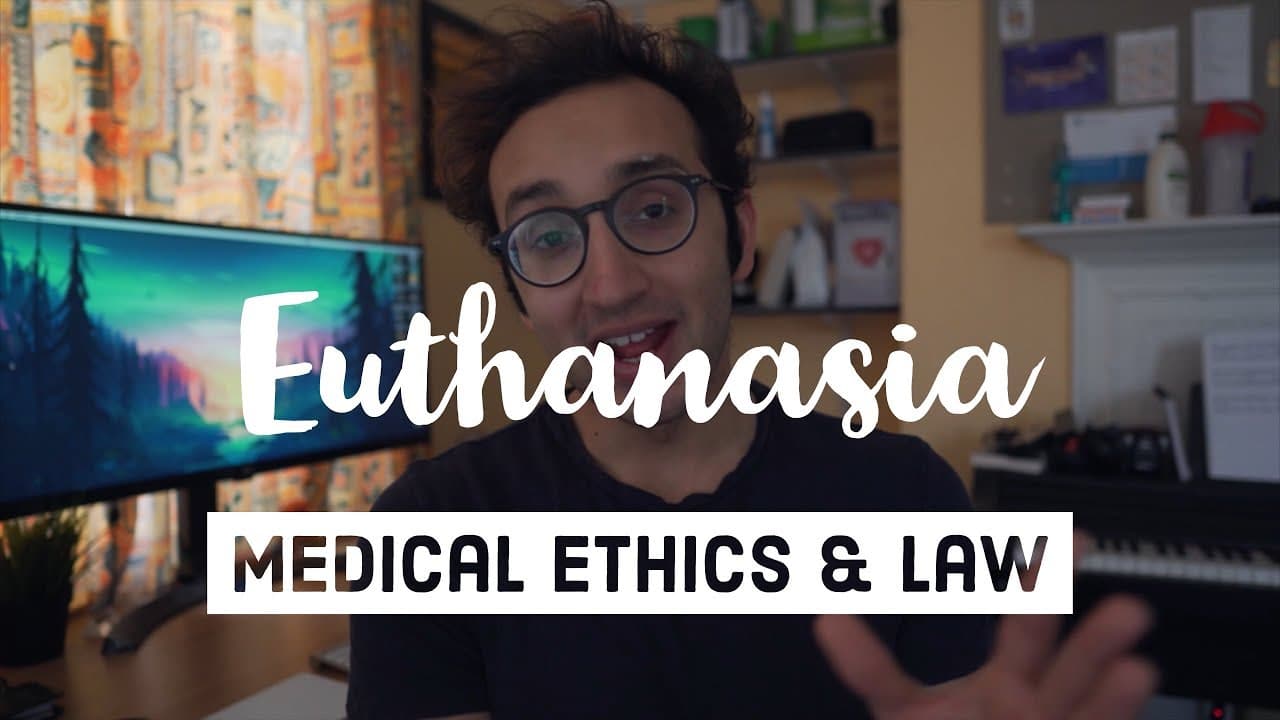
TL;DR
Euthanasia, including active and passive forms, is illegal in the UK, and the terms should be used with caution. Withdrawing or withholding treatment in a patient's best interests is not considered euthanasia and is good medical practice. The case of Dr. Nigel Cox illustrates the ethical complexities surrounding euthanasia and the doctrine of double effect, which allows for alleviating suffering without the intent to end life.
Transcript
hey guys welcome back to the channel and Happy New Year if you're new here my name is Ali I'm a final year medical student at Cambridge University and this is the third video in our series about medical ethics and today we're going to be talking about euthanasia and medical ethics at the end of life we're going to be talking about these topics in t... Read More
Key Insights
- ☢️ Euthanasia is strictly illegal in the UK, including active euthanasia, passive euthanasia, and physician-assisted suicide.
- 👋 Withdrawing or withholding treatment in a patient's best interests is considered good medical practice and not illegal.
- 👻 The doctrine of double effect allows for high doses of certain drugs to alleviate suffering, even if it may shorten a patient's life in rare cases.
- 💼 The case of Dr. Cox highlights the ethical dilemmas surrounding euthanasia but does not justify its legality.
Install to Summarize YouTube Videos and Get Transcripts
Explore YouTube Video Summarizer or Get YouTube Transcript Extractor
Questions & Answers
Q: What is active euthanasia and is it legal in the UK?
Active euthanasia involves directly taking action to end someone's life, such as injecting a lethal drug. It is illegal in the UK.
Q: Is passive euthanasia the same as withdrawing or withholding treatment?
No, passive euthanasia specifically refers to intentionally ending someone's life by withholding or withdrawing treatment. However, withdrawing or withholding treatment in the patient's best interests is good medical practice and not illegal in the UK.
Q: What is physician-assisted suicide, and why is it illegal in the UK?
Physician-assisted suicide is when a doctor provides a patient with the means to end their own life. It is illegal in the UK because the intention is still to end someone's life, which is considered murder.
Q: What is the doctrine of double effect, and how does it apply to euthanasia?
The doctrine of double effect suggests that if a doctor's intention is to provide symptom relief and improve a patient's comfort, even if it may shorten their life, it is considered legal. However, using the doctrine of double effect as a defense in euthanasia cases is rare, as palliative care can effectively manage symptoms without shortening life.
Summary & Key Takeaways
-
The video explores the case of Lillian Boyd, a patient suffering from severe rheumatoid arthritis, and her request for euthanasia to end her suffering.
-
Dr. Nigel Cox, her consultant, injected her with a drug, leading to her death. He was later found guilty of manslaughter.
-
The video explains the terms active euthanasia, passive euthanasia, and physician-assisted suicide, emphasizing the legality of each in the UK.
Read in Other Languages (beta)
Share This Summary 📚
Summarize YouTube Videos and Get Video Transcripts with 1-Click
Try YouTube Summary with ChatGPT & Claude or YouTube Transcript Generator
Explore More Summaries from Ali Abdaal 📚



Summarize YouTube Videos and Get Video Transcripts with 1-Click
Try YouTube Summary with ChatGPT & Claude or YouTube Transcript Generator