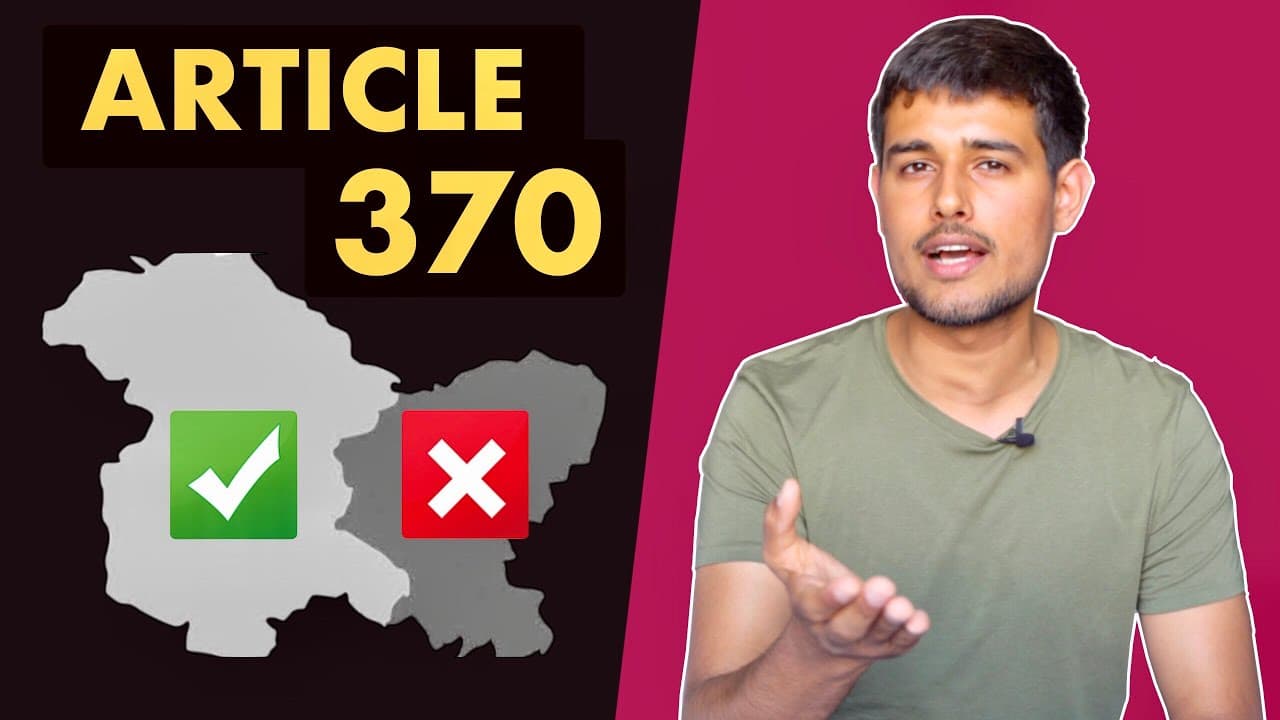
Article 370 Removal: Right or Wrong? | Explained by Dhruv Rathee
TL;DR
Dhruv Rathee analyzes the implications of revoking Article 370.
Transcript
Read and summarize the transcript of this video on Glasp Reader (beta).
Key Insights
- Article 370 granted special status to Jammu and Kashmir, allowing it to have its own constitution and limiting Indian central government's jurisdiction to specific areas.
- The revocation of Article 370 means Jammu and Kashmir will no longer have a separate constitution, and Indians can potentially buy land and apply for jobs there.
- Supporters argue that the decision will lead to economic development, increased investment, and better integration of Kashmir with India.
- Opponents claim the decision was undemocratic, unconstitutional, and imposed without consulting Kashmiris, leading to potential unrest.
- The process involved placing Kashmir under President's rule, transferring state powers to the Indian Parliament, and passing the decision swiftly.
- Critics highlight the lack of dialogue with Kashmiris, comparing the move to fascism and illegal occupation due to the military presence.
- The decision also changes Jammu and Kashmir's status to a union territory, reducing its democratic autonomy and increasing central control.
- Dhruv Rathee supports the removal of Article 370 for development but criticizes the manner of implementation, stressing the importance of winning Kashmiris' trust.
Install to Summarize YouTube Videos and Get Transcripts
Explore YouTube Video Summarizer or Get YouTube Transcript Extractor
Questions & Answers
Q: What was the significance of Article 370 for Jammu and Kashmir?
Article 370 granted Jammu and Kashmir special autonomy, allowing it to have its own constitution and limiting the Indian central government's jurisdiction to external affairs, defense, and communications. This special status meant that Jammu and Kashmir could have its own flag and laws, separate from the rest of India.
Q: What are the main arguments in favor of revoking Article 370?
Supporters of revoking Article 370 argue that it will lead to economic development and better integration of Kashmir with India. They believe that allowing Indians to buy land and invest in Kashmir will increase property values and create jobs, reducing crime and terrorism. Additionally, Kashmiris will gain access to Indian laws and benefits.
Q: What are the main arguments against revoking Article 370?
Opponents argue that the decision was undemocratic and unconstitutional, imposed without consulting Kashmiris. They criticize the military presence and restrictions on communication, comparing it to illegal occupation. They also highlight the reduction of Jammu and Kashmir's autonomy by changing its status to a union territory, increasing central control.
Q: How was Article 370 revoked, and why is the process controversial?
Article 370 was revoked by placing Jammu and Kashmir under President's rule, transferring state powers to the Indian Parliament, and passing the decision swiftly. Critics argue that the process was undemocratic, as it involved dissolving the state assembly and not consulting Kashmiris, leading to potential unrest and comparisons to fascism.
Q: What changes will occur in Jammu and Kashmir after the revocation of Article 370?
With the revocation of Article 370, Jammu and Kashmir will no longer have a separate constitution. Indians can potentially buy land and apply for jobs there. The region's status changes to a union territory, reducing its democratic autonomy and increasing central government control, which has sparked significant debate and concern.
Q: What is Dhruv Rathee's opinion on the revocation of Article 370?
Dhruv Rathee supports the revocation of Article 370 for its potential to bring economic development and integration. However, he criticizes the manner in which it was implemented, emphasizing the importance of consulting Kashmiris and winning their trust to ensure long-term success and peaceful integration with India.
Q: What potential impacts could the revocation of Article 370 have on Kashmir's future?
The future impact of revoking Article 370 is uncertain. It could lead to economic development and better integration with India, or it might result in increased unrest and alienation if Kashmiris feel excluded. The key to success lies in reducing military presence, fostering trust, and ensuring Kashmiris feel included in India's democratic process.
Q: How does the change in Jammu and Kashmir's status to a union territory affect its governance?
Changing Jammu and Kashmir's status to a union territory reduces its democratic autonomy, as the central government now has greater control compared to a normal state. This change limits the powers of the elected state government, potentially leading to conflicts with the central government and hindering development efforts in the region.
Summary & Key Takeaways
-
Dhruv Rathee discusses the revocation of Article 370, which provided special status to Jammu and Kashmir, analyzing both supportive and opposing arguments to help viewers form their own opinions.
-
Supporters believe the change will bring economic benefits and better integration, while opponents argue it was undemocratic and unconstitutional, highlighting the lack of consultation with Kashmiris.
-
Rathee supports the decision for potential development but criticizes the implementation process, emphasizing the need for Kashmiris' inclusion and trust for long-term success.
Read in Other Languages (beta)
Share This Summary 📚
Summarize YouTube Videos and Get Video Transcripts with 1-Click
Try YouTube Summary with ChatGPT & Claude or YouTube Transcript Generator
Explore More Summaries from Dhruv Rathee 📚



Summarize YouTube Videos and Get Video Transcripts with 1-Click
Try YouTube Summary with ChatGPT & Claude or YouTube Transcript Generator