Lecture 18: Land Markets (Part 3) / Public Finance (part 1)
TL;DR
Redistributive programs in developing countries face challenges in accurately identifying and targeting the poor due to imperfect information and limited state capacity.
Transcript
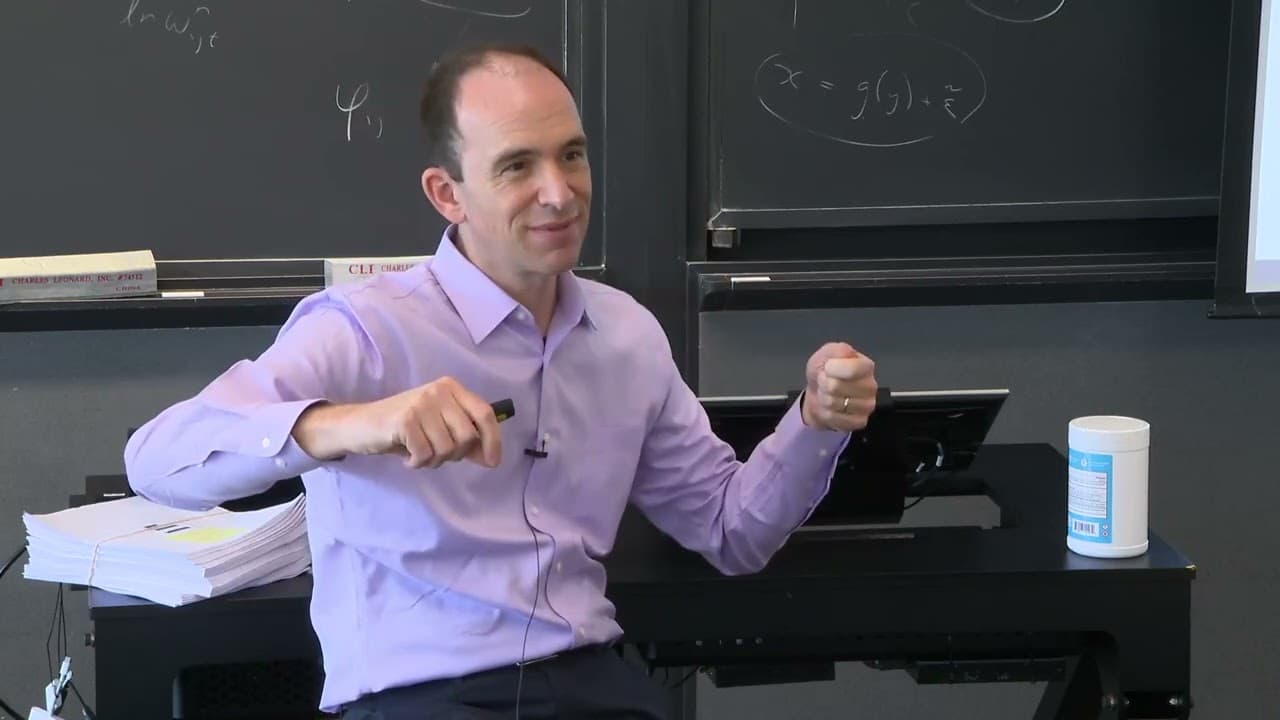
[SQUEAKING] [RUSTLING] [CLICKING] BENJAMIN OLKEN: All right, so I just have a couple of things to say to finish off kind of what I want to talk about land, and then we're going to switch to some of the lectures on public finance and redistribution. OK, so the two last points on land. The first thing is I realized as I was looking over my slides thi... Read More
Key Insights
- 😀 Redistributive programs in developing countries face challenges in accurately identifying and targeting the poor due to imperfect information and limited state capacity.
- 🎯 Different approaches such as price subsidies, universal programs, and proxy-means testing are employed to address targeting challenges.
- 🎚️ Proxy-means testing involves collecting data on observable characteristics correlated with income or consumption levels to predict eligibility for social assistance.
Install to Summarize YouTube Videos and Get Transcripts
Explore YouTube Video Summarizer or Get YouTube Transcript Extractor
Questions & Answers
Q: How do price subsidies impact redistribution efforts in developing countries?
Price subsidies can be an effective tool for redistributing wealth in developing countries, as they target goods consumed by the poor. However, they can be inefficient if they distort consumption patterns and are not specifically geared towards inferior goods.
Q: What are the challenges of using surveys to measure income or consumption levels?
Surveys have limitations in accurately measuring income or consumption levels due to recall bias and potential cheating by respondents. This makes it difficult to rely on survey data for targeting purposes in redistributive programs.
Q: How does the use of proxy-means testing raise equity concerns?
Proxy-means testing can lead to horizontal equity challenges, where individuals with similar levels of wealth or income are treated differently. Additionally, the lack of transparency regarding the government's formula for determining eligibility can create further equity issues.
Summary & Key Takeaways
-
Subsidizing goods that are consumed by the poor is one approach to redistributive programs, but it can be inefficient and distort consumption patterns.
-
Universal programs, such as universal basic income, can be redistributive but are more expensive in developing countries where a large portion of the population is tax-exempt.
-
Proxy-means testing is another method used to differentiate between the poor. It involves collecting data on observable characteristics correlated with income or consumption levels.
-
Challenges in using proxy-means testing include measurement error and the difficulty of accurately targeting individuals at different income levels.
Read in Other Languages (beta)
Share This Summary 📚
Summarize YouTube Videos and Get Video Transcripts with 1-Click
Try YouTube Summary with ChatGPT & Claude or YouTube Transcript Generator
Explore More Summaries from MIT OpenCourseWare 📚



Summarize YouTube Videos and Get Video Transcripts with 1-Click
Try YouTube Summary with ChatGPT & Claude or YouTube Transcript Generator